Get updates about news and blog posts.

Author: Eszter

  • Comics of the Lebanese Revolution – Abstract, IGNCC 2022 conference

    This is the abstract of the paper that I will present next week in Dún Laughaire at the International Graphic Novels and Comics Conference. The theme of the conference is “Comics and Conscience: Ethics, Morality, and Great Responsibility”

    „I spotted you on TV, you have 10 minutes to get back home” – Comics of the Lebanese Revolution

    (more…)
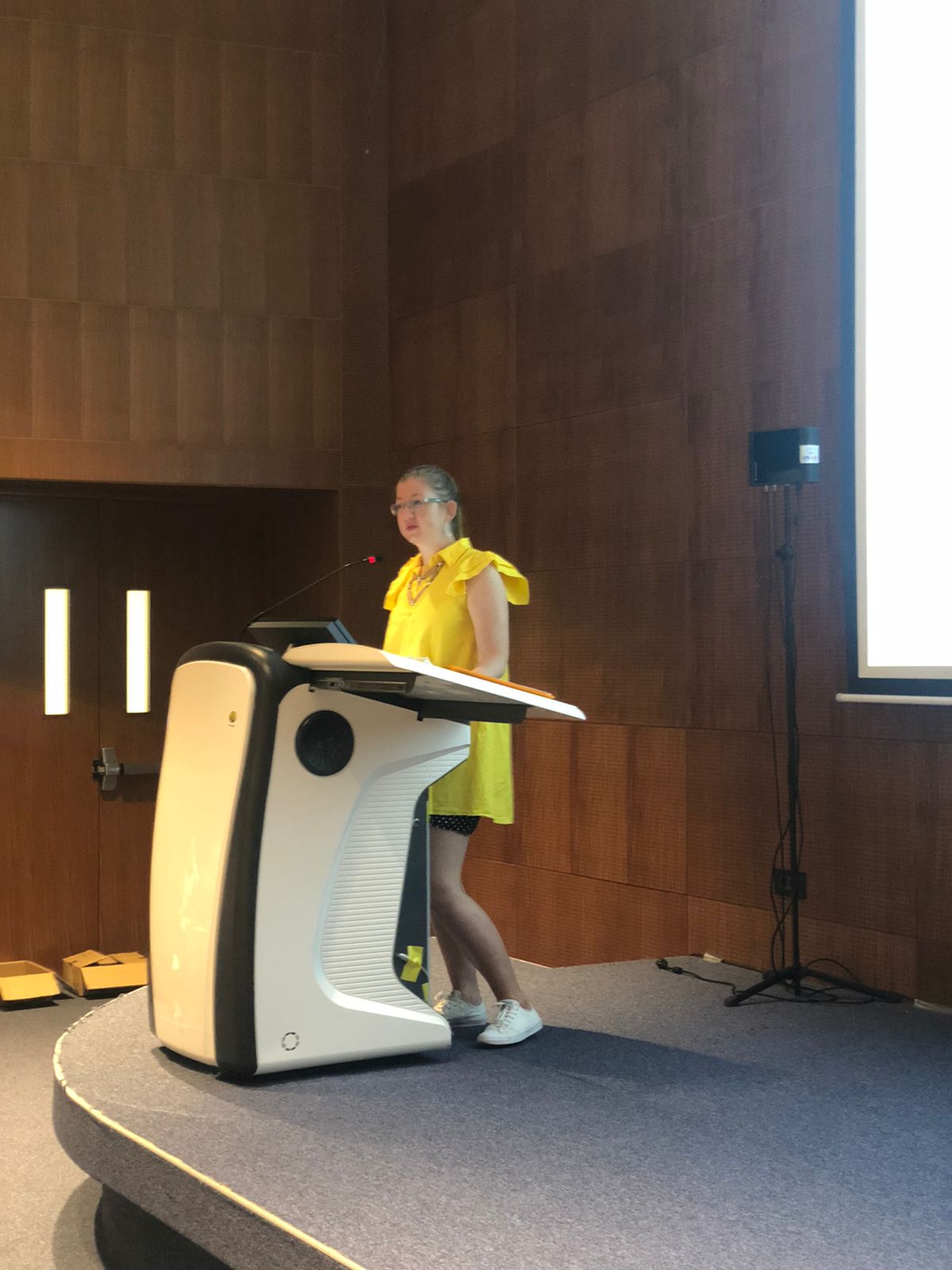
  • Violence, Politics, and the Graphic Novel – Virtual Panel organized by Maison Francaise at Columbia University

    A Virtual Roundtable with Hugo Frey, Hillary Chute, Mark McKinney, and Eszter Szep, moderated by Aubrey Gabel
    UPDATE: The panel is available on youtube. I was the fourth speaker, and I talked about comics as “poetry + graphic design” (said by Seth) and how it enables us to rethink the concept of comics and the practices around it and show this on the example of a fantastic collection of comics made by graphic desing students studying at the American University of Beirut about the 2019 Revolution in Lebanon.
    (more…)
  • Showcasing New Hungarian Comics and Graphic Novels (PDF!)

    A catalog showcasing contemporary Hungarian comics came out in fall 2021, but I completely forgot to share the news here.

    I was working on New Hungarian Comics and Graphic Novels: Speech Bubbles to Leave You Speechless in the spring, it was commissioned by the Petőfi Literary Fund. It was big work: I selected the artists and comics featured in this beautiful catalog, wrote the text about each of them, and selected the images, too. Many of the featured titles has won or has been nominated to the Hungarian comics award.

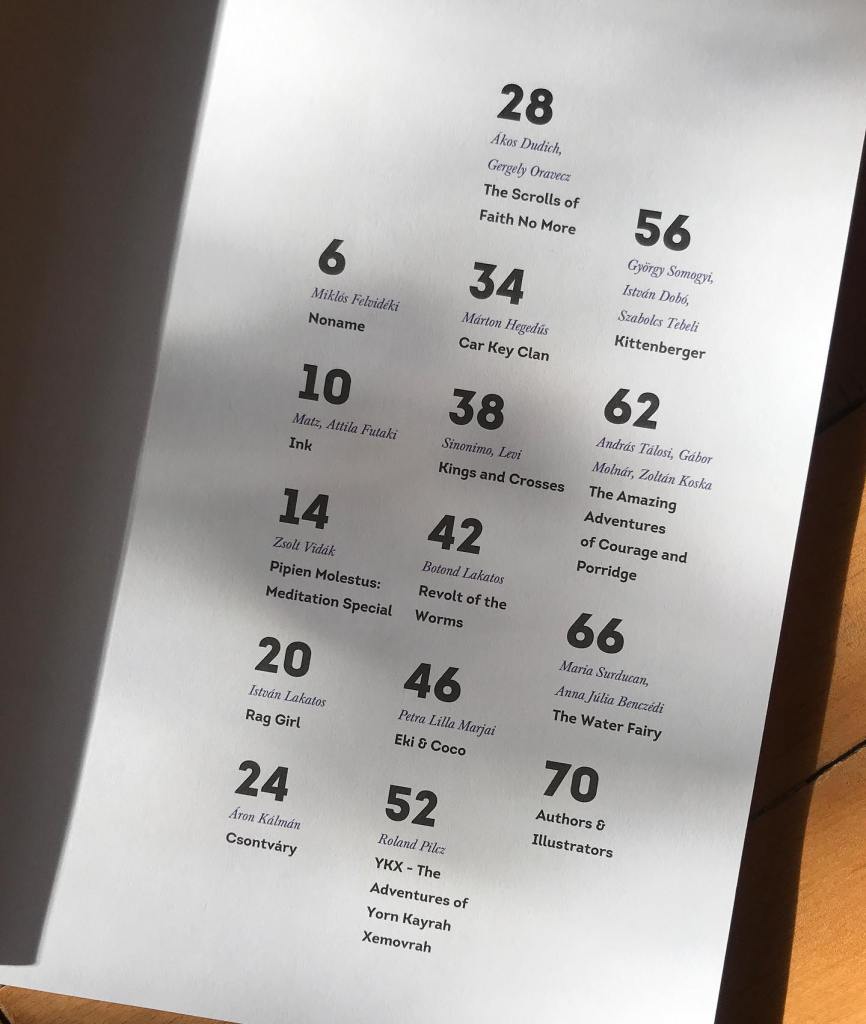
    The catalog focuses on book length comics and series, and it targets publishers and distributors. It is available in print, or it can be downloaded from this link.

    This is my press statement, originally published here.

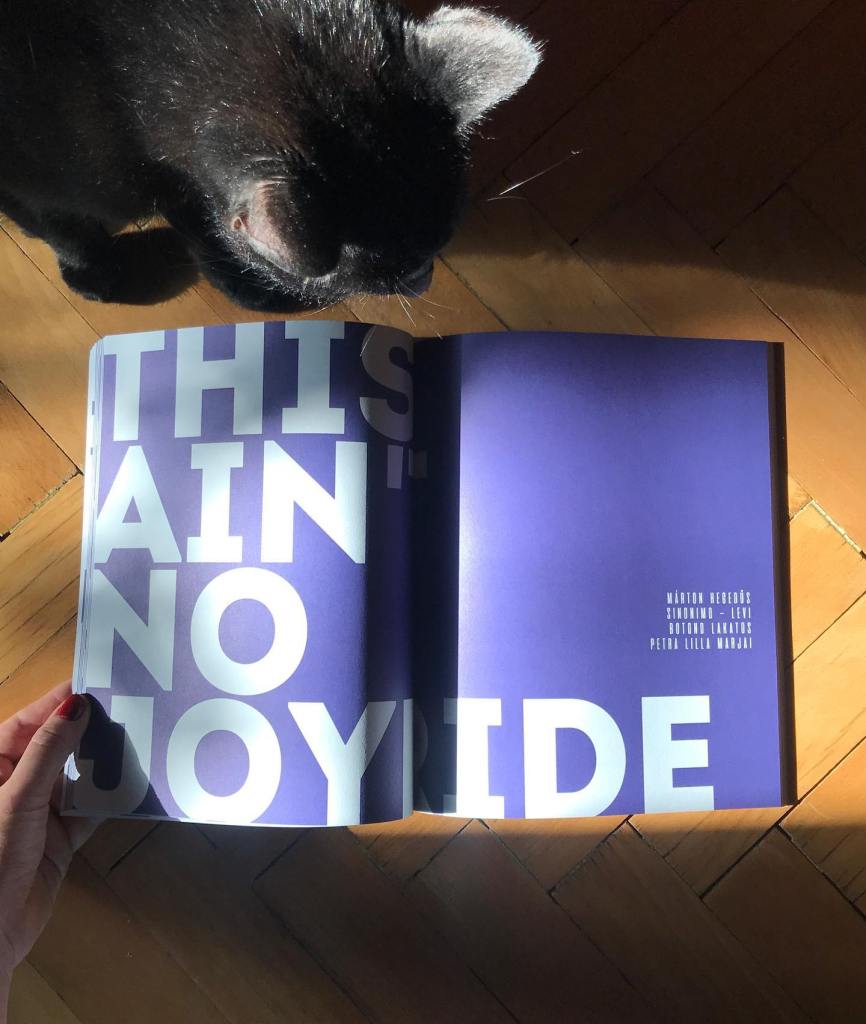
    “I divided the comics into five groups: in the “Some Heroes are Silent” group, the heroes pursue their goals in fantasy worlds which are conjured with distinctively unique visuals (Miklós Felvidéki: Noname, Attila Matz-Futaki: Ink, Zsolt Vidák: Pipien Molestus – Meditation Special). In the group under the heading “I Breathe Art,” I put the comics that deal with creation and our relationship to our artistic heritage (István Lakatos: Rag Girl, Ákos Dudich-Gergely Oravecz: the Scrolls of Faith No More, Áron Kálmán: Csontváry). The subchapter entitled “This Ain’t No Joyride” contains takes which are historical, post-apocalyptic, and social, as well as stories which explore questions of life both banal and big. While the aesthetics and genre traits of these works may differ, their creators all deal with questions of human existence and human endurance (Márton Hegedűs: Car Key Clan, Sinonimo-Levi: Kings and Crosses, Botond Lakatos: Revolt of the Worms, Petra Marjai: Eki & Coco). “Your Khaki Shirt Will Get Dirty” presents two adventure comics series, one evoking of the Indiana Jones stories, the other a steampunk reworking of historical characters and events (Roland Pilcz: YKX, György Somogyi-István Dobó-Szabolcs Tebeli: Kittenberger). Finally, under the heading “A Pinch of Magic,” I put together a selection of contemporary Hungarian children’s comics (András Tálosi-Gábor Molnár-Zoltán Koska: The Amazing Adventures of Courage and Porridge, Maria Surducan-Anna Júlia Benczédi: The Water Fairy).”

  • 2021 – A Busy Year

    When I was looking back on 2020 in my January 2021 post, I wrote that the best decision I made was quitting my job at a multinational company in the summer of 2020 (in spite of the pandemic, etc). I was grateful for that decision each and every day of 2021. Though freelancing is hard, it is getting easier and easier to find work. I still could not support myself financially if I lived alone, but I do not live alone, and I can rely on a partner who supports my freelancing projects. All year round, I could work on projects that make sense, which is a wonderful feeling.

    TEACHING

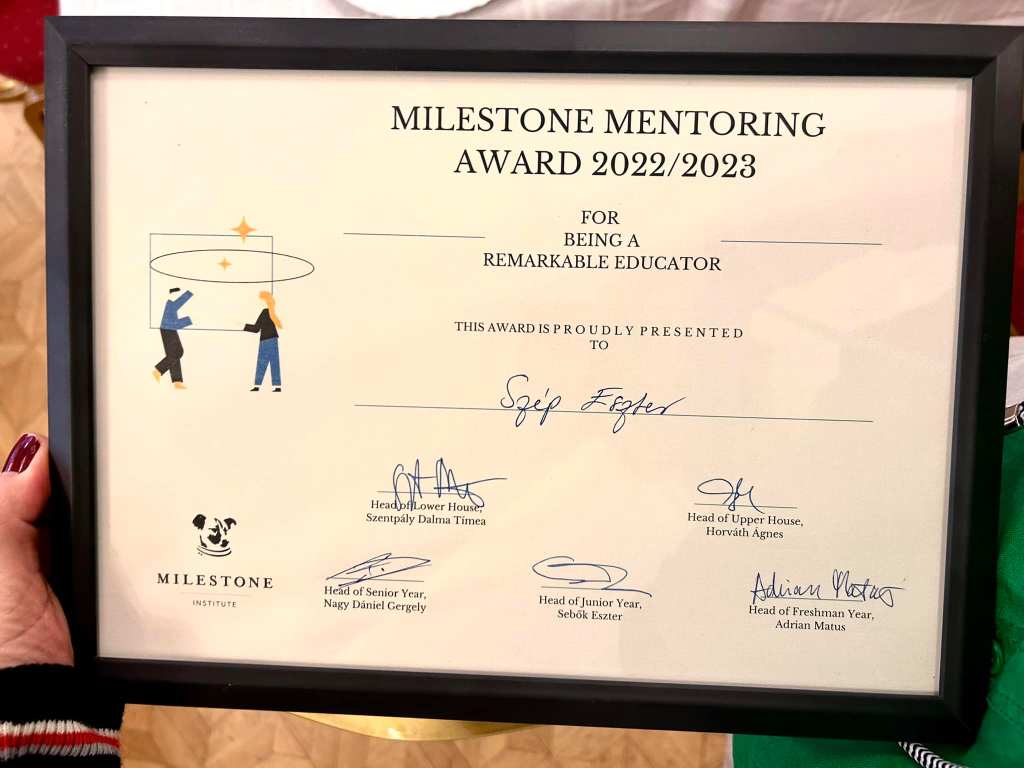
    I got some teaching gigs in the spring term, and got even more in the autumn. This is fantastic, I love teaching. I have taught a history of comics class at METU, academic writing at AMFI, “Good and Evil,” a critical thinking course at Milestone, a comics making workshop at MOME, and two practical comics making and comics as thinking classes at MOME and METU. I have put some of my syllabi online, just follow the links. I will be teaching full time (though with 4 different contracts) in 2022.

    INTERNATIONAL DISCUSSIONS OF COMICS

    During the summer, I was asked to join the editors of the Journal of Graphic Novels and Comics as the new book reviews editor. I really enjoy this work, which has allowed me to get to know some fantastic academics from all over the world.

    In the summer, I was invited to take part in Lyon BD and attend the professional workshops for organizers of comics festivals. This was AMAZING! I have never been to a French comics festival before, and even with the restrictions due to COVID, I felt the love and culture of comics.

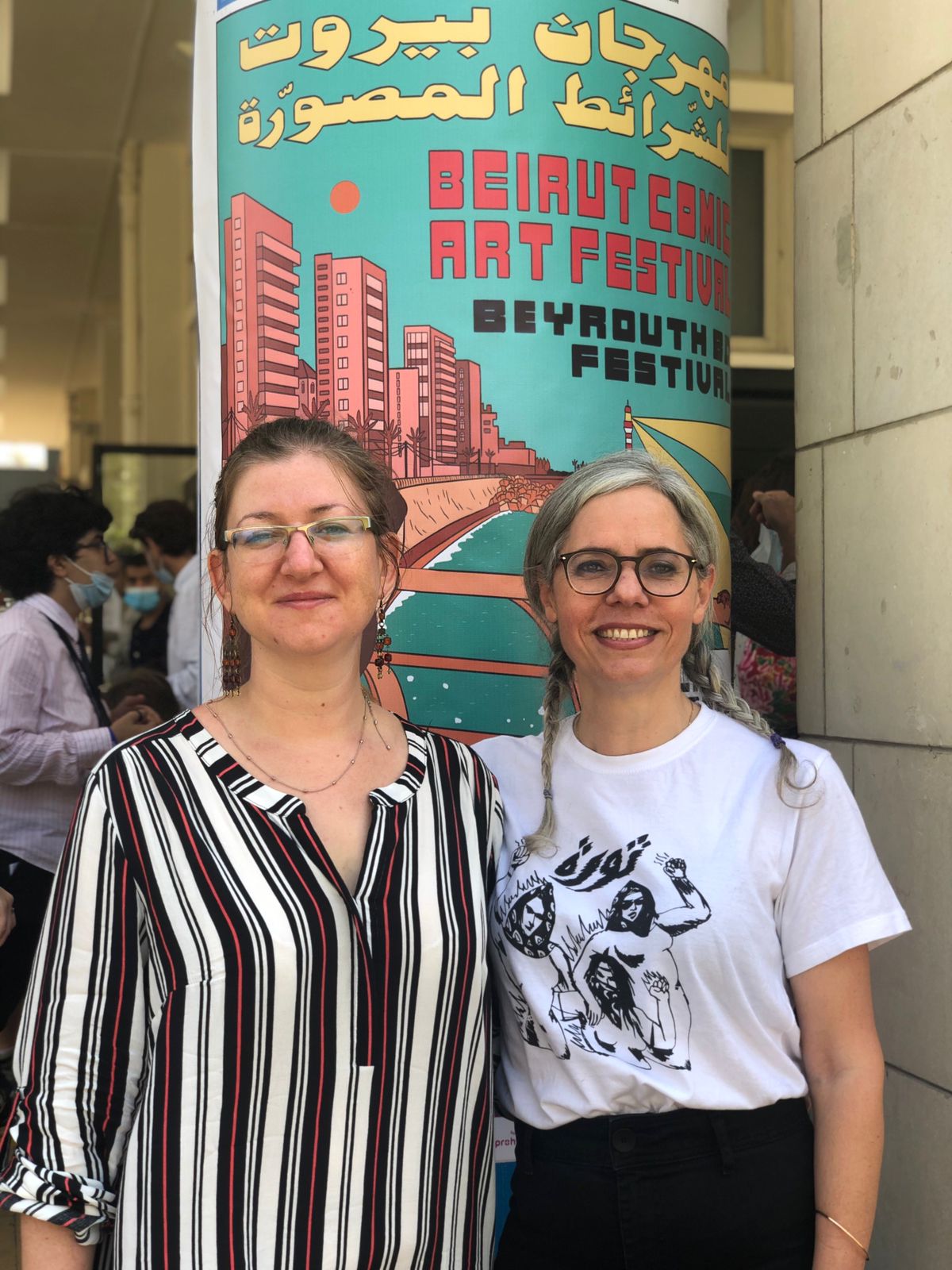
    In October, I was invited to Lebanon, to speak at the American University of Beirut and to attend the Beirut Comics Art Festival. I learnt so much in Beirut and I met brilliant comics artists and students – I have posted about it on this site, too. In preparation for my trip, I interviewed Lina Ghaibeh, organizer of the festival and chair of the Arab Comics Initiative about Arab comics and about life in conflict-ridden Lebanon – link to the article on The Comics Journal. I have also written a report on the festival, here it is.

    At the end of the year, I was invited to join the History in Comics Erasmus BIP project. We will organize a conference in September, 2022, so stay tuned! This is our website: historyincomics.org.

    JOURNALISM IN HUNGARIAN

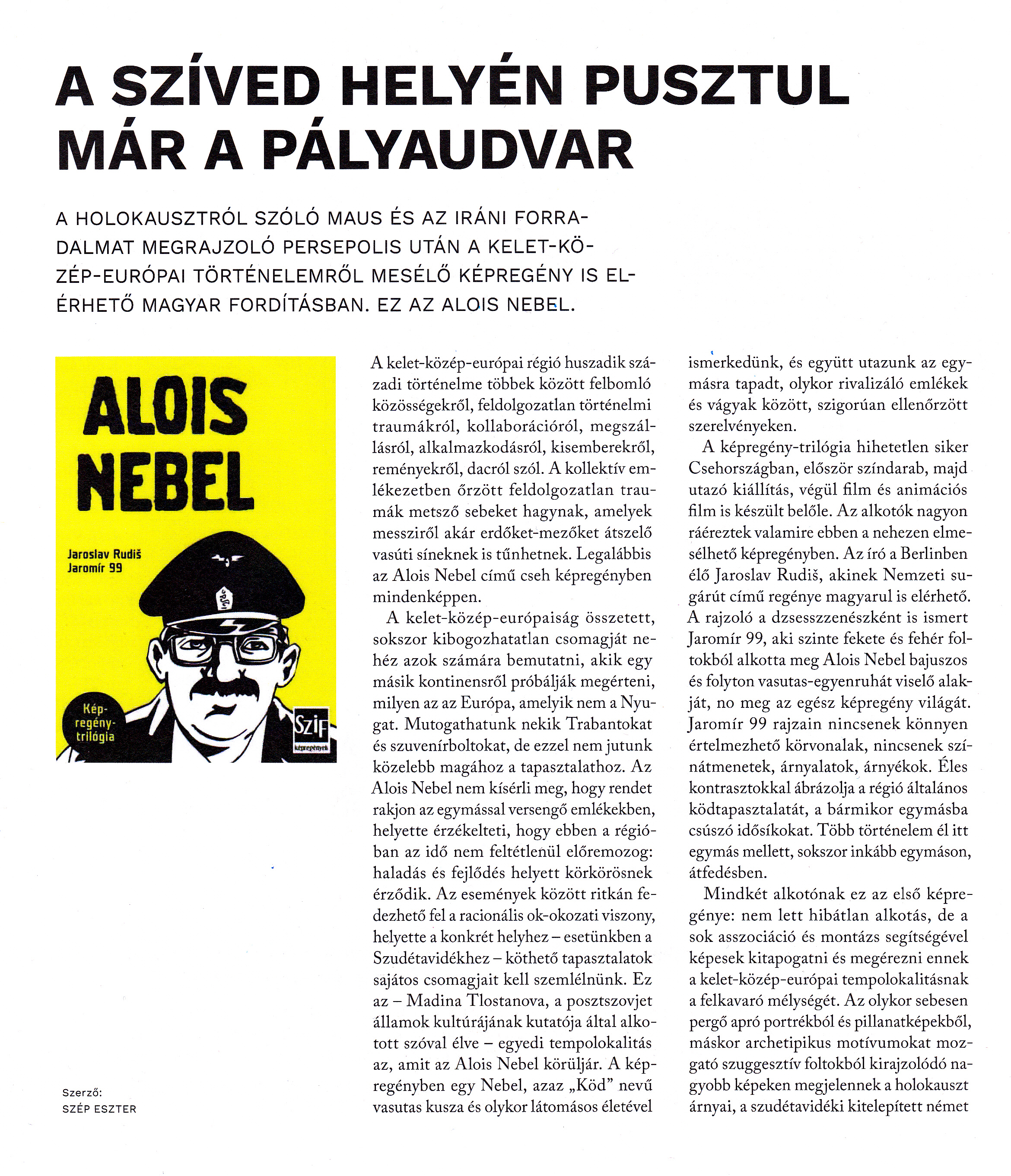
    I continued writing to various cultural magazines and portals. This is a cause for continuous conflict in me, because these magazines and portals pay so little that if you write a good, long, well thought-out article, your wage is something like 1-2 dollars/hour. My journalistic work is collected here, and here is a list of the long and interesting things I could write about: on Alois Nebel, a cool Czech comic, report on horror in Hungary, report on conserving old paper documents, interview with writer Anita Moskát, interview with Anna Gács on memoirs.

    I started writing about current academic topics in the field of comics studies in essays. I would like comics to be more accepted here and I would like to contribute to the canonization of comics studies as a valid academic discipline. I have written three essays: on Chabon’s Kavalier and Clay and its translation; on graphic medicine; on Paul Williams’s book on the origins of the graphic novel.

    PUBLICATIONS

    This year I haven’t written or published any articles in English -and that is okay. I feel I need more time to find a topic after my book – and I am still grateful every day that I could write a book and publish it with the Ohio State University Press. I published two book reviews, though.

    IN 2022

    I already have a number of teaching contracts and promises that I am very excited about. I am also looking forward to our meetings with the History in Comics research group, and I hope I’ll find a research topic and I start writing articles again.

    I wish you the very best, creative energies, piece, long walks, friends for 2022!

    • Keynote at IGNCC
      One of the greatest honors of my life has been to keynote at the joint conference of IGNCC and IBDS (International Graphic Novels and Comics Conference, International Bande Dessinée Society) in Brussels on 4 July 2025.
    • COMPLEX is published
      THE choose your own adventure comic from the Balkans that you would not want to miss – brought to you by the Random Factor Comics Collective!
    • Versions of Me – Comics Anthology
      Last autumn I had the pleasure to co-teach a one-week practical workshop on making comics and feminism. We exhibited and printed our comics!
  • Guest Lecturing at the American University of Beirut, Reporting on Arab Comics for TCJ

    In October 2021 I was invited by Lina Ghaibeh to hold a lecture to graphic design students about drawing and comics. I was and am still honored by this opportunity.

    I met Lina in Lyon as we both were invited to Lyon BD, and it was really easy to talk with her about the difficulties of organizing comics festivals and events in countries that do not really have an appreciation of comics as an artform, and also about teaching comics. We both love teaching. 🙂 Before my visit, we talked a lot about the situation in Beirut, which is extra difficult: Covid came upon a grief financial and political crisis, and the illegally stored ammonium nitrate exploded in the port of Beirut on 4 Aug 2020. It killed many people and destroyed culturally important parts of the city. I interviewed Lina for The Comics Journal, and she speaks about how they decided to eventually organize a festival in this situation, the role of art in hardship, the history and present of Arab comics, and the work and goals of the Arab Comics Initiative at the American University of Beirut. I learned a lot from this discussion, which was recorded in three sittings. Here is a link.

    When I arrived at Beirut, I was really excited about being there and being present at the opening of the comprehensive, extensive, and beautiful exhibition of contemporary Arab comics – with works exhibitied from ten countries. The exhibition was curated by Lina Ghaibeh and George Khoury JAD. At the same time, I was humbled by knowing that the fact that my hotel has electricity is a privilege, as that the government provides only around 3 hours of electricity a day, and people have to use generators or candles. I walked a lot around the city and I saw the scars left by the Civil War (1975-1990) and the Revolution in 2019 and the Explosion, I saw street art everywhere, and I saw and talked to really kind people. This has been an experience of a lifetime.

    If you are interested, here is my report on the events and exhibitions of the Beirut Comics Art Festival, published on The Comics Journal. I really enjoyed the drawn concerts, the programs at various locations in the city, and the exhibitions that showed political engagement, concern, and power. In the report, I made mini interviews with organizers and artists.

    And of course I also talked at the American University of Beirut. It went okay. I took many pictures by phone and by my beloved analog camera (those in the beginning of this post were taken by my Minolta x700). If you want to see more, visit my blog, please.

  • The first review of my book is here

    Andrew Godfrey-Meers reviewed Comics and the Body: Drawing, Reading, and Vulnerability for the Comics Grid. I have been so anxious (you can imagine), and it is such an honor to have one’s book read by a reviewer who understands the stake of the book and comments on it critically. Andrew Godfrey-Meers looks at Comics and the Body from the perspective of Graphic Medicine, and offers precious insight into how the issues raised and theories formulated in the book could be used to talk about the Covid experience of people with disabilities in the UK.

    Here is a link to the review: https://www.comicsgrid.com/article/id/4796/

  • Book Reviews Editor of the Journal of Graphic Novels and Comics

    I am happy to share that I am the new book reviews editor of the Journal of Graphic Novels and Comics. I am really excited about this job and cannot wait to read and publish tons (!) of interesting reviews of books on comics. 

    I have been a secret book reviews enthusiast in the past 10 years or so, and I think many of you agree with me that there is a lot going on in comics research now. The field is becoming more international and more global, newer and newer chapters are explored in the history of the medium, and there is a great number of monographs and collections that offer syntheses of and guides to this expanding field.
    If you are interested in reviewing books for the Journal of Graphic Novels and Comics, please contact me (eszterszep AT gmail DOT com). 

    • Doctoral students, postdocs, independent scholars, as well as tenured and non-tenured faculty are all welcome!
    • Please write a few lines about yourself, as well as about your areas of expertise and interest. If you already have a title in mind, do not hesitate to share it!

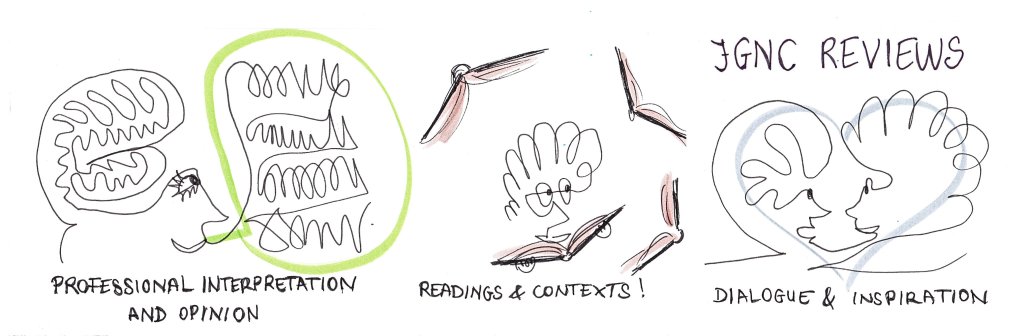
    Finally, here is a comic I made about our book review philosophy. The strip was deeply influenced by Hungarian critic József Lapis’s several funny essays and self-reflections on reviews and the roles of reviewers.
  • New Patreon Project: Petr Sís, drawing, protest, post-soviet life

    The new project that I am undertaking with the help of Patreon folks is partly a conference presentation and partly an issue I have wanted to explore for a while now.

    I have been interested in how postcolonial theories could be used on postsoviet life and stuff – this is happening in literature and in flim, but comics haven’t been studied in this respect. Or not enough.

    I am also interested in drawing as a way of protest.

    So in the next project I’ll try to explore these ideas: the trick in the whole endeavour is that I have two weeks left until the annual conference of the Comics Studies society.

    The first post, in which I introduce the topic and Czech illustrator Petr Sís, is already on patreon for anyone to read – so it is not restricted to Patrons only this time. There are a lot of amazing images by Petr Sís, check it out.

    Children’s books by Petr Sís.
  • The Marie Duval Patreon Project

    In 2018 Roger Sabin gave me a Marie Duval T-shirt. Now THIS is the way to put ideas into someone’s head: you give them a T-shirt with a cool pattern related to a little known aspect to their research, and they are doomed… Yes, my new #patreon project is on Duval.

    Marie Duval was drwaing to the British humorous-satyrical weekly Judy from 1869, and she started drawing the adventures of the first comics superstar, Ally Sloper. After her death, there were conscious attempts to misattribute her work and to erase her from the history of cartooning and visual journalism.

    My project is based on the fantastic book Marie Duval: Maverick Victorian Cartoonist by Simon Grennan, Roger Sabin, and Julian Waite (2020). In the four parts of the project, I explore some of my favourite topics in the book: #1 Duval’s career, #2 women and work in Victorian Britain, #3 the influence of theatre on Duval’s cartooning, and #4 the politics of her drawing style and why it was considered vulgar. Link.

    I think Marie Duval was a creative woman employee who provoked the norms of her age in many ways, including her employment, her lack of formal training, her style, her topics, her sense of humour, her acting career, and even her family. I simply adore her achievement. Check out the details of the project on Patreon!

    Here are some images that I love. They come from the Marie Duval archive.

  • History of Comics Course

    I was asked to lecture on the history of comics in the spring term. There are a few things you should know:

    #1 I don’t believe in lecturing and any forms of frontal teaching.

    #2 I don’t think that students of photography, design theory, or visual communication should sit an exam in the history of comics (in Hungary each lecture must be finished by a written or spoken exam.) They would benefit more about making comics or understanding how they work or getting inspired by them.

    I am terrible, I know.

    However, this lecture series turned out to be the greatest joy of my spring ’21 quarantine season.

    I could transform the course to be less formal, more interactive, more practice-oriented, and a bit more interactive. Here is the syllabus, some creative assignments, and some of the amazing work done by the students.

    And some student work to tease you. The first two images are stylistic practice, the third one is an adaptation of a poem, the last one is a page analysis – the exercise comes from Nick Sousanis.