Get updates about news and blog posts.

Tag: képregénykutatás

  • New Publication: Children’s Comics in Hungary

    Children’s comics is undergoing a change in Hungary: in recent years several YA graphic novels have been translated and further titles are promised. In this small country with a conservative book industry, publishers have been hesitant to publish book format comics, and publishers of children’s literature did not publish comics at all. This seems to be undergoing a change, and I am really happy about it.

    The target audience of comics in this country is 20-40 year-olds, most magazine format and book format comics are sold directly on festivals and comics fairs. The canonical works of the 1980s – comics have grown up – era are translated now + newer titles by DC and Marvel, which results in a masculine market that is a) unacknowledged by the gatekeepers of literature (literary publishers, magazines, writers, influencers) b) not particularly open to children’s titles.

    I hope that the new children’s titles will attract young readers and also hope that there will be a time when Hungarian authors will also be able to have their stories published as beautiful colorful books.

    In my essay I provide a background on the history of children’s comics in Hungary and also of the prevailing stereotypes about comics.

    The stereotype that comics will a) teach children to read or b) make children like literature is particularly strong in this country because until the 1980s the ONLY available comics were adaptations of literary works. This tie with literature was the only way comics could survive until state socialism but it has a big drawback: for decades it has been DEFAULT to compare comics to the original literary works and get disappointed. The literary work was shortened, which was deemed barbaric, the comics were text heavy (but noone noticed that in a way we do, because they did not know comics of the capitalist west), and the children were still not queuing in the library to borrow the original literary works!

    I also speculate the reasons why children’s literature is so sceptical about comics, claiming that one of the reasons is the culture of collecting toys and gimmicks, which is associated with cheap entertainment. This culture arrived in the late 1980s and in the 1990s. In this era new kinds of comics were allowed to be printed (breaking away from literary adaptations) which were most of the time related to cartoons. Children (among them myself 🙂 ) in this era met comics in a complex transmedial environment: magazines, books, stickers, notebooks, scented rubbers, cartoon series, anime series (of course we did not know the word anime). All this culture of objects and the idea of collecting are alien to the culture of children’s literature in Hungary, and I might be wrong, but this might be the first essay in Hungary that deals with this topic. (I have learned a lot about comics and transmedia from Frederick Luis Aldama’s interview with Benjamin Woo – it’s on youtube, check it out.)

    I was also asked to include how comics can be read, somehow this question is very important in Hungary. I am constantly asked how one reads comics properly, and in 2018 when I was co-curating a major comics exhibition I also had to address this issue in one of the texts on the walls. I use the “art of tensions”, the model by Charles Hatfield in Alternative Comics (2005) because I think the idea of having four layers of meaning is a simple model that shows the complex beauty of comics. This model is also very teachable – the portal where my essay is published addresses teachers and professionals working with children’s literature, and I hope they will find my essay and Hatfield’s model useful.

    https://igyic.hu/esszektanulmanyok/gyerekek-es-kepregenyek.html

  • My Review of Nimona and Women in Battle is Out

    … in Hungarian. The literary journal “Alföld” kindly commissioned comics reviews for its May issue (link). The plan was to sync these with the International Comics Festival Budapest. The festival was cancelled, and the journal ran out of funding so it only publishes online instead of print and cannot pay the authors for an indefinite amount of time.

    Culture is in a terrible position in Hungary, it is a noble hobby and the frustration caused by the lack of money slowly kills you inside. But I am an optimist today (my position on the optimist-let’s die now axis changes every day), and I am happy that I could write a review of these two comics in Hungarian.

    Why are these comics important?

    1. Hungary has a limited comics market: the majority of the titles is interesting for a male readership in their 30s and 40s. I can understand this: they are the ones who buy comics, and the publishers want to sell. Plus publishers belong to that age group. (Naturally, as every trend, this one exists among other trends and is not absoulute.)
    2. When the guys mentioned above were children, there were no comics that could have addressed a girl readership, so they are missing now.
    3. Some publishers realized that it is vitally important to address young readers today — they are the comics readers of the future!
    4. Some publishers realized that it is vitally important to bring in comics that are not about superheroes and white males.

    Because of points 3 and 4 in the above list, the publication of Nimona and Women in Battle is very important: they address a new reader group, that of teenage girls. I hope their audience finds them.

    (I analyze the comics scene in Hungary from a gender point of view in the 2019/4 issue of Csillagszálló. It will soon be published online at Dot &Line.)

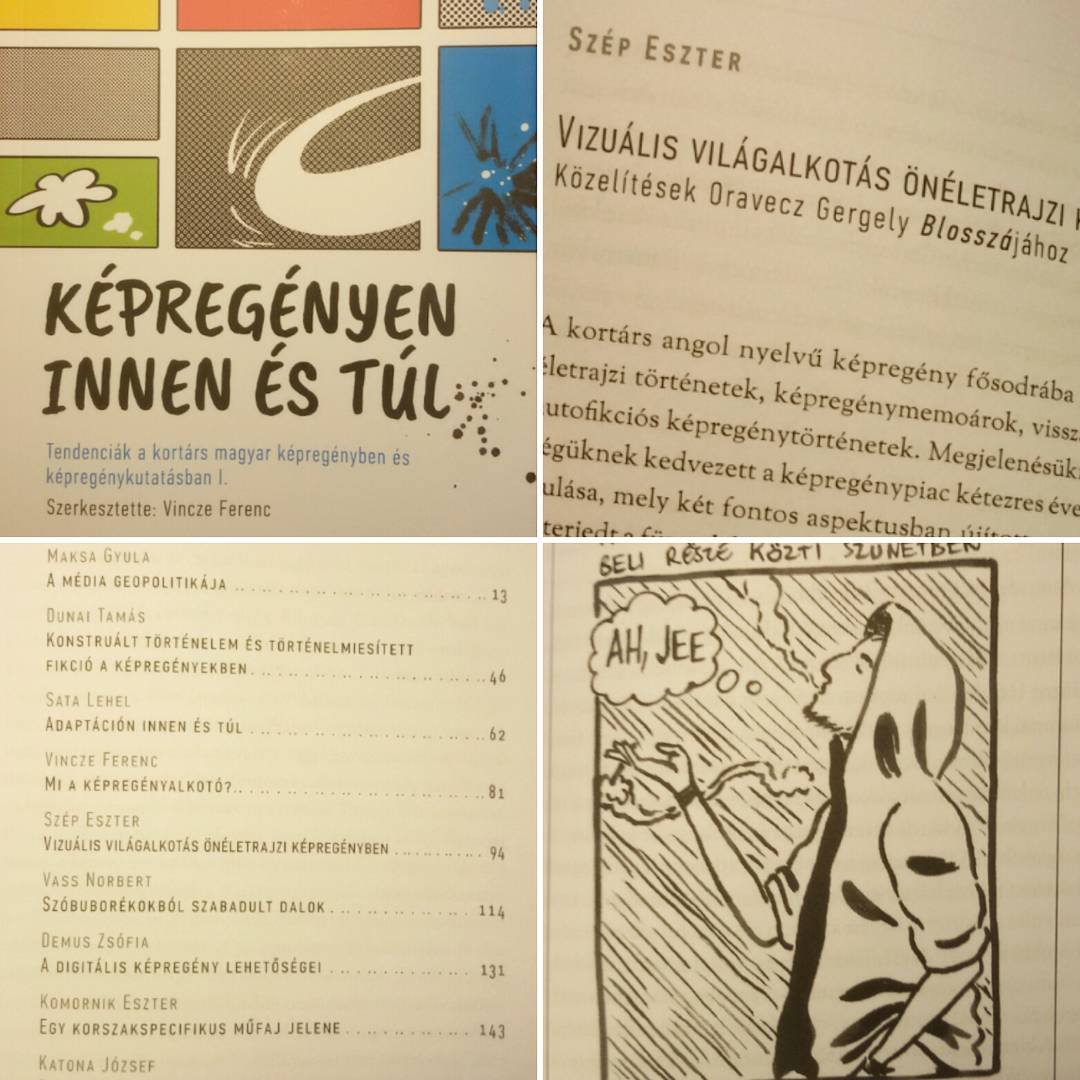
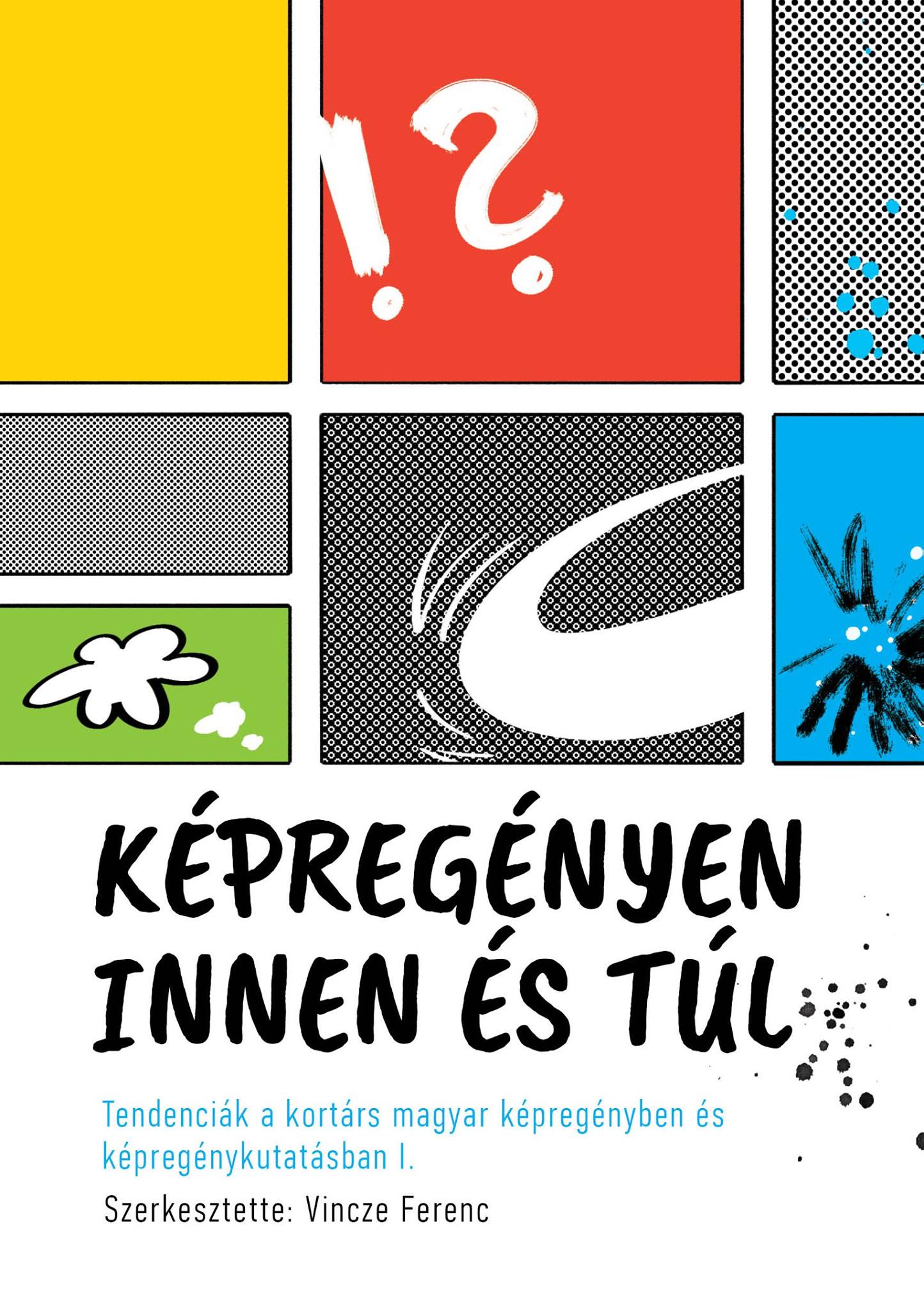
  • Comics Scholarship in Hungary: Edited Volume is Out

    It is difficult to place Hungary on the map of comics, and it is almost impossible to locate our output in the field of comics scholarship.

    As far as comics artists are concerned, some of them did find their place in Dark Horse’s or DC’s outsourced projects as pencillers or inkers, but in general Hungarian comics are not translated into English.
    As far as comics scholarship and the academic research of the medium is concerned, it turns out that a lot is done at various universities, mainly at departments of “Media and Communication.” Here, some courses are offered, but there is no systematic program.

    Last year’s conference, organized by Ferenc Vincze was a big breakthrough in comics scholarship: it was the first time that some of the researchers who work in isolation could meet and exchange ideas. We have come from a multitude of backgrounds: I have a background in English and American comics and literature, others come from French studies, galleries, media studies, popular culture studies (especially music).

    The volume based on this conference is the first collection of comics scholarship in Hungary. I can’t wait to read it!
    I contributed with an article on Gergely Oravecz’s Blossza. This is an amazing strip series: for 100 days, Gergely was drawing a strip a day about his life. In the first part of the article I show some instances of ironic authentication (Charles Hatfield term) at work in Blossza, so we can say that I am not saying anything radically new about comics diaries, but the term has not been used in Hungarian, and I thought it is utterly important for Hungarian readers to know about it and to be able to approach non-fiction comics through the simultaneous filters of irony and authenticity.  I also emphasize instances when the daily rhythm of the diary project is ironically undermined within the strips themselves.

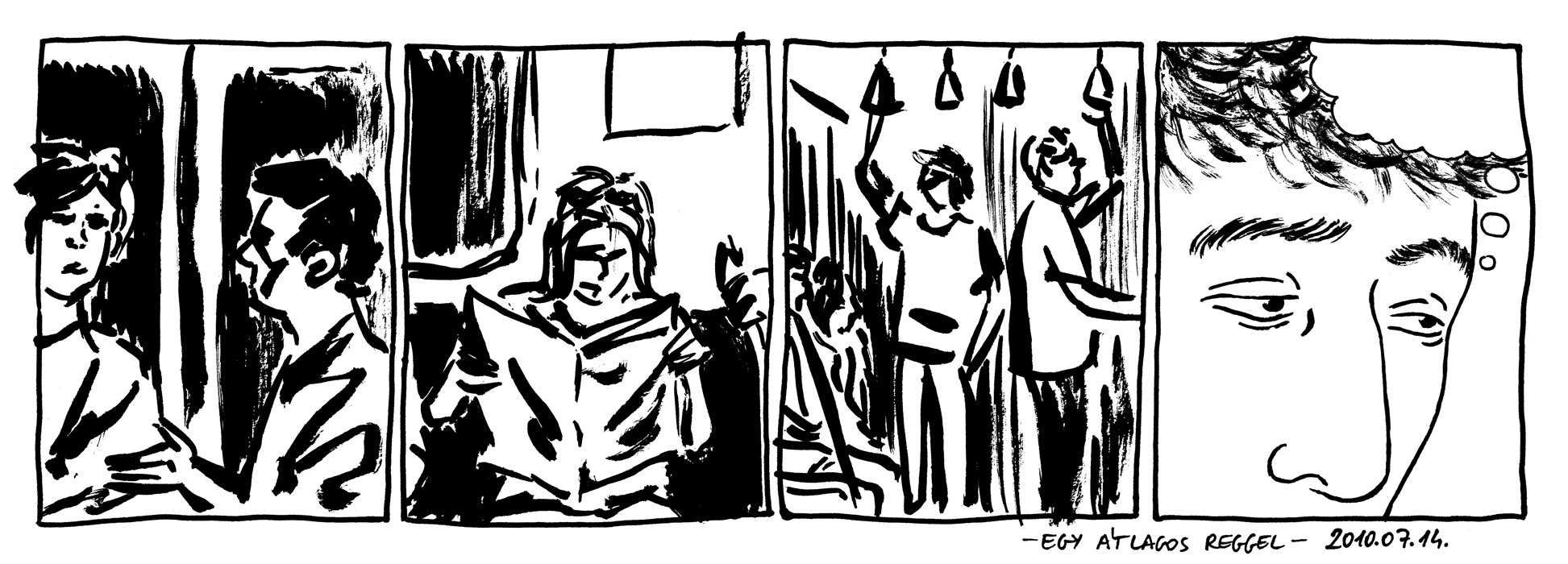
    In the second part of the article, and I really enjoyed writing this part, as it is close to my dissertation, I show ways in which the quality of the line contributes to the meaning of the strip. I show one such wordless strip at the end of this blog entry.

    If you speak Hungarian, you might find this collection of essays interesting.


    szépirodalmi figyelő

    szépirodalmi figyelő címlap

    3 ábra.jpg