Get updates about news and blog posts.

Tag: Oravecz Gergely

  • Showcasing New Hungarian Comics and Graphic Novels (PDF!)

    A catalog showcasing contemporary Hungarian comics came out in fall 2021, but I completely forgot to share the news here.

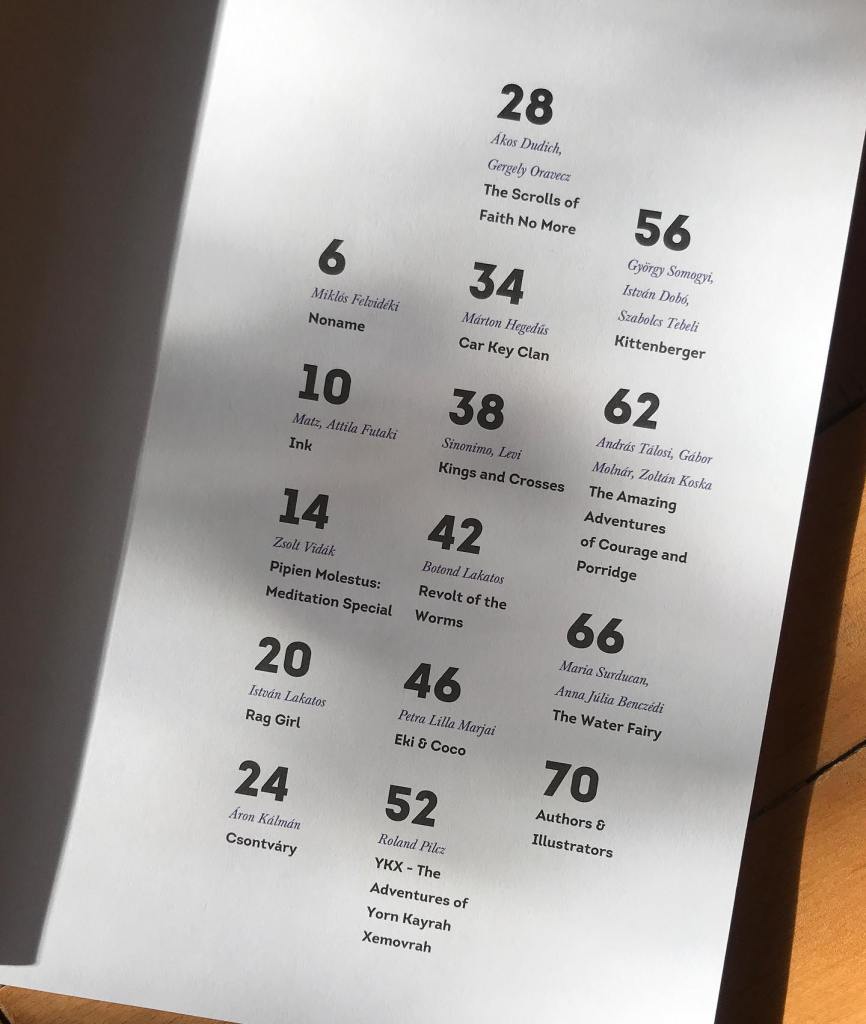
    I was working on New Hungarian Comics and Graphic Novels: Speech Bubbles to Leave You Speechless in the spring, it was commissioned by the Petőfi Literary Fund. It was big work: I selected the artists and comics featured in this beautiful catalog, wrote the text about each of them, and selected the images, too. Many of the featured titles has won or has been nominated to the Hungarian comics award.

    The catalog focuses on book length comics and series, and it targets publishers and distributors. It is available in print, or it can be downloaded from this link.

    This is my press statement, originally published here.

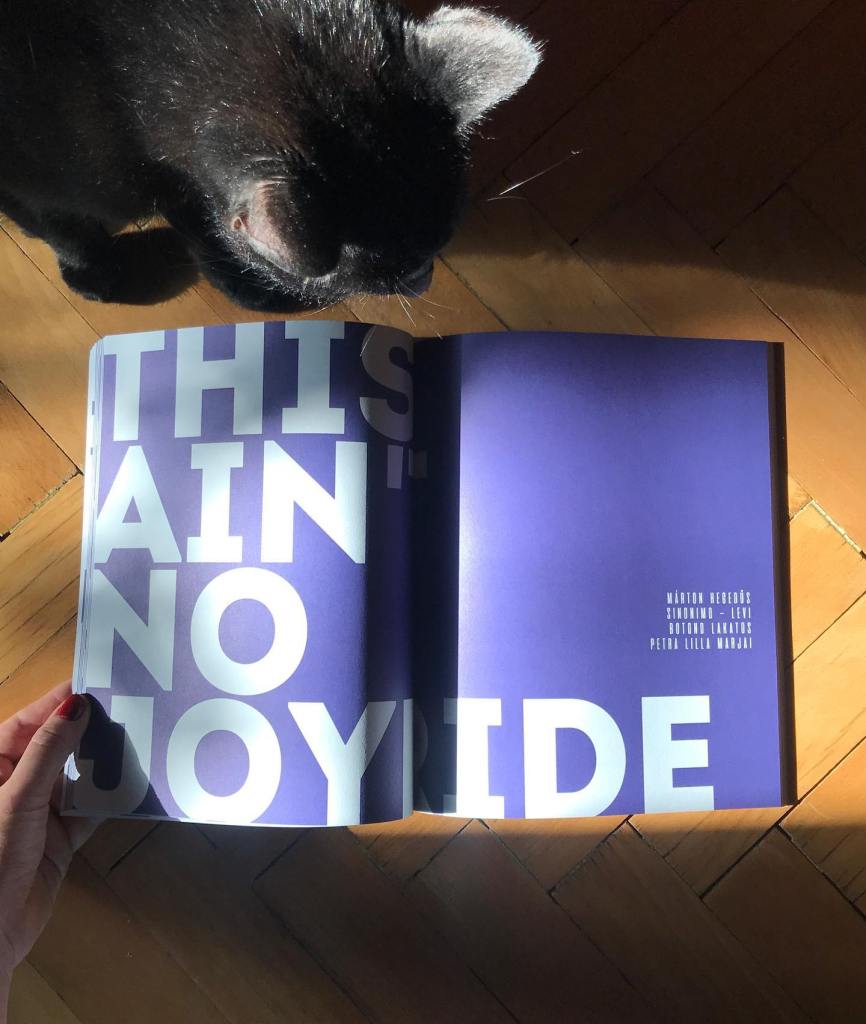
    “I divided the comics into five groups: in the “Some Heroes are Silent” group, the heroes pursue their goals in fantasy worlds which are conjured with distinctively unique visuals (Miklós Felvidéki: Noname, Attila Matz-Futaki: Ink, Zsolt Vidák: Pipien Molestus – Meditation Special). In the group under the heading “I Breathe Art,” I put the comics that deal with creation and our relationship to our artistic heritage (István Lakatos: Rag Girl, Ákos Dudich-Gergely Oravecz: the Scrolls of Faith No More, Áron Kálmán: Csontváry). The subchapter entitled “This Ain’t No Joyride” contains takes which are historical, post-apocalyptic, and social, as well as stories which explore questions of life both banal and big. While the aesthetics and genre traits of these works may differ, their creators all deal with questions of human existence and human endurance (Márton Hegedűs: Car Key Clan, Sinonimo-Levi: Kings and Crosses, Botond Lakatos: Revolt of the Worms, Petra Marjai: Eki & Coco). “Your Khaki Shirt Will Get Dirty” presents two adventure comics series, one evoking of the Indiana Jones stories, the other a steampunk reworking of historical characters and events (Roland Pilcz: YKX, György Somogyi-István Dobó-Szabolcs Tebeli: Kittenberger). Finally, under the heading “A Pinch of Magic,” I put together a selection of contemporary Hungarian children’s comics (András Tálosi-Gábor Molnár-Zoltán Koska: The Amazing Adventures of Courage and Porridge, Maria Surducan-Anna Júlia Benczédi: The Water Fairy).”

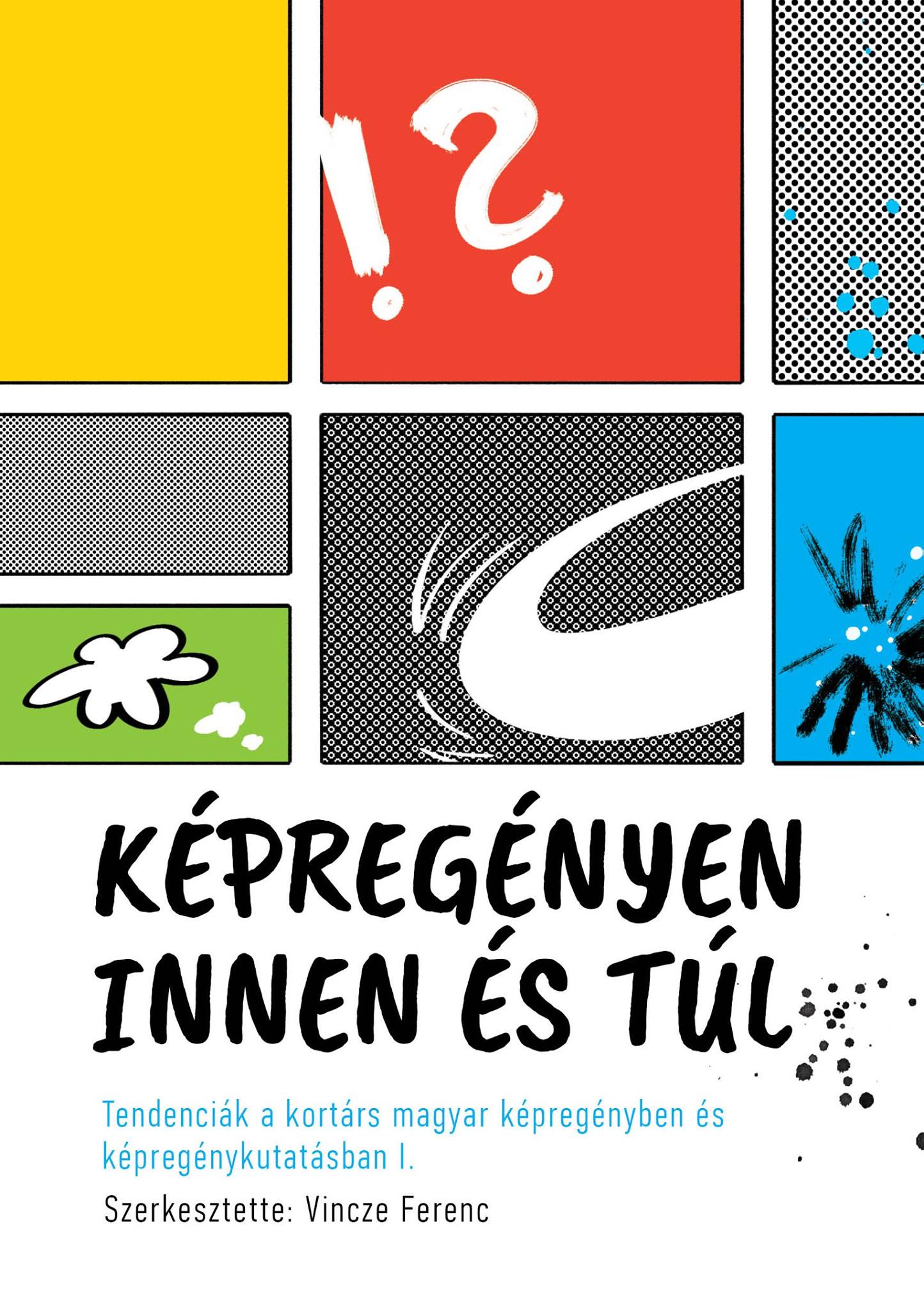
  • Comics Scholarship in Hungary: Edited Volume is Out

    It is difficult to place Hungary on the map of comics, and it is almost impossible to locate our output in the field of comics scholarship.

    As far as comics artists are concerned, some of them did find their place in Dark Horse’s or DC’s outsourced projects as pencillers or inkers, but in general Hungarian comics are not translated into English.
    As far as comics scholarship and the academic research of the medium is concerned, it turns out that a lot is done at various universities, mainly at departments of “Media and Communication.” Here, some courses are offered, but there is no systematic program.

    Last year’s conference, organized by Ferenc Vincze was a big breakthrough in comics scholarship: it was the first time that some of the researchers who work in isolation could meet and exchange ideas. We have come from a multitude of backgrounds: I have a background in English and American comics and literature, others come from French studies, galleries, media studies, popular culture studies (especially music).

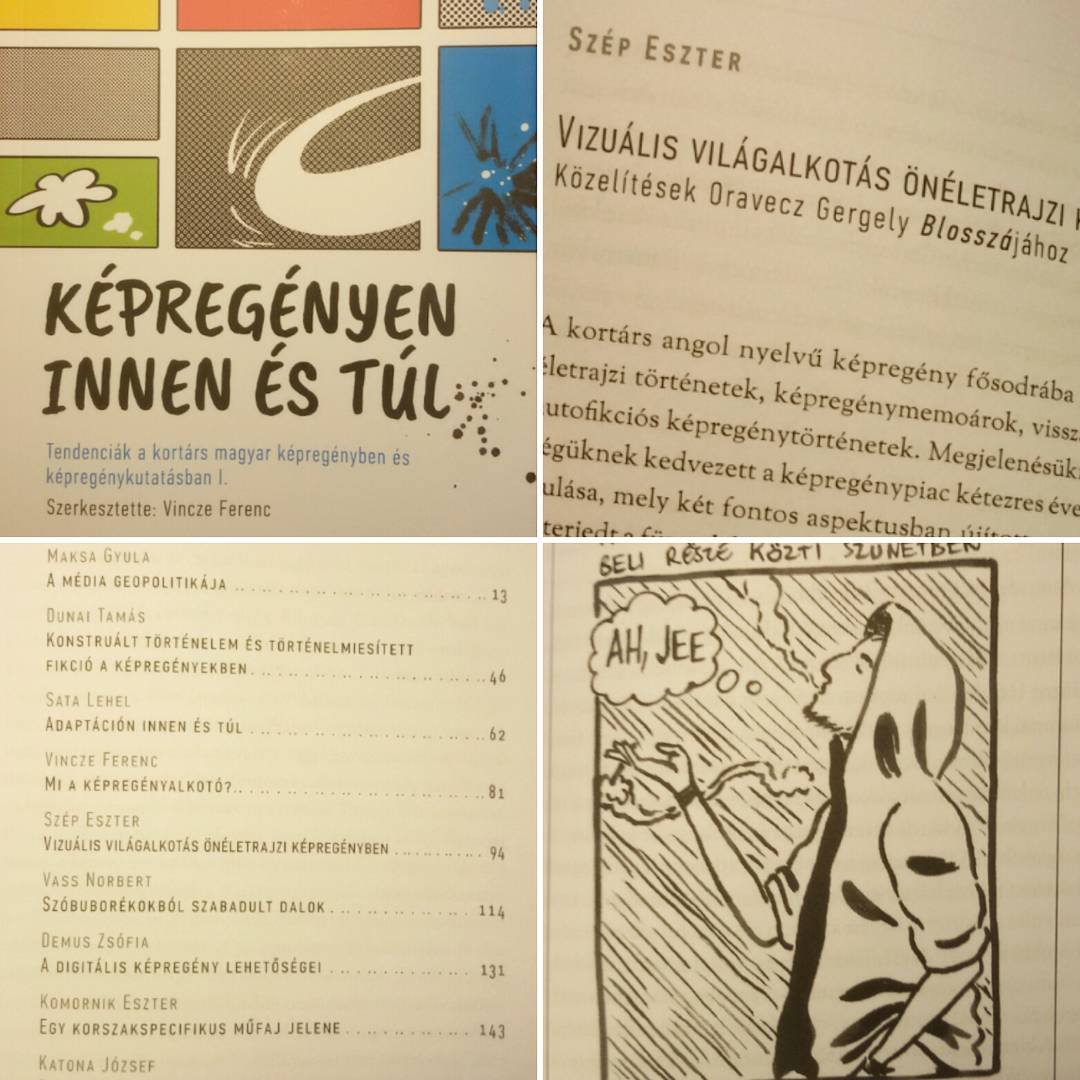
    The volume based on this conference is the first collection of comics scholarship in Hungary. I can’t wait to read it!
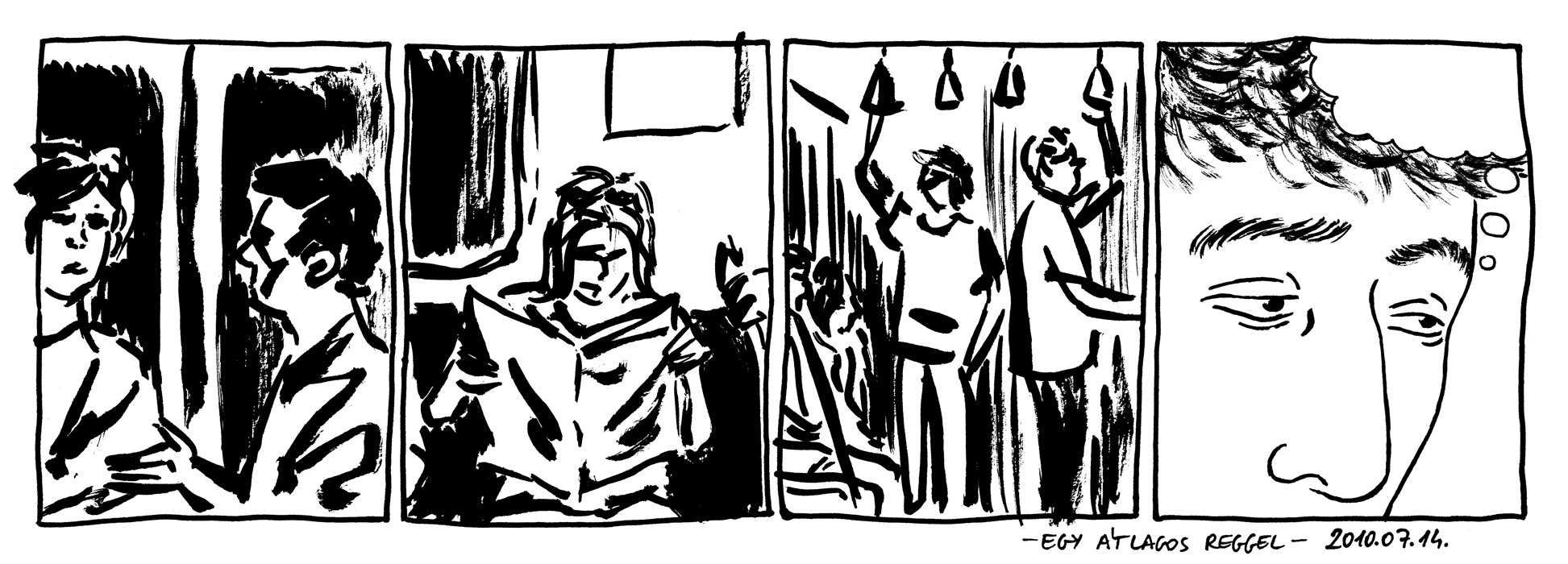
    I contributed with an article on Gergely Oravecz’s Blossza. This is an amazing strip series: for 100 days, Gergely was drawing a strip a day about his life. In the first part of the article I show some instances of ironic authentication (Charles Hatfield term) at work in Blossza, so we can say that I am not saying anything radically new about comics diaries, but the term has not been used in Hungarian, and I thought it is utterly important for Hungarian readers to know about it and to be able to approach non-fiction comics through the simultaneous filters of irony and authenticity.  I also emphasize instances when the daily rhythm of the diary project is ironically undermined within the strips themselves.

    In the second part of the article, and I really enjoyed writing this part, as it is close to my dissertation, I show ways in which the quality of the line contributes to the meaning of the strip. I show one such wordless strip at the end of this blog entry.

    If you speak Hungarian, you might find this collection of essays interesting.
     

    szépirodalmi figyelő

    szépirodalmi figyelő címlap

    3 ábra.jpg

  • In the window

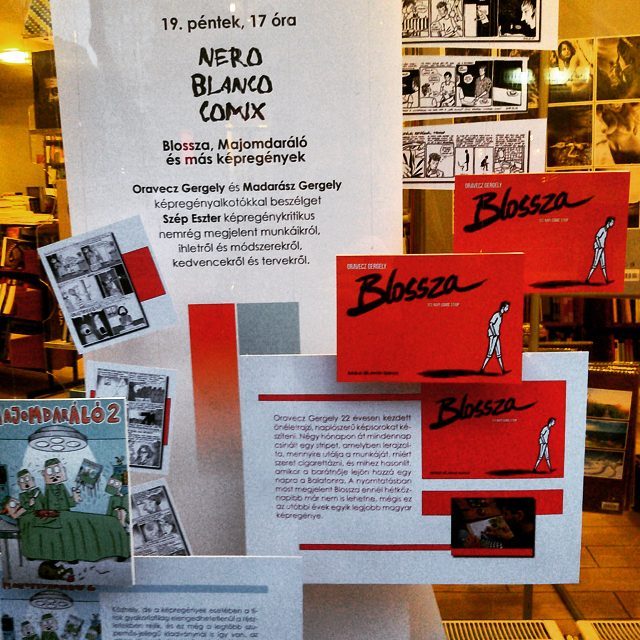
    Wow, our event, which is the first comic-related event in the prestigious Írók Boltja, is featured in the window. It is such an honour!

    írók boltja kirakat