Get updates about news and blog posts.

Year: 2019

  • Animals and other beasts in fantasy

    I am really happy to share that I will be one of the participants of ViTa.

    What is ViTa?
    ViTa is a day devoted to talking about all things science fiction, fantasy, weird, horror, and gaming. The acronym comes from “Meeting of Worlds” (Világok Találkozása) in Hungarian. This is now the third year that we have ViTa. I have enjoyed the first two as a member of the audience, and will be a participant this year on 30 Nov in Bem cinema, Budapest.

    Body and Fantasy
    is the title of the roundtable I am participating it. We will start off by discussing a fantasy novel published this year, Irha és bőr / Fir and Skin by Anita Moskát. This is a really sensitive, smart, and also brutal novel in which animals turn into partly human-partly animal creatures. It is cruel and clever, and I especially love the poetic language that is rich in biological metaphors. It is a novel that would really deserve to be made available for the global market. I am sure that many interesting topics will be addressed.

    I have written about Irha és bőr in Hungarian on my blog here. I have also flirted with animal studies when I was approaching Julian Barnes’ fiction. The chapter I wrote is here (the cover of the volume looks really amateurish, but the essays in it are really cool).

  • Lines, Erasure, Affect: Reading Dominique Goblet — Comics Forum, Leeds, 7-8 Nov 2019

    Here is the abstract of the presentation I am going to give at the Comics and Art and Design conference of the Comics Forum in Leeds, 7-8 November 2019. Cannot wait! This conference is always so inspiring.

    The starting point of my investigation is that comics is a drawn medium, and that this fact has intriguing consequences on how comics narratives work, how they are made, and how they are interpreted. Though there is a growing number of studies of drawing coming from comics scholarship (e.g. Gardner, Baetens, Grennan), in my presentation I apply theories of drawing coming from art history to the study of comics. Obviously, there is no direct correspondence, but I believe questions asked by art historians facilitate creative and fruitful rethinkings of the significance of drawing in comics. Focusing on drawing directs attention to comics as a process and not as a product, as well as to the transmissive nature[1] of reading comics and engagement with them.

    I will primarily rely on Norman Bryson’s “A Walk for a Walk’s Sake” (2003) and Karen Kurczynski’s “Drawing is the New Painting” (2014), and I will provide readings Dominique Goblet’s Pretending is Lying (2007) inspired by Bryson’s and Kurczynski’s insight. I will examine associations of rawness and immediacy in Goblet’s comics, and I will contrast these to the drawn photographs she also includes in her narrative. Techniques of erasure are present in both Goblet’s “raw” and “photographic” images, while erasure is a central topic of the graphic memoir itself. I will also argue that Pretending is Lying can be seen as a work in the state of becoming, one that is understood not simply by our cognitive capacities, but by the special ways our bodies understand lines.


    [1] Jill Bennett described art as transmissive in Empathic Vision (2005).

  • Introducing the International Comics Festival at Budapest

    I’m going to briefly talk about the International Comics Festival of Budapest at PesText, a festival celebrating literature in translation.

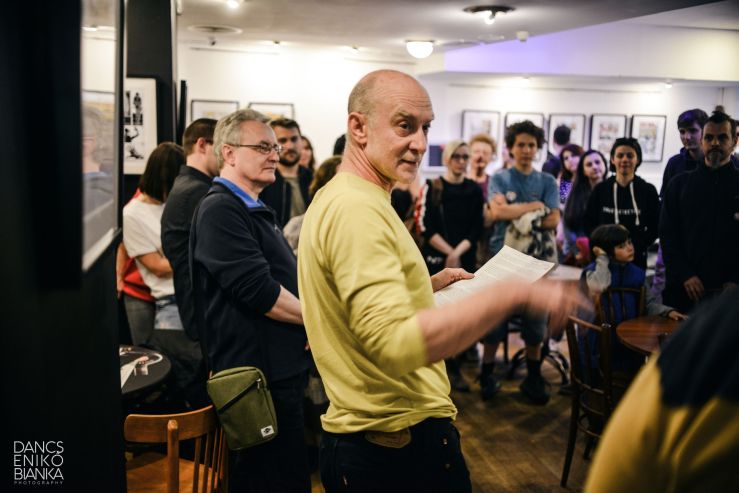
    I have been organizing this festival for at least 5 years (though I’m not sure), and I have been main organizer in the past 2 years. This year, in order to celebrate the 15th festival, I made the event a 5-day affair. Though I will only have a couple of minutes to talk about this lovechild (honestly: each organizer is in love with comics), it has been so much fun assembling these slides and going over the pictures (90% made by Enikő Bianka Dancs), that I have decided to share it.

    So this is our comics festival!

    Follow this link for slides.

  • The Geometry of Interdimensional Travel: Trips to Alien Lands in Jesse Jacobs’ Comics – Abstract for Comics and Travel conf @Oxford

    Moving Images: Comics and Travel (conference)
    5 July 2019
    Oxford Comics Network
    University of Oxford

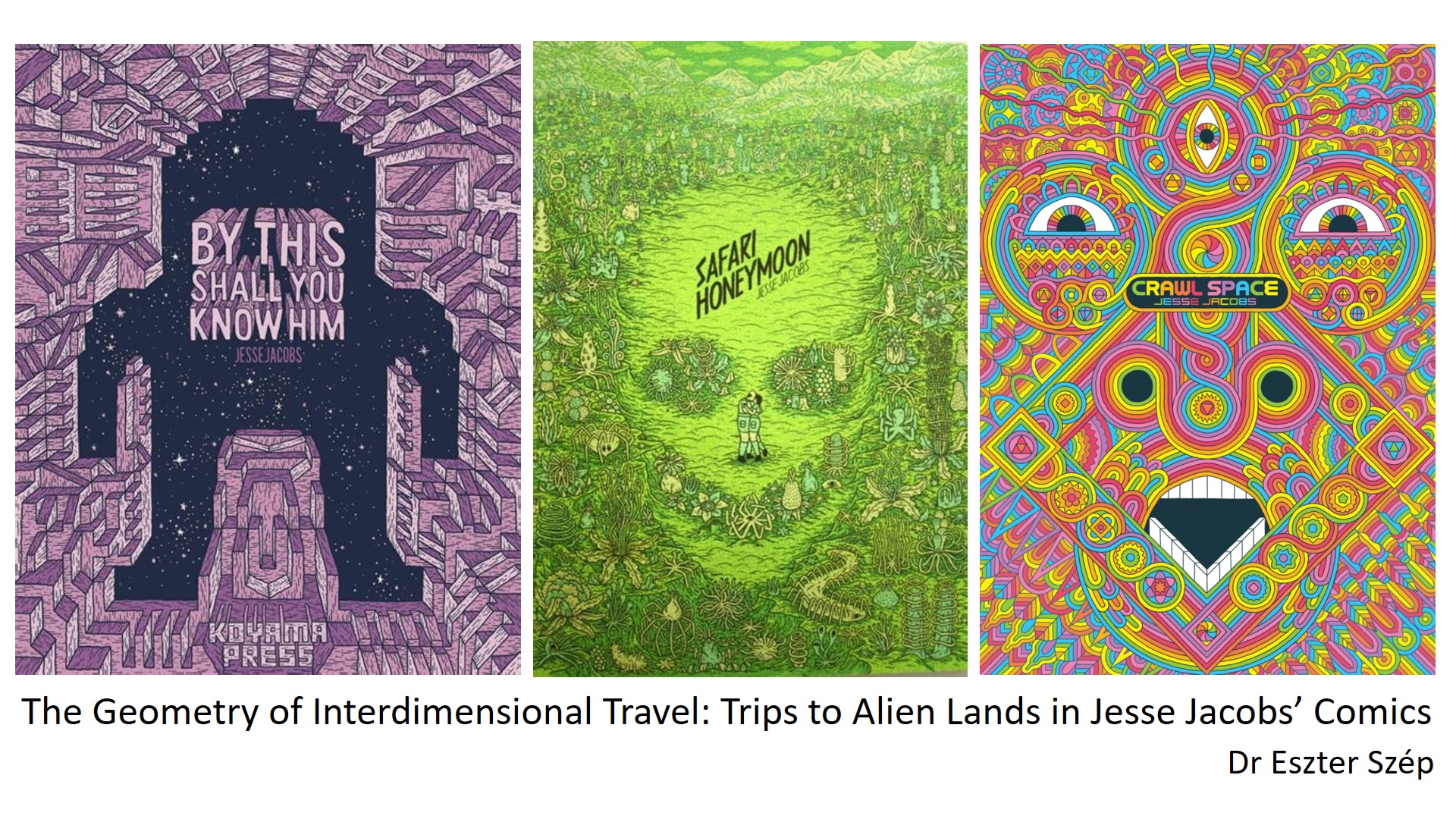
    Traveling to other dimensions, mapping alien lands, and exploring the unknown both within the the mind and in one’s (new) environment are common topics of SF comics, yet in Jesse Jacobs’ comics these topics are handled in very different ways. In By This Shall You Know Him (2012), Safari Honeymoon (2014), and Crawl Space (2017), neither space nor creatures are static, they are constantly in a state of becoming. Their morphing is paradoxically simultaneously organic and mechanical, it is actual and hallucinatory.

    I argue in my paper that the never-ending morphing of biological and constructed forms is just as important in exploring the motif of travel as is an actual narratable and verbally constructed story (of gods practicing creation in By This, of a couple exploring a jungle in Safari, and of a new dimension in one’s washing machine in Crawl). I use close reading to analyze the organic changes of alien life forms’ bodies and alien dimensions, and I show that these transformations are guided by the changes of panel design and by the geometry of the page, and not simply by a plotline.

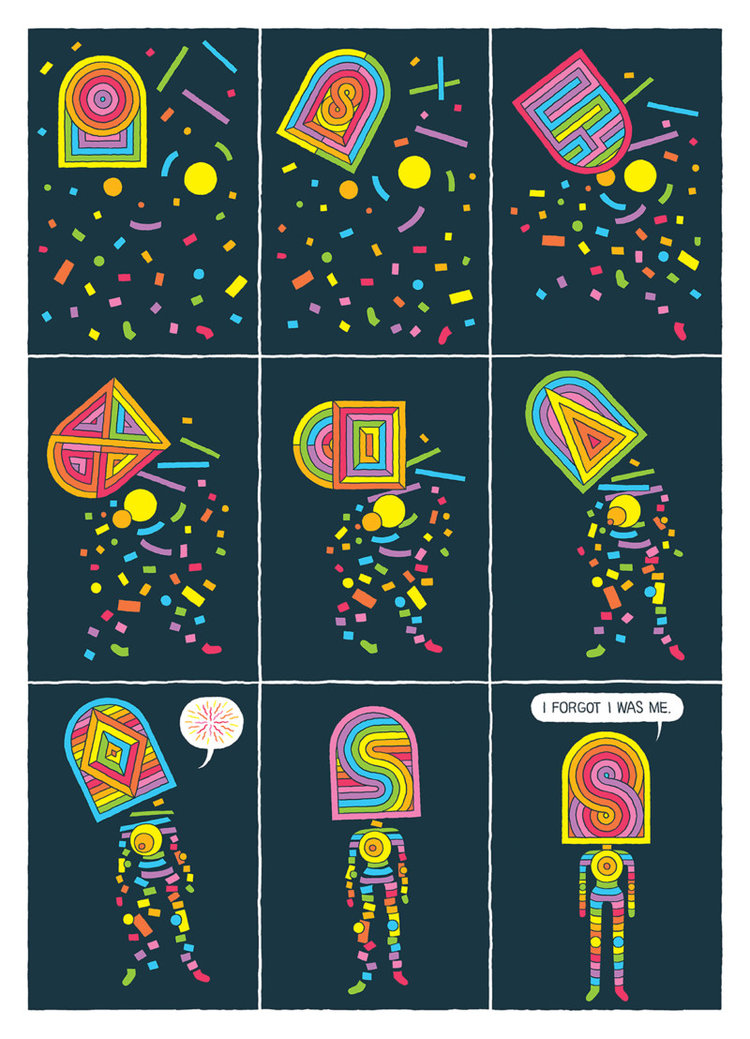
    In Safari Honeymoon and Crawl Space, travelling does not simply happen in space or between dimensions, it also takes place within different forms of creatures who are constantly in transition. Jacobs’ amazing visual logic uses repetition, sequencing, isolation, morphing, as well as playing with representing multidimensional spaces and reinterpreting what makes a figure a figure. In his most recent work, Crawl Space, colour is added to this experimental visuality, by which Jacobs does not simply represent the journey or psychedelic trip of the characters, but invites readers to think of comics narratives and narration in new, not easily verbalizible ways.

    the first slide of my presentation
  • Encapsulations: Critical Comics Studies – Editorial Board

    University of Nebraska Press has launched its comics studies series with a long-needed focus: “By looking at understudied and overlooked texts, artists, and publishers, Encapsulations facilitates a move away from the same “big” and oft-examined texts. Instead the series uses more diverse case studies to explore new and existing critical theories in tune with an interdisciplinary, intersectional, and global approach to comics scholarship.”

    I am so happy, honored, and enthusiastic that I can be on the editorial board of this series. Send us manuscripts! More info at the homepage of the press.

    Editorial Board

    Michelle Ann Abate
    The Ohio State University

    José Alaniz
    University of Washington

    Frederick Luis Aldama
    The Ohio State University

    Julian Chambliss
    Michigan State University

    Margaret Galvan
    University of Florida

    A. David Lewis
    Massachusetts College of Pharmacy and Health Science

    Jean-Matthieu Méon
    University of Lorraine, France

    Ann Miller
    University of Leicester, United Kingdom

    Elizabeth Nijdam
    University of British Columbia, Canada

    Barbara Postema
    Massey University Manawatū, New Zealand

    Eszter Szép
    Independent Researcher, Hungary

    Carol Tilley
    University of Illinois at Urbana-Champaign

  • Performativity Conference – I’ll be a Respondent

    On 24-25 May I’ll be one of the respondents at the Performativity Conference 2019, an event organized by the Narratives of Culture and Identity Research Group. Though I am a founding member of this group, I could not take part in organizing this event because of my really intensive work on the 15th International Comics Festival at Budapest.

    However, I am really happy to be able to take part as a respondent, and I cannot wait to hear the inspiring papers. Book of abstracts and schedule are available here.

  • An Interview with Me

    I got interviewed by one of the coolest Hungarian websites devoted to SF, Próza Nostra, on the occasion that I was the main organizer of the 15th International Comics Festival of Budapest. Contrary to the past 14 years, when the festival meant basically a single Sunday packed with programmes, this year I made the festival last for 5 days. On the first four evenings there were cultural programs (two exhibitions and two roundtables), and the fifth day was a big fair + workshops + talks / interviews.

    I am really happy that Próza Nostra interviewed me because it is a rare acknowledgement of my work as organizer, and because the questions were really clever and instead of asking me to recommend programs I was asked to reflect on tendencies in the Hungarian comics scene + broader bookish culture. Thank you!

    http://www.prozanostra.com/iras/jo-csillagegyuttallast-szeretnenk-kihasznalni-interju-szep-eszterrel-budapesti-nemzetkoz

  • 15th International Comics Festival Budapest

    3/1
    I have survived the busiest couple of months of my life. I have been the main organizer of the 5-day (!) 15th International Comics Festival, Budapest. I have also become the chair of the Ninth Art Foundation, a foundation working on promoting comics culture in Hungary.
    Here is our festival poster, drawn by Miklós Felvidéki, and below are some details:

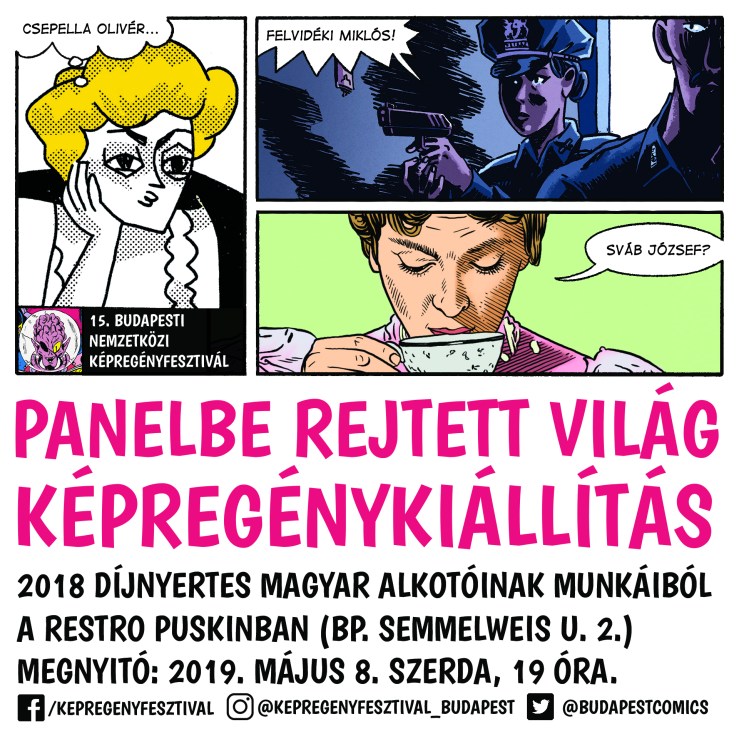
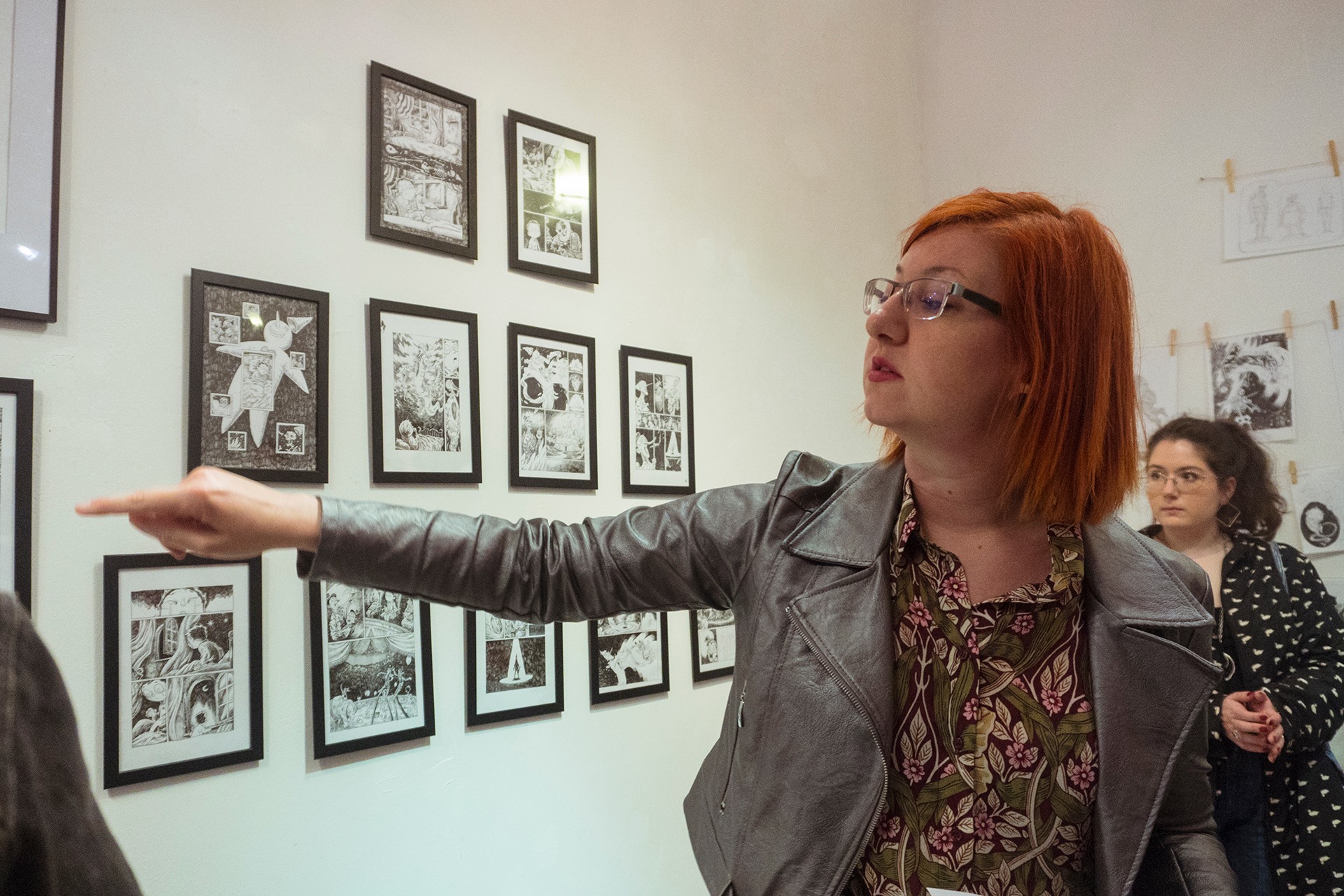
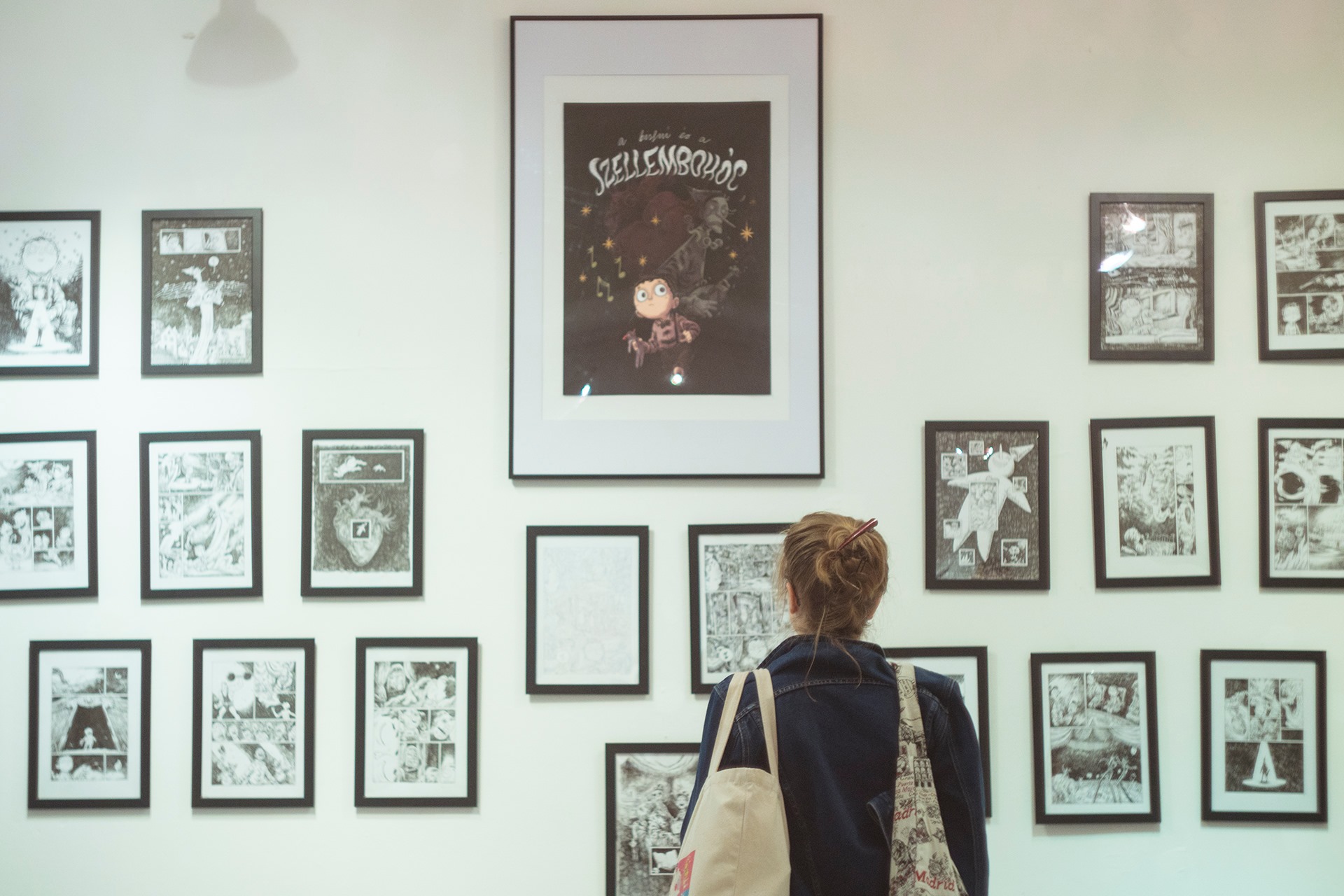
    3/2 As part of the Comics Festival, I curated an exhibition based on the works of three amazing artists who won comics prices last year, Miklós Felvidéki, Olivér Csepella and József Sváb. I gave it the broad title of “A World Hidden in Panels” and I hope that many people who visit Restro Puskin will like the pictures on the walls. The exhibition was opened by András Beck on 10 May 2019.

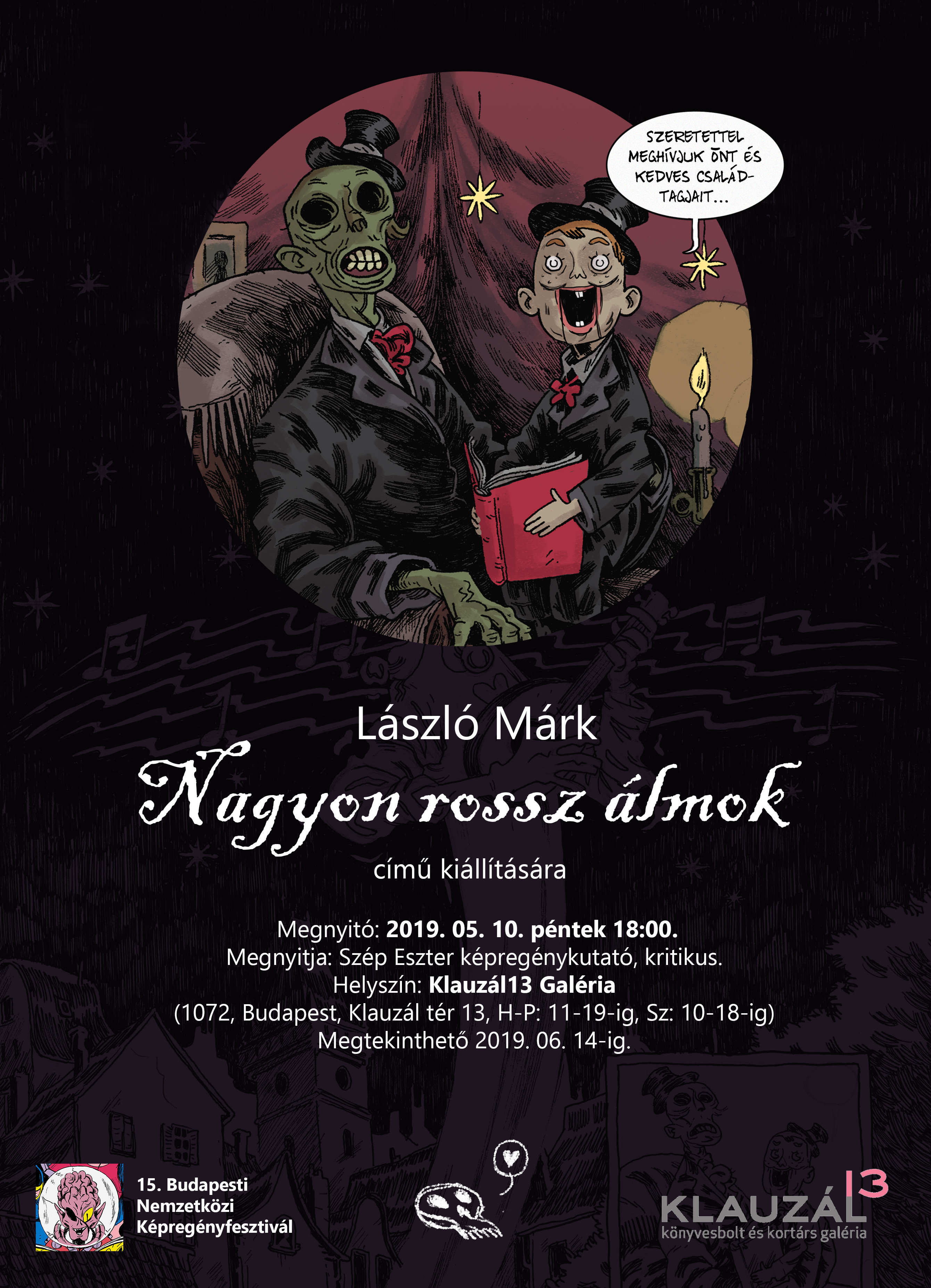
    3/3 On the third day of the comics festival, I had the honor of opening Márk László’s comics exhibition, Very Bad Dreams. I just love Márk’s works.