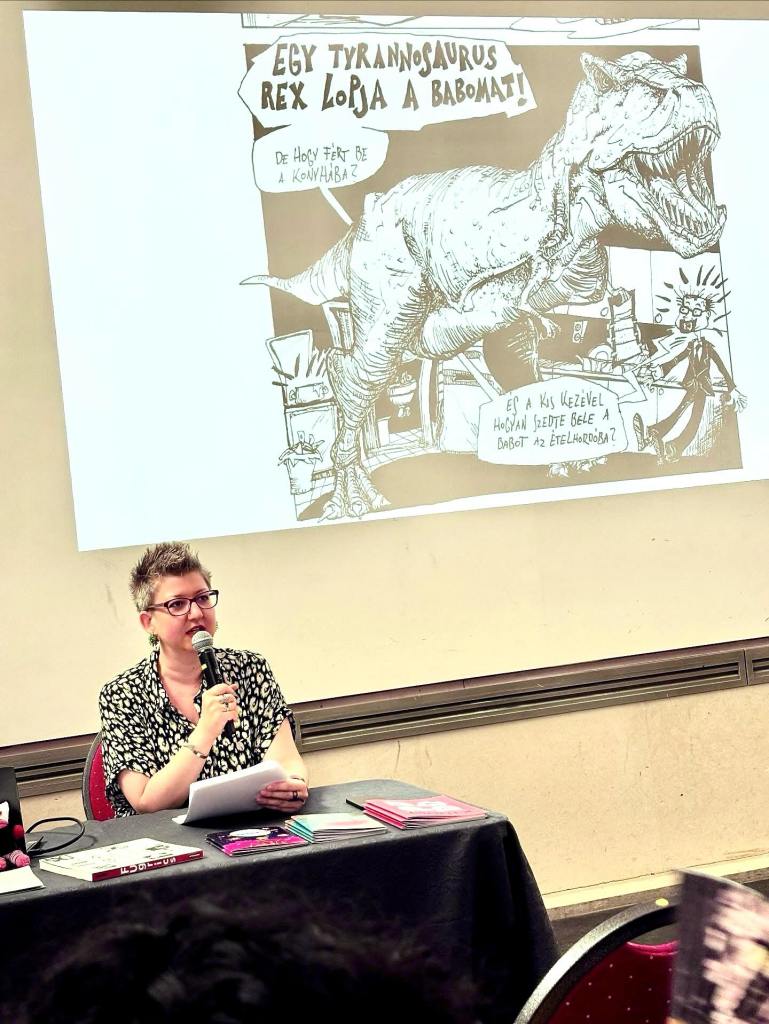
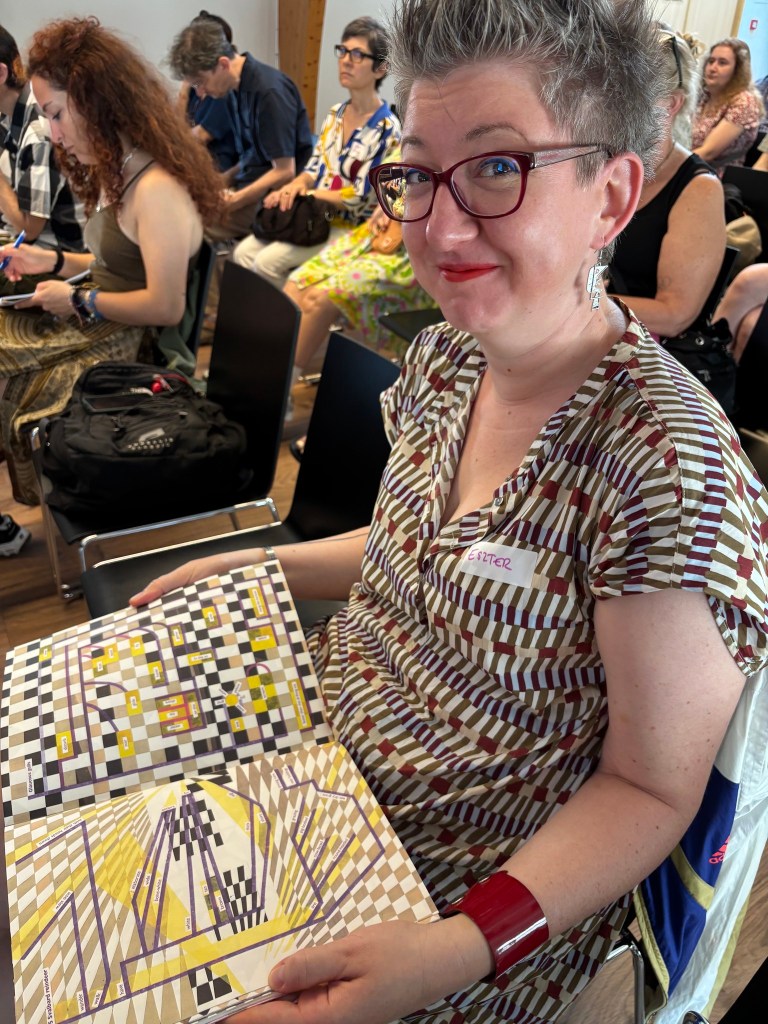
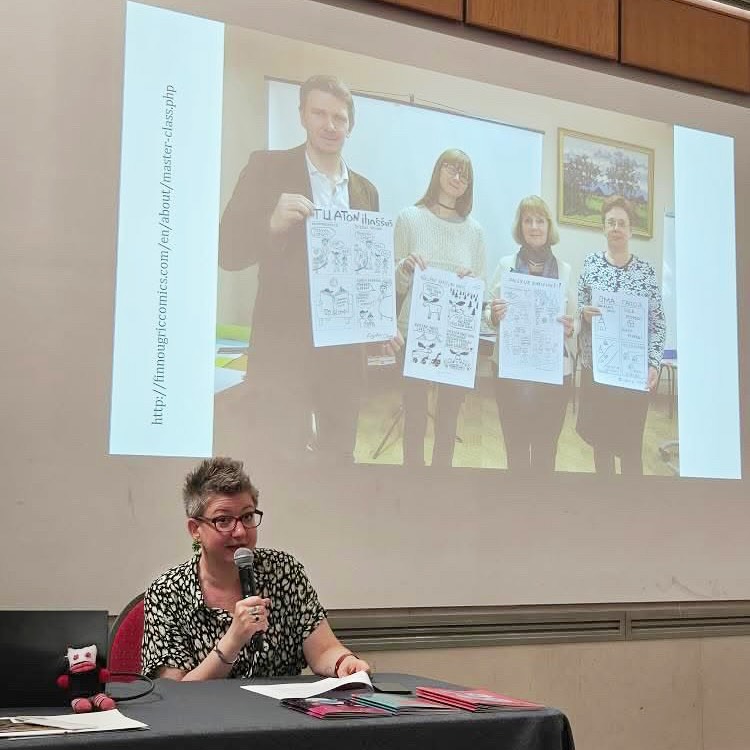
One of the greatest honors of my life has been to keynote at the joint conference of IGNCC and IBDS (International Graphic Novels and Comics Conference, International Bande Dessinée Society).
Curious about comics.
Get updates about news and blog posts.
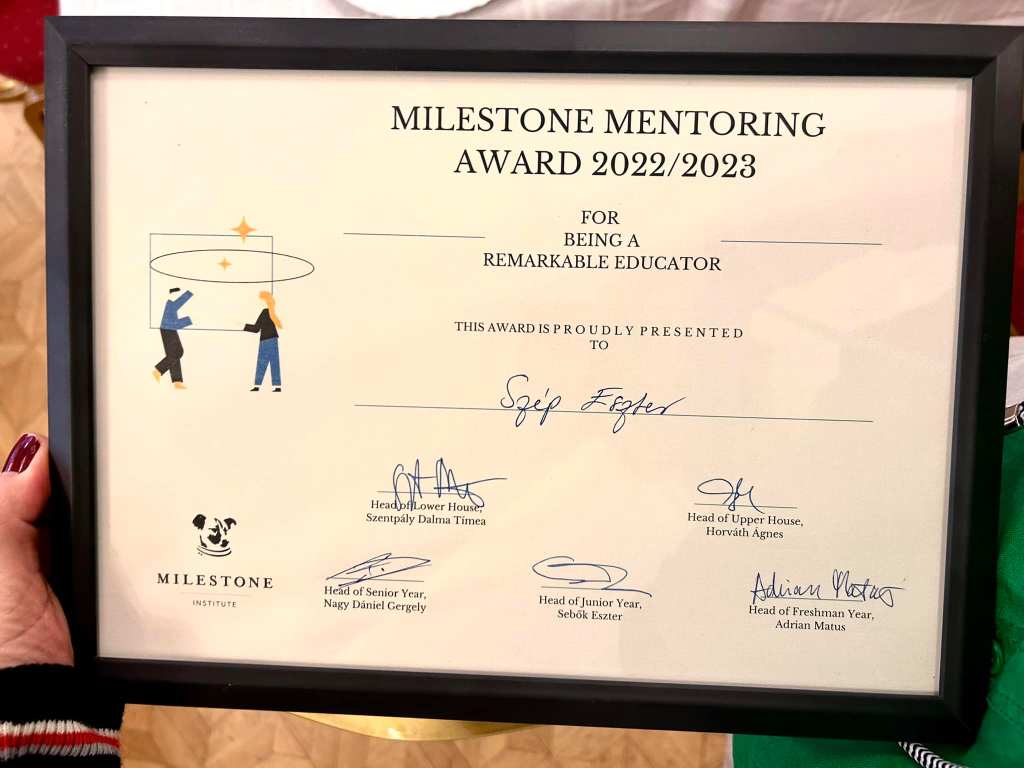
Proud to share that I got an award for being a remarkable educator! This was the first time Milestone Institute handed out awards, and I’m honored.
That said, I also would like to say that I’m absolutely open to teaching at your institution, too!

This past year I’ve been part of the History in Comics research project, initiated by Eli Woock at Palacky University, Olomouc, Czech Republic. We have had meetings, presentations, and discussion every second month, and we have had a great time. This research group meant that I could get connected to other comics scholars and I could think about questions that are not part of my usual what the fuck is going on in Hungary? routine. I have learnt a lot from the project participants, who are:
(more…)This is the abstract of the paper that I will present next week in Dún Laughaire at the International Graphic Novels and Comics Conference. The theme of the conference is “Comics and Conscience: Ethics, Morality, and Great Responsibility”
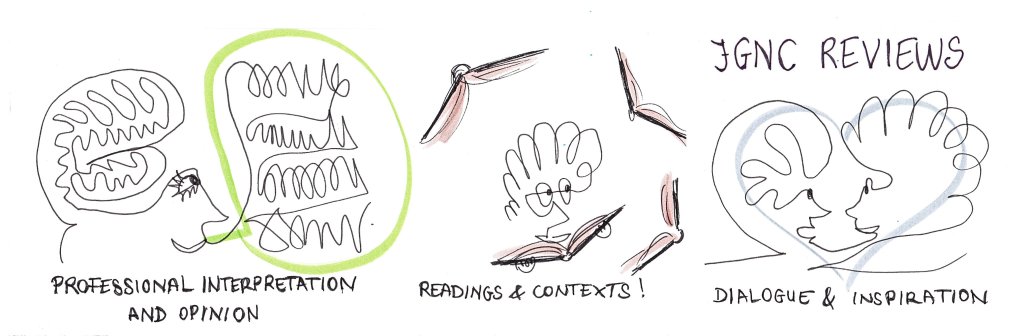
I am happy to share that I am the new book reviews editor of the Journal of Graphic Novels and Comics. I am really excited about this job and cannot wait to read and publish tons (!) of interesting reviews of books on comics.
I have been a secret book reviews enthusiast in the past 10 years or so, and I think many of you agree with me that there is a lot going on in comics research now. The field is becoming more international and more global, newer and newer chapters are explored in the history of the medium, and there is a great number of monographs and collections that offer syntheses of and guides to this expanding field.
If you are interested in reviewing books for the Journal of Graphic Novels and Comics, please contact me (eszterszep AT gmail DOT com).
Finally, here is a comic I made about our book review philosophy. The strip was deeply influenced by Hungarian critic József Lapis’s several funny essays and self-reflections on reviews and the roles of reviewers.
Before the actual video, I also would like to share sketchnotes made by fantastic artist-researchers during the talk – thank you Muna, John, and Paul!
This sketchnote is by Dr Muna Al-Jawad, aka The Old Person Whisperer, who was the official sketchnoter of our panel:
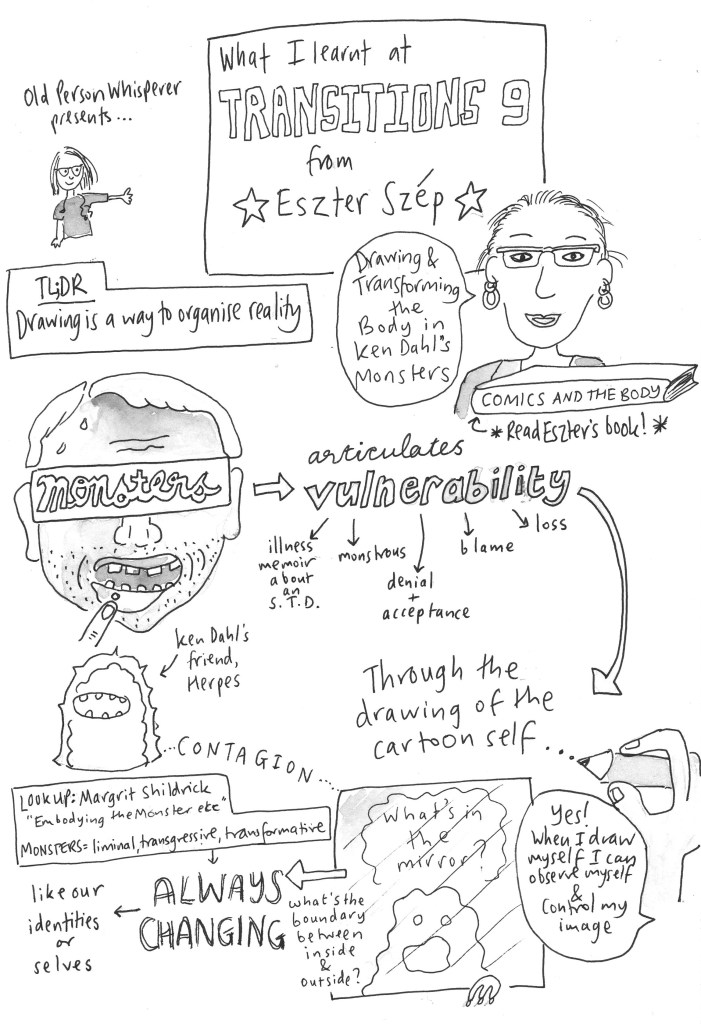
Dr John Miers also made sketchnotes:

And Dr Paul Fisher Davies mentions this talk in his sketchnote on our panel:

And now the video:
PS: This talk is based on Chapter 2 of my book, Comics and the Body: Drawing, Reading, and Vulnerability.
This is my abstract for Transitions 9: New Directions in Comics Studies 2021 (Transitions was canceled in 2020 but will take place online this year – 2021. There will be live sketchnoting during the panels! I’ll speak on 8 April about a chapter of my book that I’ve not talked about at any conferences before. – Check out the full program here.)
Ken Dahl, in his graphic narrative on living with the sexually transmitted disease of herpes, represents his avatar and personifies the illness of the avatar with cunning visual inventiveness. Dahl’s dynamic visualizations freely transform the bodies of the characters, which, I argue, emphasize drawing as a performance and as a way to think about the many controversial topics of this comic (eg. relationships, responsibility, sex, guilt, prejudice). Bodies are constantly created and recreated in acts of drawing, which offer creative ways for Dahl (pen name for Gabby Schulz) not only to find visual expressions of complex feelings and experiences regarding illness but also to testify to the endlessness of pictorial embodiment (El Refaie) itself.
The metamorphoses keep the avatar in what Margrit Shildrick called the “condition of constant becoming” (1): in a particularly vulnerable state where the repeated acts of transforming the avatar’s body are used to ask visual questions about the body. Shildrick does not talk about comics, her book, Embodying the Monster: Encounters with the Vulnerable Self, studies monstrosity and vulnerability in various cultural products: my paper applies Shildrick’s questions to Dahl’s take on normative and the monstrous bodies. I show with examples and by close reading that the morphing of the avatar’s body is expressive of vulnerability on two levels: on the level of the narrative where the illness is transforming the body, and on the level of representation, where it is the lines that govern the transformations of the body.
Content warning: Dahl uses a cartoony style to show a sexually transmitted disease, but occasionally he switches to a very realistic, photoreferential way of drawing, which can be disturbing. Actually these changes are extremely interesting.
Some personal notes:
– this conference presentation is based on chapter 2 of my book, Comics and the Body, which has, I am so happy to say, entered production phase!
– I cannot wait to meet the fantastic members of the comics community in the UK and to talk to keynote speaker Nick Sousanis again! I am 100% sure this will be a most inspiring conference!

I am looking forward to the 2021 conference of the Comics Studies Society. The topic this year is Re/Building Community. Here is my abstract.
The Wall: Growing Up Behind the Iron Curtain is Petr Sís’s multiple award-winning graphic memoir about his childhood in what is now the Czech Republic and what used to be Czechoslovakia. In my presentation I argue that contrasting public space – a space of politics, social pressure, and danger – and private space – hidden and small places of creative self-expression – is a central topic of the memoir. Sís’s narrative successfully mobilizes page design, that is, the distribution of drawn elements in space, in order to illustrate and demonstrate the spatial tensions of life under Communism. I will study the visual metaphors that playfully represent the persistent revolt of a community.
I show that the narrative can be interpreted as a creative protest against intellectual, political, and physical walls and borders: on each page, Sís reinterprets the revolt against the wall as a symbol and as a physical presence. In The Wall, the creative individual cannot be limited by walls imposed upon it and the walls isolating the individual from the community. Art is shown as self-expression and as a link between people, but also as a dangerous activity threatening the artists themselves in a system of surveillance. Art – be it drawing on a canvas or on a wall or playing in a band – is shown in the pictures as indispensable to bringing the wall down. At the same time, the textual layer drags these almost idealistic scenarios down to earth by providing details about the political and cultural contexts of Communism.

The day has come when I can proudly share with you that my book has been released! I really enjoyed writing it and discussing my ideas at conferences. I just love this topic. I am really happy now!
I am so grateful for the support of my husband and friends and for EAAS for their postgrad research grant to the Billy Ireland Cartoon Library. Without them and it I really could not have written this book.
In this book I examine the role of the body in drawing and reading comics within a single framework. In each chapter I approach a different aspect of embodied interaction with comics (drawing lines; drawing bodies; drawing style; reading bodies and abstract lines; interacting with a book object). This is an interdisciplinary book that is equally inspired by art practice, feminist ethics, and materiality studies.
If you are interested, I’d like to recommend two videos for further info: In this video I discuss my research with Frederick Louis Aldama.
And I made this short video to introduce the basic ideas of my book:
Amazing cover art by Amanda Weiss.
 Eszter Szép