Get updates about news and blog posts.

Tag: comics studies

  • Where Do Graphic Novels Come From?

    Contrary to the myths inherited from the 80s and later, the graphic novel was not invented or made popular exclusively by Will Eisner or his manager. In my latest Patreon project I dig into the origins of the graphic novel format and I also explore the origins of the term. A teaser of the project is now available for anyone on my website.

    The project itself is longer than this teaser and is more argumentative. It is based on Dreaming the Graphic Novel by Paul Williams (Rutgers UP, 2020). I absolutely recommend this book. And my Patreon! Have I mentioned my Patreon in this paragraph yet?

    The project on Patreon (ha!) shows that in the 60s and 70s many people had many ideas about how comics should be rethought. Yes, creators, publishers, editors, retailers thought that comics was in need of some change.

    I do not dwell on this moral and financial crisis for long in my Patreon project (check!) , instead, I show the diversity of things people were doing and thinking AT THE SAME TIME. This is a dynamic and exciting age: noone knew that the graphic novel will turn out to be successful. They did not know it would be called graphic novel!

    Why Patreon? I am experimenting with new formats to keep on doing research, thinking, and discussing ideas. As some of you know, I am outside Academia, which gives me a hard time, but I have watched dozens of Neil Gaiman motivational speeches and I am actively looking for alternative ways to share what I know and to learn from you all.

    Distinguished guests, behold the project teaser:

    The argumentation and further details of how people were experimenting with long format comics is available on Patreon, where my previous project is also available: You can also listen to an audio/podcast/thing on Ursula K. Le Guin’s Earthsea cycle. Here is the link: patreon.com/eszterszep

  • The Cover of My Book is Here

    I am totally thrilled and mesmerized. I feel flattered by the care and attention of the editors and designers at the Ohio State University Press, and I am particularly grateful to Amanda Weiss, who drew the cover.

    The cover of my book represents everything that this book is about: first, the vulnerability of bodies, which includes that the onlooker can also experience the vulnerability of his or her body when looking at other bodies. Second, the line: I adore that this cover uses multiple pens and pencils and plays with the qualities of lines used to draw the body. Third: markmaking by hand is actually a thinking process. Fourth, the background invites touch and haptic perception. I am totally in love.

    The book will be out in November 2020.

    “The exuberance of the prose and lovely phrasing beautifully offset the topic, which is exceptionally well-researched as well as being very clearly elaborated. The book was a pleasure to read and has the potential to reshape scholarly engagements with the material and affective dimensions of comics reading processes.” —Kate Polak, author of Ethics in the Gutter: Empathy and Historical Fiction in Comics (OSU Press, 2017)

    “Eszter Szép’s book provides an analysis of the body that is currently undiscussed in the field, not only filling a gap in existing scholarship but also developing a new lens for analysis that highlights the potential for further research and study.” —Harriet Earle, comics scholar and lecturer

    Eszter Szép’s Comics and the Body is the first book to examine the roles of the body in both drawing and reading comics within a single framework. With an explicit emphasis on the ethical dimensions of bodily vulnerability, Szép takes her place at the forefront of scholars examining comics as embodied experiences, pushing this line of inquiry into bold new territory. Focusing on graphic autobiography and reportage, she argues that the bodily performances of creators and readers produce a dialogue that requires both parties to experience and engage with vulnerability, thus presenting a crucial opportunity for ethical encounters between artist and reader. Szép considers visceral representations of bulimia, pregnancy, the effects of STIs, the catastrophic injuries of war, and more in the works of Lynda Barry, Ken Dahl, Katie Green, Miriam Katin, and Joe Sacco. She thus extends comics theory into ethical and psychological territory that finds powerful intersections and resonances with the studies of affect, trauma, gender, and reader response.

  • Lines, Erasure, Affect: Reading Dominique Goblet — Comics Forum, Leeds, 7-8 Nov 2019

    Here is the abstract of the presentation I am going to give at the Comics and Art and Design conference of the Comics Forum in Leeds, 7-8 November 2019. Cannot wait! This conference is always so inspiring.

    The starting point of my investigation is that comics is a drawn medium, and that this fact has intriguing consequences on how comics narratives work, how they are made, and how they are interpreted. Though there is a growing number of studies of drawing coming from comics scholarship (e.g. Gardner, Baetens, Grennan), in my presentation I apply theories of drawing coming from art history to the study of comics. Obviously, there is no direct correspondence, but I believe questions asked by art historians facilitate creative and fruitful rethinkings of the significance of drawing in comics. Focusing on drawing directs attention to comics as a process and not as a product, as well as to the transmissive nature[1] of reading comics and engagement with them.

    I will primarily rely on Norman Bryson’s “A Walk for a Walk’s Sake” (2003) and Karen Kurczynski’s “Drawing is the New Painting” (2014), and I will provide readings Dominique Goblet’s Pretending is Lying (2007) inspired by Bryson’s and Kurczynski’s insight. I will examine associations of rawness and immediacy in Goblet’s comics, and I will contrast these to the drawn photographs she also includes in her narrative. Techniques of erasure are present in both Goblet’s “raw” and “photographic” images, while erasure is a central topic of the graphic memoir itself. I will also argue that Pretending is Lying can be seen as a work in the state of becoming, one that is understood not simply by our cognitive capacities, but by the special ways our bodies understand lines.


    [1] Jill Bennett described art as transmissive in Empathic Vision (2005).

  • Encapsulations: Critical Comics Studies – Editorial Board

    University of Nebraska Press has launched its comics studies series with a long-needed focus: “By looking at understudied and overlooked texts, artists, and publishers, Encapsulations facilitates a move away from the same “big” and oft-examined texts. Instead the series uses more diverse case studies to explore new and existing critical theories in tune with an interdisciplinary, intersectional, and global approach to comics scholarship.”

    I am so happy, honored, and enthusiastic that I can be on the editorial board of this series. Send us manuscripts! More info at the homepage of the press.

    Editorial Board

    Michelle Ann Abate
    The Ohio State University

    José Alaniz
    University of Washington

    Frederick Luis Aldama
    The Ohio State University

    Julian Chambliss
    Michigan State University

    Margaret Galvan
    University of Florida

    A. David Lewis
    Massachusetts College of Pharmacy and Health Science

    Jean-Matthieu Méon
    University of Lorraine, France

    Ann Miller
    University of Leicester, United Kingdom

    Elizabeth Nijdam
    University of British Columbia, Canada

    Barbara Postema
    Massey University Manawatū, New Zealand

    Eszter Szép
    Independent Researcher, Hungary

    Carol Tilley
    University of Illinois at Urbana-Champaign

  • 2018 – My publications

    2018: The year most of my projects bloomed, when I finished my PhD, when I reworked my PhD thesis into a book (added 2 chapters, took one away) (to be published in 2020). In terms of non-academic achievements, I organized (almost alone) the comics festival in May, co-curated a major exhibition on comics in the National Széchényi Library, opened Hungary’s first community comics library. Basically a year when I worked my arse off.

    1.Books I Edited

    Turning The Page. Gendered Identities in Contemporary Literary and Visual Cultures. Ed. Kata Gyuris, Eszter Szép and Dóra Vecsernyés. L’Harmattan, Budapest. Download link.

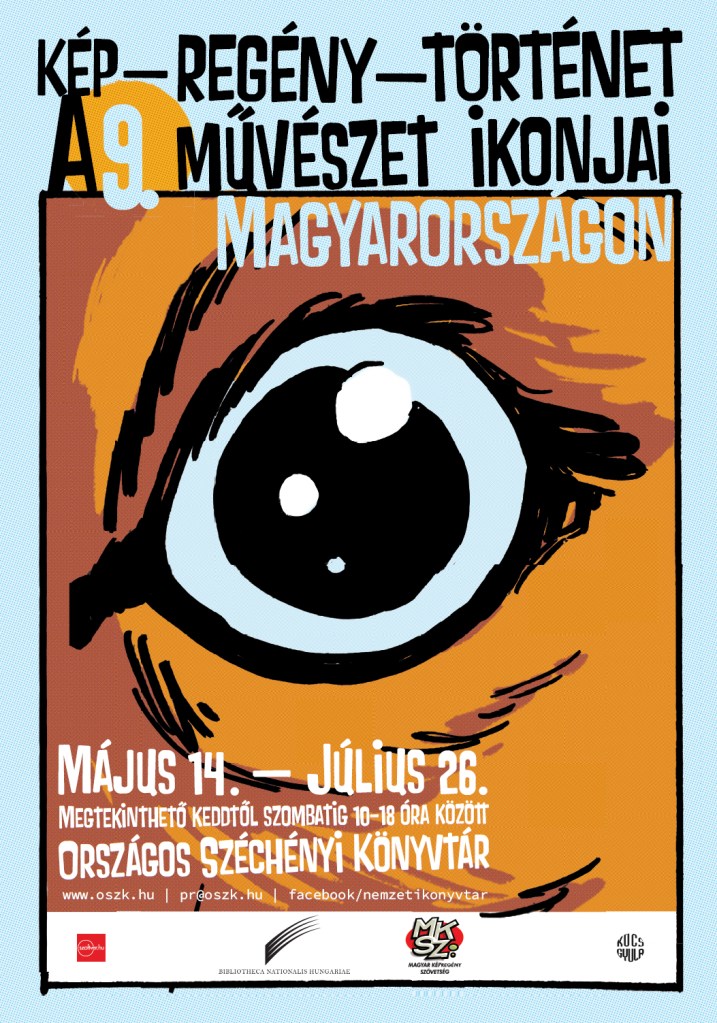
    2018 [Exhibition catalog, bilingual] Kép-regény-történet: A kilencedik művészet ikonjai Magyarországon. Ed. Eszter Szép. Országos Széchényi Könyvtár, Budapest, 2018.

    2. Articles and Reviews in English

    “Kids’n’Comics: An Equation with Variables to Rearrange.” Kids’n’Comics Exhibition Catalog, D17 Gallery, 2018. pp. 10-12.

    “A review of Simon Grennan: A Theory of Narrative Drawing. Palgrave Macmillan, 2017. 277 pp, 96,29 €.” INKS – The Journal of the Comics Studies Society, Summer 2018, pp. 261-264.

    “A review of The Materiality of Writing. A Trace-Making Perspective. Edited by Christian Mosbæk Johaannessen and Theo van Leeuwen.” Image & Narrative. online.

    “A review of Unflattening, Nick Sousanis (2015), Cambridge: Harvard University Press, 208 pp., ISBN: 9780674744431, p/bk, £18.95.” Studies in Comics 8.2. 262-264.

    “Ben Katchor: A képregény túllép a próza kifejezési lehetőségein” [The title is in Hungarian, but the interview is in English] Ben Katchor: Conversations. Ed. Ian Gordon. University Press of Mississippi, 2018, pp. 152-154.

    3. Articles and Reviews in Hungarian

    “Metacomics: Poetics of Self-Reflection in Comics” [Metaképregény: Az önreflexivitás képregényes poétikái”][This is the Hungarian version of my article in Studies in Comics featuring examples taken from H. comics.]Intézményesülés, elbeszélések, médiumok: Tendenciák a kortárs magyar képregényben és képregénykutatásban II. ed. Ferenc Vincze, Szépirodalmi Figyelő Alapítvány, 2018, pp. 95-119. 

    “Kölykök + képregények: egy régóta rendezésre váró egyenlet.” Kölykök + képregények kiállításkatalógus, D17 Galéria, 2018, pp. 7-9.

    “Setting a Limit on Fantasy.” [in Hungarian. Original title: “A fantáziának határt szabni.”] Szépirodalmi Figyelő no. 3, 2018, pp. 100-104.

    “Comics on the Power of Poetry: Nyugat + Zombik by Olivér Csepella.” [in Hungarian. Original title: “Képregény a költészet hatalmáról: Csepella Olivér: Nyugat + zombik.”] Alföld, vol. 69, no. 4, 2018, pp. 96-101.

    “Comics Around the Globe Today: A Review of Gyula Maksa’s Comics in Intercultural Currents,” [ “A képregényről globálisan, ma: Maksa Gyula Képregények kultúraközi áramlatokban című könyvéről.”],
    Médiakutató vol. 19, no. 1, 2018, pp. 97-99.

    4. Non-Academic Writings on Comics in Hungarian

    “Történetváz a fiókból – Michael Crichton: Dragon Teeth.kilencedik.hu/tortenetvaz-a-fiokbol-michael-crichton-dragon-teeth/

    “Brit istenek – Gillen & McKelvie: The Wicked + The Divinekilencedik.hu/brit-istenek-gillan-mckelvie-the-wicked-the-divine/

    “Hogyan került a szövegbuborék a képregénybe?” kilencedik.hu/szovegbuborek/

    “A magyar képregény 2017-ben, kilenc pontban.” kilencedik.hu/a-magyar-kepregeny-2017-ben-kilenc-pontban/

    “Mellékszereplők reflektorfényben: Paper Girls 1-4.” kilencedik.hu/paper-girls/

    “Jessica Jones és a sötét.” kilencedik.hu/jessica-jones-es-a-sotet/

    5. Extras

    • I co-curated a major comics exhibition
    • I co-founded the first comics library in Hungary

  • “Postmortemistical” Look: The Memory of Things and the Traces of Personhood in Roz Chast and Ben Katchor — Abstract

    Here is the abstract of the paper I’m going to present at the Ninth International Graphic Novel and Comics Conference, Retro! Time, Memory, Nostalgia, @Bournemouth University, UK, 27-29 June 2018
    “Postmortemistical” Look: The Memory of Things and the Traces of Personhood in Roz Chast and Ben Katchor

    The paper investigates the ways personal relationships and memories are organized around objects and things, and how these are rearranged once the object/thing is no longer possessed by a person (due to death in Chast’s memoir, and due to abandonment in Katchor’s strips). Objects are represented in both examined comics, that is, in Roz Chast’s memoir about her last years with her parents and their deaths, Can’t We Talk About Something More Pleasant? (Bloomsbury, 2014) and Ben Katchor’s collection of strips, Julius Knipl Real Estate Photographer: Stories (Little, Brown and Company 1996), as sites of a conflict between personal memory and an apersonal and atemporal existence.

    In the paper I argue that in both Chast’s and Katchor’s comics, things and objects (cf. thing theory) exist in a limbo, and are used to investigate personality and personhood in scenarios of absence. Can’t We Talk About Something More Pleasant? introduces the idea that objects, such as hairbrushes, bankbooks, photographs, and forgotten everyday objects play important and multiple roles in facing the frailty of memory, dementia and death. Things, for example old color pencils found in a drawer, represent both the past and the present, they simultaneously stand for deep personal connections and fond, and are accumulated junk the existence of which indicates future problems (can it be touched? can it be thrown away?). Likewise, Ben Katchor’s Julius Knipl Real Estate Photographer asks questions about the meaning of objects/things left behind: they exist simultaneously in a vacuum of interpretation and in the actuality of physical space. The things and objects are left behind, forgotten, stored, reserved, measured, bulked and sold, but most importantly, they are looked at and represented. The paper investigates the “postmortemistical” look (Chast) that frames these objects for the reader of the comics.

    The paper utilizes questions raised by thing theory (Bill Brown and Jane Bennett), and it also builds on the materiality of living and the idea that even everyday and banal places preserve memory (reflecting on Pierre Nora’s concept). As far as methodology is concerned, I use close reading and compare recurring tropes.

    knipl


  • Teaching and Syllabi 2018

    This term I’m really lucky and really busy: I can teach two very interesting courses at two universities here at Budapest.  I have been responsible for the content of both courses, and I have spent a lot of time thinking about what to do, what to teach, and how. Though preparing one’s own syllabus is complicated, enjoying the confidence of my employers is an amazing thing. I totally LOVE what my students are going to read/learn/do.

    In this post I write about the two courses that I am teaching this semester, namely Comics Studies: An Introduction (which is one of the first courses fully devoted to the study of comics in Hungary) at the American Studies Department of ELTE, and Word and Image Relations at the Institute for Theoretical Studies of Moholy Nagy University of Art and Design (MOME for short).

    If you click on the course titles above you can download the syllabi. The one for MOME is in Hungarian, as the course is in Hungarian, too.

    1) Word and Image Relations at the Moholy Nagy University of Arts and Design.

    In general, this is a university for artists, we might as well say that theory is secondary here. I have a pretty mixed group of students there, textile designers, design managers, and a photographer. The aim of the course is to explore some ways in which words and images work together in contemporary bookish contexts. When I found out that I’m going to have some many students working with textile, I wanted to reflect on that medium as well, but I had to realize, that I am not trained for that, and I am not ready to teach word and image in textile yet. So, we start with some theory (W. J. T. Mitchell), move on to literature, photography, the questions of memory, and to comics. We meet 2×80 a week, so preparing for this course is pretty intense (it has already started). I have to somehow reduce the time I spend on preparing for the classes.

    Evaluation at MOME: each week there are assignments, eg. watch a lecture or documentary on youtube (in general I think they are a lot more fun than reading studies, plus you can do them during ironing!). As the course progresses, there will be more comics reading involved. Furthermore, students are asked to submit two assignments, one roughly in the middle of the course, one at the end. They are asked to reflect on any of the topics raised in class in paper-based forms that contain word and image. I specifically asked that the second assignment should be a comic. I think thinking of theoretical questions visually is new for them, or at least they asked a lot about the assignment, so each class we have a look at some examples of sketchnoting, academic comics, photomontages, whatever.

    I hope that the assignments will be creative and fun, so my plan is to create a zine out of them and print a limited number of copies for the International Comics Festival at Budapest. A literary journal (one of the very few who are open to comics) also agreed to publish a selection of these works. I am really happy about this already!

    2) Comics Studies: An Introduction at ELTE. This is the Faculty of Humanities, so I am more familiar with what the interests of students might be like. It seems that there is considerable interest in the course, which is a good thing, of course. 🙂 I am proud because this might be the first actual course on comics studies, I am not sure. Even if it is not the first, it is in the top 5 I think.

    Deciding what to teach here has been complicated because of the extremely limited resources we have here. By here I mean Eastern Europe. I can only teach comics that I can give to the students, there are hardly any comics in the university or public libraries, and definitely no comics in English. I have comics that I used for my PhD dissertation, I have some Image titles that I enjoy reading, and I have a selection of other stuff. I do not have comic books, collections of comic books, or superheroes.

    I was thinking about a lot on whether or not I should provide a historical overview and present an evolutionary attitude in the way I organize what we read. I decided to restrict comics history to one class (90 mins), and focus instead on form, drawing (my favourite topic), and some hot issues, like graphic medicine and autobiography. As a result, this course basically flashes some ideas present in contemporary book format comics.

    Evaluation at ELTE: when I teach, I usually ask students to write two shorter papers on topics assigned by me. This time, I though it is important for students to see what academic discourse on comics is like. I suppose they registered for the course because they already have an interest in comics (I will ask them for sure, but the course hasn’t started yet), so they are familiar with fan culture to some extent. (Ah yes, it would have been sooooo interesting to speak about fan culture and reception! But I chose the path more familiar to me, and keep on close reading actual comics. I HEART close reading!) So, students are asked to read an academic paper and sum it up / present the most important points in ten minutes. The rest of the class does not have to read these papers — they can, of course. My intention is to really restrict these presentations to 10-12 minutes, and this way to encourage keeping to the point. Furthermore, my aim is to give students a scope of articles they can reach back to when they write their papers at the end of the term.

    I remember that when I was a student, we frequently had to give short presentations, but we were just given a name or a title, and we could talk about basically anything. This was easy to do during my studies of Hungarian literature, the libraries were useful and the librarians helpful. But comics studies is so new in Hungary that my suspicion is that providing a set of articles to present on will be helpful. We will see.

    Wish me good luck!

    krazy kat.jpg

  • The Ethical Stakes of Style: Crosshatching and Testimony in Joe Sacco’s Comics. Abstract.

    Documenting Trauma: Comics and the Politics of Memory
    A Symposium hosted by the TORCH Network

    University of Oxford, 22.06.2017

    Joe Sacco’s reportage has often been studied in ethical frameworks, as his comics have shed light on both the background of journalistic work and on the creation of narratives in the comics form. Sacco’s comics contribute to human rights discourse and the narratives have played important parts in revealing the complexities of armed conflicts for a Western public.

    In my paper I read Sacco’s comics on the Bosnian War and study the connection between style and ethical engagement in the narratives. I explore the capability of drawing style to express engagement and compassion with the pain and vulnerability of the Other, and argue that Sacco has a compulsive relationship to drawing, which supersedes his often mentioned meticulous attention to detail. I show that the role of crosshatched backgrounds in Safe Area Goražde (2000) and The Fixer: A Story from Sarajevo (2003) create a different temporality for both the artist and the reader, the temporality of dwelling (Diprose). I show that the heavily crosshatched haptic surfaces foreground the labour of the artist, and represent his embodied presence in the work. The haptic surfaces are just as important in panel compositions as the figures giving testimony, and are expressive of an intensive, laborious and time consuming engagement with both the materials used for drawing and, more importantly, with the traumatized person who is being drawn. In the close readings of certain panels and page structures I also rely on Norman Bryson’s theory of the logic of the gaze, as well as on Laura U. Marks’ now classic investigation of haptic visuality, and ultimately show that style, and not only the choice of topic or the nature of narratives, can be representative of ethical issues.


    Literature

    Bryson, Norman. Vision and Painting: The Logic of The Gaze. Macmillan, 1983.

    Diprose, Rosalyn. “Corporeal Interdependence. From Vulnerability to Dwelling in Ethical Community.” SubStance, vol. 42, no. 3, 2013, pp. 185-204.

    Marks, Laura U. The Skin of the Film: Intercultural Cinema, Embodiment, and the Senses. Duke University Press, 2000.

  • Abstract – Presence and Disappearance: The surface of the page and narrating sexual abuse in the works of Debbie Drechsler and Katie Green

    I’ll be talking at a panel at the 7th International Comics and Medicine Conference in Dundee in a couple of days (link). The topic of this year’s conf is “Stages and Pages”, and here is my abstract:


    Presence and Disappearance  – The surface of the page and narrating sexual abuse in the works of Debbie Drechsler and Katie Green

    The paper focuses on autobiographically motivated graphic narratives, namely Debbie Drechsler’s Daddy’s Girl (1996) and Summer of Love (2002) and Katie Green’s Lighter than My Shadow (2013), and examines representations of the violated female body in relation to the surface of the page. Both authors use the expressive power of background, and build on the emotional potential of patterns against which the body is performed. Furthermore, both Drechsler and Green utilize the notions of presence and absence their visual representations of deeply traumatized heroines.

    Drechsler deconstructs the idea of form and background in her tragic and disturbing stories about incest: she often visually disguises her female protagonists by making them blend in with backgrounds. Simultaneously, her work features backgrounds of dark rhythmic patterns, minute strokes, curves as a canvas on which the character’s emotions and moods can be represented. Green uses a system of visual markers of anorexia, anxiety and guilt – such as the gaping mouth or the black cloud of scribble – not only to indicate the emotional state of her protagonist, but on a different level also to structure the pages and the connect layout with content.

    In the works of both Drechsler and Green, emotionally motivated visual markers eventually influence the very structures of the narratives, and in Green’s case, the very format of the published work. The very body of this heavy, more than 500-page long book that promises lightness in its title can be interpreted as a metaphor for the body – think, for instance, about its scrapbook-like design and the disintegration of the protagonist’s body

    Apart from form and pattern, absence will also be studied: Green’s sequence of black (142-145) and white (384-386, 388) pages will be interpreted as performative gestures and performative spaces where the anorexic body is present by its disappearance.


    IMG_9872