In October 2021 I was invited by Lina Ghaibeh to hold a lecture to graphic design students about drawing and comics. I was and am still honored by this opportunity.


Curious about comics.
Get updates about news and blog posts.
Andrew Godfrey-Meers reviewed Comics and the Body: Drawing, Reading, and Vulnerability for the Comics Grid. I have been so anxious (you can imagine), and it is such an honor to have one’s book read by a reviewer who understands the stake of the book and comments on it critically. Andrew Godfrey-Meers looks at Comics and the Body from the perspective of Graphic Medicine, and offers precious insight into how the issues raised and theories formulated in the book could be used to talk about the Covid experience of people with disabilities in the UK.
Here is a link to the review: https://www.comicsgrid.com/article/id/4796/

I am happy to share that I am the new book reviews editor of the Journal of Graphic Novels and Comics. I am really excited about this job and cannot wait to read and publish tons (!) of interesting reviews of books on comics.
I have been a secret book reviews enthusiast in the past 10 years or so, and I think many of you agree with me that there is a lot going on in comics research now. The field is becoming more international and more global, newer and newer chapters are explored in the history of the medium, and there is a great number of monographs and collections that offer syntheses of and guides to this expanding field.
If you are interested in reviewing books for the Journal of Graphic Novels and Comics, please contact me (eszterszep AT gmail DOT com).
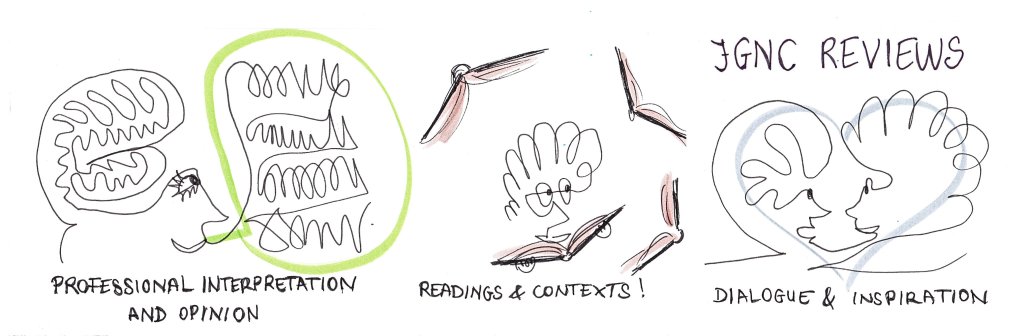
Finally, here is a comic I made about our book review philosophy. The strip was deeply influenced by Hungarian critic József Lapis’s several funny essays and self-reflections on reviews and the roles of reviewers.
The new project that I am undertaking with the help of Patreon folks is partly a conference presentation and partly an issue I have wanted to explore for a while now.
I have been interested in how postcolonial theories could be used on postsoviet life and stuff – this is happening in literature and in flim, but comics haven’t been studied in this respect. Or not enough.
(more…)
Marie Duval was drwaing to the British humorous-satyrical weekly Judy from 1869, and she started drawing the adventures of the first comics superstar, Ally Sloper. After her death, there were conscious attempts to misattribute her work and to erase her from the history of cartooning and visual journalism.
My project is based on the fantastic book Marie Duval: Maverick Victorian Cartoonist by Simon Grennan, Roger Sabin, and Julian Waite (2020). In the four parts of the project, I explore some of my favourite topics in the book: #1 Duval’s career, #2 women and work in Victorian Britain, #3 the influence of theatre on Duval’s cartooning, and #4 the politics of her drawing style and why it was considered vulgar. Link.
(more…)I was asked to lecture on the history of comics in the spring term. There are a few things you should know:
#1 I don’t believe in lecturing and any forms of frontal teaching.
#2 I don’t think that students of photography, design theory, or visual communication should sit an exam in the history of comics (in Hungary each lecture must be finished by a written or spoken exam.) They would benefit more about making comics or understanding how they work or getting inspired by them.
I could transform the course to be less formal, more interactive, more practice-oriented, and a bit more interactive. Here is the syllabus, some creative assignments, and some of the amazing work done by the students.
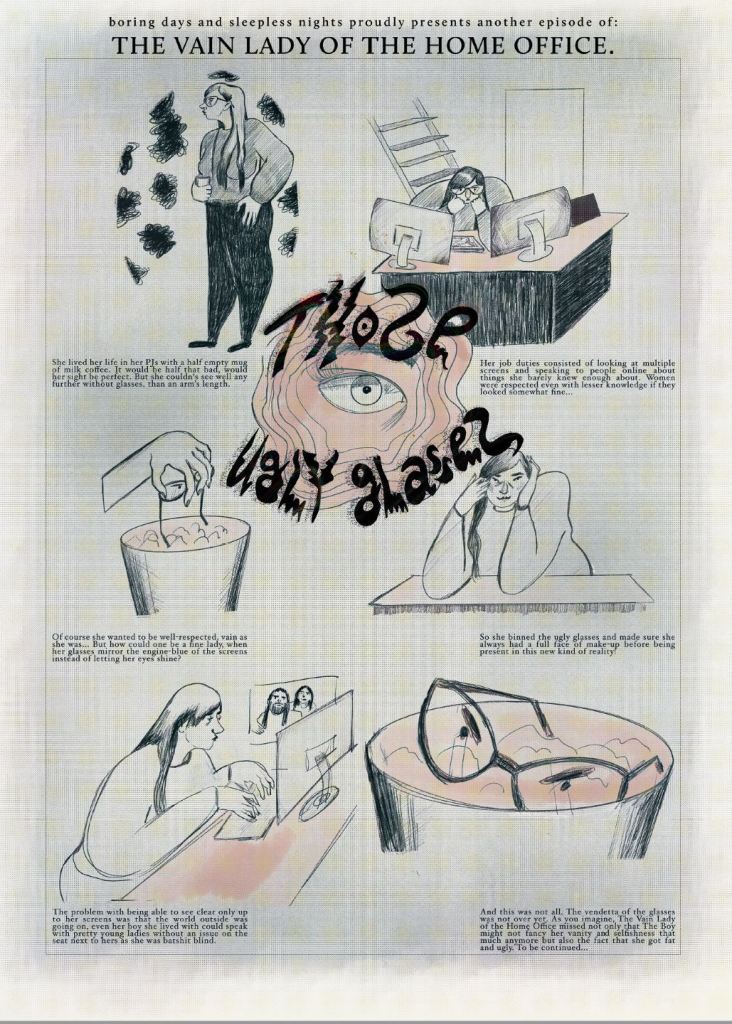
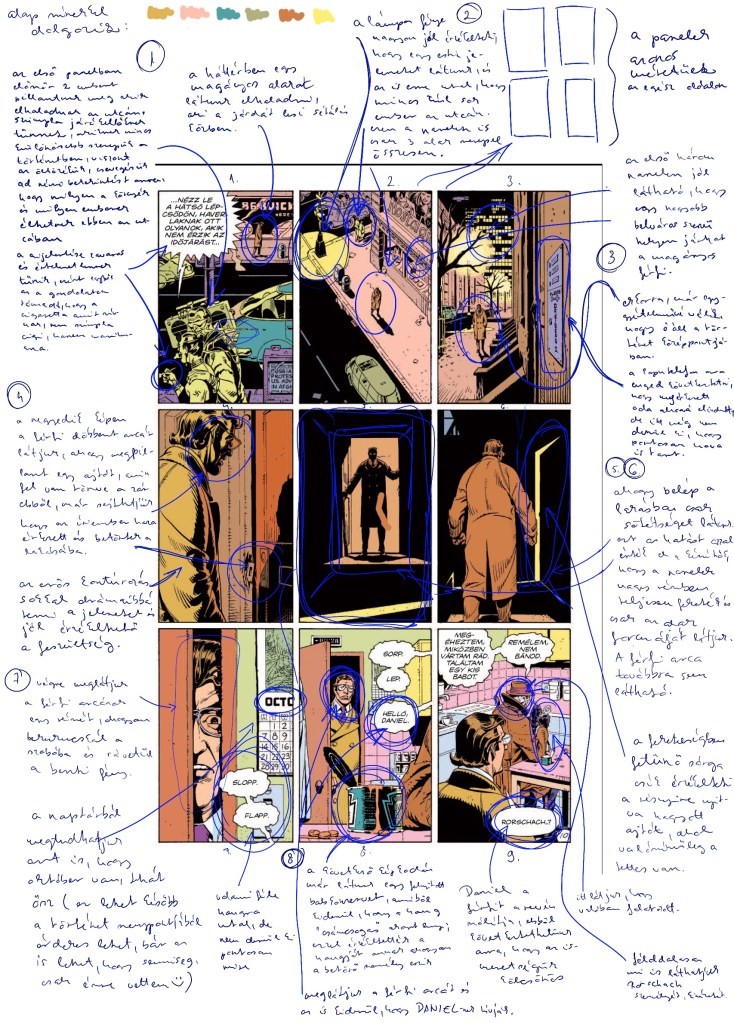
And some student work to tease you. The first two images are stylistic practice, the third one is an adaptation of a poem, the last one is a page analysis – the exercise comes from Nick Sousanis.


Before the actual video, I also would like to share sketchnotes made by fantastic artist-researchers during the talk – thank you Muna, John, and Paul!
This sketchnote is by Dr Muna Al-Jawad, aka The Old Person Whisperer, who was the official sketchnoter of our panel:
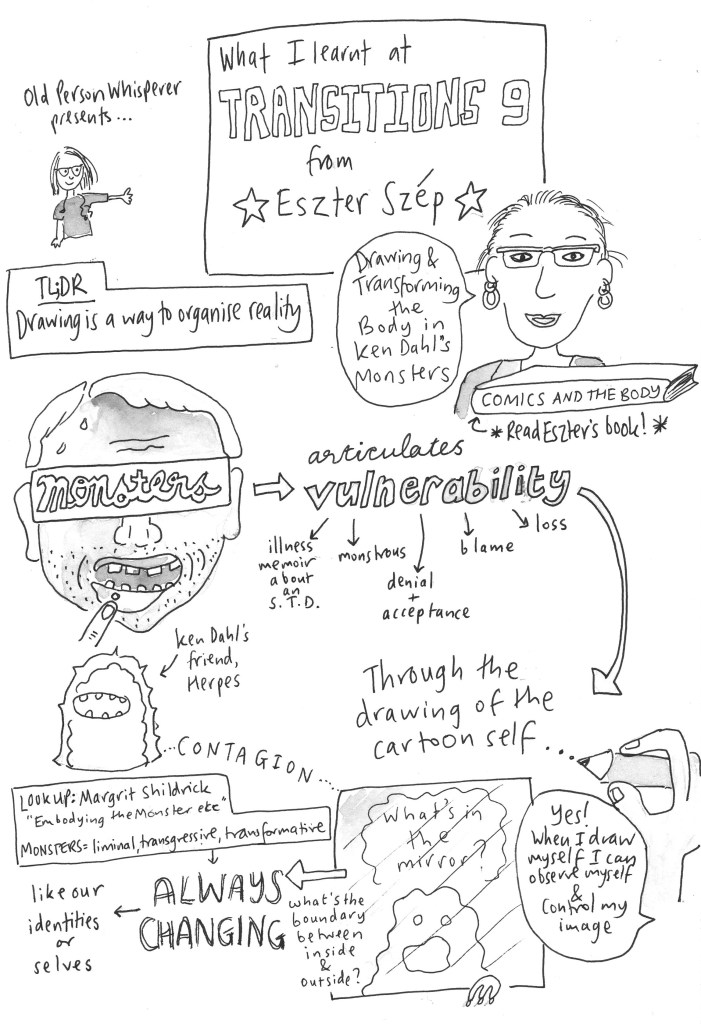
Dr John Miers also made sketchnotes:

And Dr Paul Fisher Davies mentions this talk in his sketchnote on our panel:

And now the video:
PS: This talk is based on Chapter 2 of my book, Comics and the Body: Drawing, Reading, and Vulnerability.
This is my abstract for Transitions 9: New Directions in Comics Studies 2021 (Transitions was canceled in 2020 but will take place online this year – 2021. There will be live sketchnoting during the panels! I’ll speak on 8 April about a chapter of my book that I’ve not talked about at any conferences before. – Check out the full program here.)
Ken Dahl, in his graphic narrative on living with the sexually transmitted disease of herpes, represents his avatar and personifies the illness of the avatar with cunning visual inventiveness. Dahl’s dynamic visualizations freely transform the bodies of the characters, which, I argue, emphasize drawing as a performance and as a way to think about the many controversial topics of this comic (eg. relationships, responsibility, sex, guilt, prejudice). Bodies are constantly created and recreated in acts of drawing, which offer creative ways for Dahl (pen name for Gabby Schulz) not only to find visual expressions of complex feelings and experiences regarding illness but also to testify to the endlessness of pictorial embodiment (El Refaie) itself.
The metamorphoses keep the avatar in what Margrit Shildrick called the “condition of constant becoming” (1): in a particularly vulnerable state where the repeated acts of transforming the avatar’s body are used to ask visual questions about the body. Shildrick does not talk about comics, her book, Embodying the Monster: Encounters with the Vulnerable Self, studies monstrosity and vulnerability in various cultural products: my paper applies Shildrick’s questions to Dahl’s take on normative and the monstrous bodies. I show with examples and by close reading that the morphing of the avatar’s body is expressive of vulnerability on two levels: on the level of the narrative where the illness is transforming the body, and on the level of representation, where it is the lines that govern the transformations of the body.
Content warning: Dahl uses a cartoony style to show a sexually transmitted disease, but occasionally he switches to a very realistic, photoreferential way of drawing, which can be disturbing. Actually these changes are extremely interesting.
Some personal notes:
– this conference presentation is based on chapter 2 of my book, Comics and the Body, which has, I am so happy to say, entered production phase!
– I cannot wait to meet the fantastic members of the comics community in the UK and to talk to keynote speaker Nick Sousanis again! I am 100% sure this will be a most inspiring conference!

I am looking forward to the 2021 conference of the Comics Studies Society. The topic this year is Re/Building Community. Here is my abstract.
The Wall: Growing Up Behind the Iron Curtain is Petr Sís’s multiple award-winning graphic memoir about his childhood in what is now the Czech Republic and what used to be Czechoslovakia. In my presentation I argue that contrasting public space – a space of politics, social pressure, and danger – and private space – hidden and small places of creative self-expression – is a central topic of the memoir. Sís’s narrative successfully mobilizes page design, that is, the distribution of drawn elements in space, in order to illustrate and demonstrate the spatial tensions of life under Communism. I will study the visual metaphors that playfully represent the persistent revolt of a community.
I show that the narrative can be interpreted as a creative protest against intellectual, political, and physical walls and borders: on each page, Sís reinterprets the revolt against the wall as a symbol and as a physical presence. In The Wall, the creative individual cannot be limited by walls imposed upon it and the walls isolating the individual from the community. Art is shown as self-expression and as a link between people, but also as a dangerous activity threatening the artists themselves in a system of surveillance. Art – be it drawing on a canvas or on a wall or playing in a band – is shown in the pictures as indispensable to bringing the wall down. At the same time, the textual layer drags these almost idealistic scenarios down to earth by providing details about the political and cultural contexts of Communism.

2020 was the most productive year in my life if we look at the number of academic and non-academic publications – I have to add that a number of them were written in 2018. On a personal level, 2020 was difficult because of the isolation of COVID, my own weeks of being ill, and because of the lack of success in finding an academic or cultural job.
was quitting my job in June. I was working at a multinational company in the IT sector, and each and every cell of me felt that I do not belong there.
Without full time employment I could immerse myself in stuff that I would otherwise do after work or not at all. I am most proud of the marketing campaign of the International Comics Festival: this year it was small and it lacked international guests, and in the campaign comics artists and other comics-related people told the audience why they like comics. As comics is still considered a childish and dubious medium in Hungary, I consider this a campaign for social change.
was that each and every one of my job and scholarship applications was rejected. I was applying for jobs in Hungary and abroad, and it seems that I am too inernational for Hungarian people and too Hungarian for international people; too academic for non-academic people and academic in the wrong way for academic people. I have had some terrible weeks of despair, sleeping issues, and a general sense of “I have no place in this world, I am not young any more, what the shall I do now?” In general, I am looking for ways to work and cooperate and innovate, but this many rejections can really kill one from the inside. And the worst thing is when they tell you that you are an enthusiastic person, you can take everything. This is simply not true.

To motivate myself to keep on doing stuff, reading stuff, and talking about stuff, I started a Patreon page (here is a link). I do not have many backers, but I love each of them. The monthly projects I undertake have possibly saved my life. I need to feel that I can continue my research and scientific communication even without institutional background. (I am reclaiming ‘scientific communication’ from the hard sciences.)
is that my book has been published! It is basically 1/3 my dissertation and 2/3 not my dissertation, and I still cannot believe it that a top American publisher published it. I hope that people will find ideas in it that they can use, that inspires them, and I also hope that it will not be the last book I have written. More about my book here. And this is the publisher’s site.
Another unbelievable event is that I was invited to talk about my book and my other projects in Frederick Louis Aldama’s videocast. I love this series, Frederick has made interviews with many inspiring comics scholars – I have learned a lot watching the episodes. You can watch the episode with me here.

we started with my friend, István Mráz. We have been talking about it for quite some time, and finally we made it happen. In the first series our topic was the hero in comics. We had two guests, Anita Moskát, the coolest Hungarian fantasy writer, and Kata Gyuris, the coolest expert on African literature I know. The podcast is now in its second season! Youtube. Spotify.
starting my own Youtube channel. Here it is. It is in English, and I will use it to discuss comics and literature.
As you know I am involved with comics life in Hungary. I feel that there is a change happening and there is a general interest in comics. I have been interviewed 7 times (out of these twice on TV, and once in a Facebook Live, and I also talked about Stan Lee in “Lapozz a 99-re” podast), though not about my work but about the history of comics in Hungary, in the US, and the comics world in Hungary. I have no idea how many people watch cultural programmes on state TV channels in the Hungarian media environment, am really happy that offline and online cultural magazines have opened up towards comics.
I start with the academic ones:

I believe that my analysis of Miriam Katin’s graphic memoirs, published in Documenting Trauma (Palgrave Macmillan, 2020) is one of the best chapters I have ever written. This is greatly due to the questions the editors (Candida Rifkind and Dominic Davies) asked me or ideas they suggested elaborating or restructuring. Katin’s work is also part of my book: whereas there I study the embodied nature of its art and of my reading process, here I look at the representations of the maternal body and of the mother tongue.

I was invited to write about Hungarian comics in Comics of the New Europe (Leuven UP, 2020), a collection focusing on Eastern European comics after 1989. This is such an understudied topic! Thanks to the editors, Martha Kuhlman and José Alaniz. My chapter briefly summarizes the history of Hungarian comics and then provides close readings of strips by Gergely Oravecz and Dániel Csordás. Google Books.
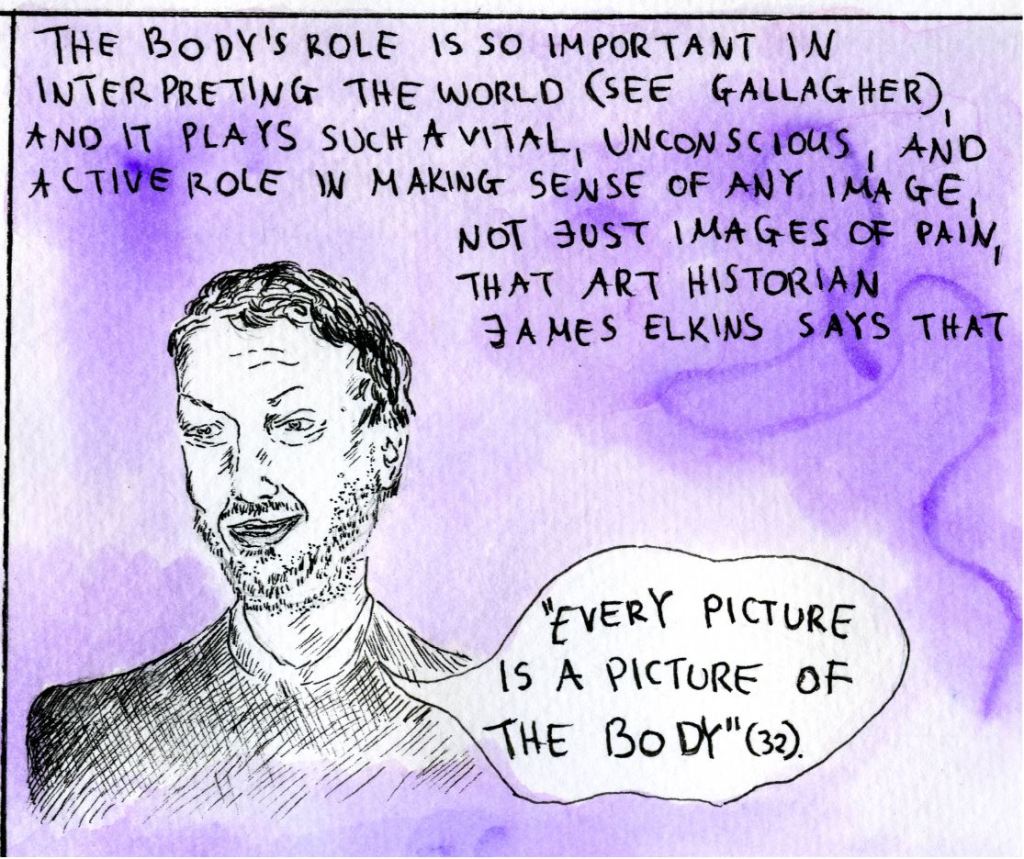
I work as a mentor to gifted teenagers at Milestone Institute, and with my mentee, Boglárka Littner, we made a comic. As the title, Lines and Bodies, suggests, this is an argumentative comic related to my research. I learned a lot while discussing with Bogi what these sometimes abstract ideas mean, while figuring out how I could simplify them, and while brainstorming how we could turn this train of thought into a comic. Boglárka is a sensitive and smart artist, I love her illustrations. You can read the comic online: Link.
I wrote one review for TCJ (The Comics Journal) on Swimming in Darkness (Link), two more are coming up in the first quarter of 2021.
At the end of the year an unexpected opportunity found me: I started writing weekly reviews and articles in the magazine 168 óra. Though this work does not allow me to make a living, it allows me to think and write about comics, novels, films, animation, and HBO/Netflix series. Here are the articles I have written. (They are in Hungarian.) My favorite article is about Brian Cox and David Ince’s book and podcast, The Infinite Monkey Cage.
 Eszter Szép