You can watch the 20-minute presentation on Monsters, a very creative and playful comic on STDs by Ken Dahl (penname for Gabby Schulz) on YouTube. This video was made for the Transitions 9: New Directions in Comics Studies conference in 2021.
Before the actual video, I also would like to share sketchnotes made by fantastic artist-researchers during the talk – thank you Muna, John, and Paul!
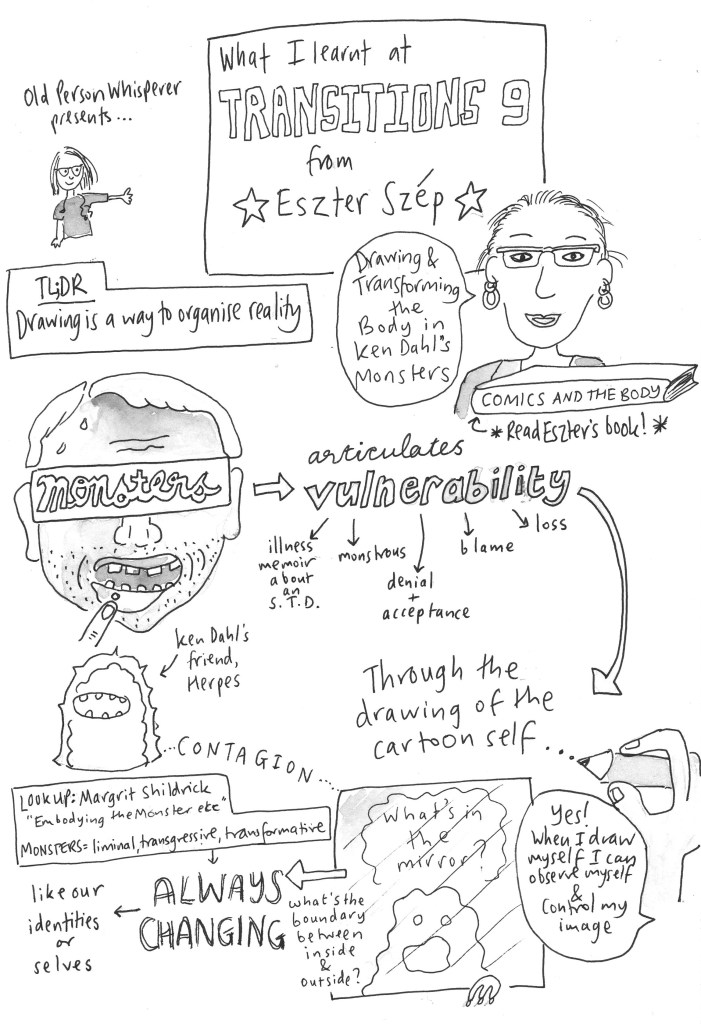
This sketchnote is by Dr Muna Al-Jawad, aka The Old Person Whisperer, who was the official sketchnoter of our panel:
Dr John Miers also made sketchnotes:
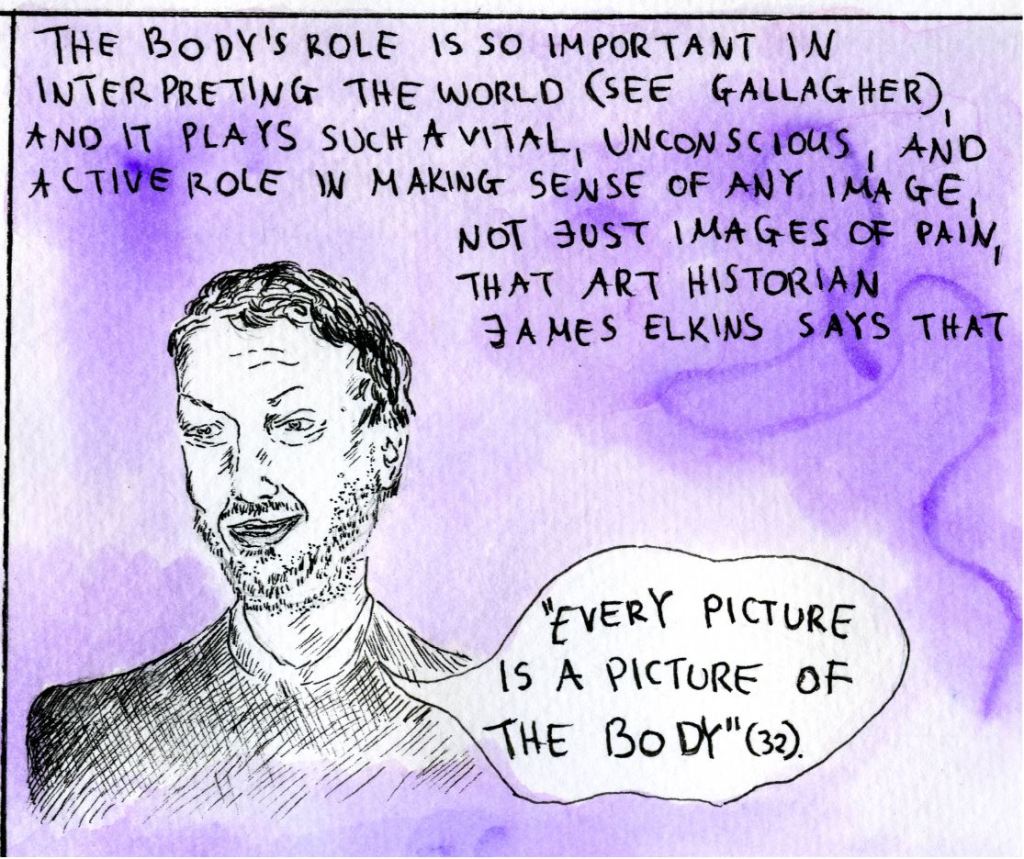
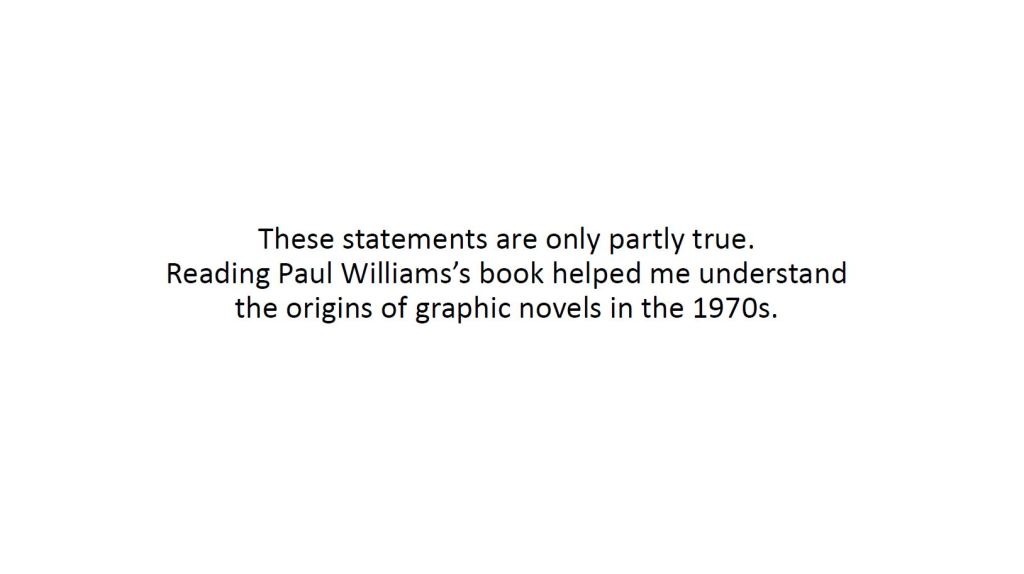
And Dr Paul Fisher Davies mentions this talk in his sketchnote on our panel:
I am looking forward to the 2021 conference of the Comics Studies Society. The topic this year is Re/Building Community. Here is my abstract.
The Wall: Growing Up Behind the Iron Curtain is Petr Sís’s multiple award-winning graphic memoir about his childhood in what is now the Czech Republic and what used to be Czechoslovakia. In my presentation I argue that contrasting public space – a space of politics, social pressure, and danger – and private space – hidden and small places of creative self-expression – is a central topic of the memoir. Sís’s narrative successfully mobilizes page design, that is, the distribution of drawn elements in space, in order to illustrate and demonstrate the spatial tensions of life under Communism. I will study the visual metaphors that playfully represent the persistent revolt of a community.
I show that the narrative can be interpreted as a creative protest against intellectual, political, and physical walls and borders: on each page, Sís reinterprets the revolt against the wall as a symbol and as a physical presence. In The Wall, the creative individual cannot be limited by walls imposed upon it and the walls isolating the individual from the community. Art is shown as self-expression and as a link between people, but also as a dangerous activity threatening the artists themselves in a system of surveillance. Art – be it drawing on a canvas or on a wall or playing in a band – is shown in the pictures as indispensable to bringing the wall down. At the same time, the textual layer drags these almost idealistic scenarios down to earth by providing details about the political and cultural contexts of Communism.
If there is one thing in this world that I have always loved that is overcomplicating things. (And dinosaurs). So I was extra happy that I could work on this comic about comics, what is more, comics about comics studies. My comics are part of a larger project, published in the volume Comics Is…: Debating… Read more: Comics about Comics Studies
2020 was the most productive year in my life if we look at the number of academic and non-academic publications – I have to add that a number of them were written in 2018. On a personal level, 2020 was difficult because of the isolation of COVID, my own weeks of being ill, and because of the lack of success in finding an academic or cultural job.
1) The best decision of the year
was quitting my job in June. I was working at a multinational company in the IT sector, and each and every cell of me felt that I do not belong there.
Without full time employment I could immerse myself in stuff that I would otherwise do after work or not at all. I am most proud of the marketing campaign of the International Comics Festival: this year it was small and it lacked international guests, and in the campaign comics artists and other comics-related people told the audience why they like comics. As comics is still considered a childish and dubious medium in Hungary, I consider this a campaign for social change.
2) The biggest disappointment
was that each and every one of my job and scholarship applications was rejected. I was applying for jobs in Hungary and abroad, and it seems that I am too inernational for Hungarian people and too Hungarian for international people; too academic for non-academic people and academic in the wrong way for academic people. I have had some terrible weeks of despair, sleeping issues, and a general sense of “I have no place in this world, I am not young any more, what the shall I do now?” In general, I am looking for ways to work and cooperate and innovate, but this many rejections can really kill one from the inside. And the worst thing is when they tell you that you are an enthusiastic person, you can take everything. This is simply not true.
To motivate myself to keep on doing stuff, reading stuff, and talking about stuff, I started a Patreon page (here is a link). I do not have many backers, but I love each of them. The monthly projects I undertake have possibly saved my life. I need to feel that I can continue my research and scientific communication even without institutional background. (I am reclaiming ‘scientific communication’ from the hard sciences.)
3) The most amazing and miraculous thing
is that my book has been published! It is basically 1/3 my dissertation and 2/3 not my dissertation, and I still cannot believe it that a top American publisher published it. I hope that people will find ideas in it that they can use, that inspires them, and I also hope that it will not be the last book I have written. More about my book here. And this is the publisher’s site.
Another unbelievable event is that I was invited to talk about my book and my other projects in Frederick Louis Aldama’s videocast. I love this series, Frederick has made interviews with many inspiring comics scholars – I have learned a lot watching the episodes. You can watch the episode with me here.
4) I am really proud of the podcast
we started with my friend, István Mráz. We have been talking about it for quite some time, and finally we made it happen. In the first series our topic was the hero in comics. We had two guests, Anita Moskát, the coolest Hungarian fantasy writer, and Kata Gyuris, the coolest expert on African literature I know. The podcast is now in its second season! Youtube. Spotify.
5) While I was sick with COVID, I was dreaming about
starting my own Youtube channel. Here it is. It is in English, and I will use it to discuss comics and literature.
As you know I am involved with comics life in Hungary. I feel that there is a change happening and there is a general interest in comics. I have been interviewed 7 times (out of these twice on TV, and once in a Facebook Live, and I also talked about Stan Lee in “Lapozz a 99-re” podast), though not about my work but about the history of comics in Hungary, in the US, and the comics world in Hungary. I have no idea how many people watch cultural programmes on state TV channels in the Hungarian media environment, am really happy that offline and online cultural magazines have opened up towards comics.
6) Finally, here is a list of my publications in 2020:
I start with the academic ones:
I believe that my analysis of Miriam Katin’s graphic memoirs, published in Documenting Trauma (Palgrave Macmillan, 2020) is one of the best chapters I have ever written. This is greatly due to the questions the editors (Candida Rifkind and Dominic Davies) asked me or ideas they suggested elaborating or restructuring. Katin’s work is also part of my book: whereas there I study the embodied nature of its art and of my reading process, here I look at the representations of the maternal body and of the mother tongue.
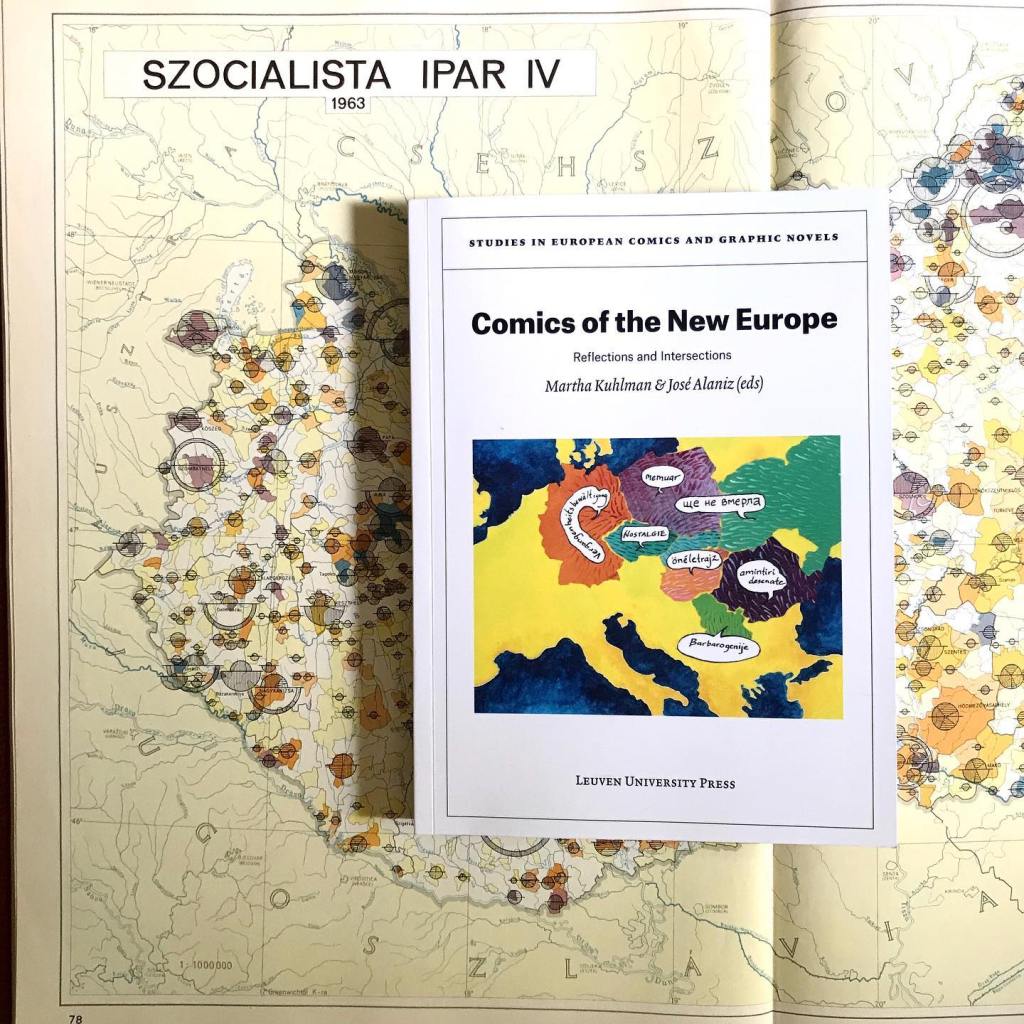
I was invited to write about Hungarian comics in Comics of the New Europe (Leuven UP, 2020), a collection focusing on Eastern European comics after 1989. This is such an understudied topic! Thanks to the editors, Martha Kuhlman and José Alaniz. My chapter briefly summarizes the history of Hungarian comics and then provides close readings of strips by Gergely Oravecz and Dániel Csordás. Google Books.
I work as a mentor to gifted teenagers at Milestone Institute, and with my mentee, Boglárka Littner, we made a comic. As the title, Lines and Bodies, suggests, this is an argumentative comic related to my research. I learned a lot while discussing with Bogi what these sometimes abstract ideas mean, while figuring out how I could simplify them, and while brainstorming how we could turn this train of thought into a comic. Boglárka is a sensitive and smart artist, I love her illustrations. You can read the comic online: Link.
I also published an academic text in Hungarian: it is on children’s comics, and you can find it here.
My non-academic publications
I wrote one review for TCJ (The Comics Journal) on Swimming in Darkness (Link), two more are coming up in the first quarter of 2021.
At the end of the year an unexpected opportunity found me: I started writing weekly reviews and articles in the magazine 168 óra. Though this work does not allow me to make a living, it allows me to think and write about comics, novels, films, animation, and HBO/Netflix series. Here are the articles I have written. (They are in Hungarian.) My favorite article is about Brian Cox and David Ince’s book and podcast, The Infinite Monkey Cage.
The day has come when I can proudly share with you that my book has been released! I really enjoyed writing it and discussing my ideas at conferences. I just love this topic. I am really happy now!
I am so grateful for the support of my husband and friends and for EAAS for their postgrad research grant to the Billy Ireland Cartoon Library. Without them and it I really could not have written this book.
In this book I examine the role of the body in drawing and reading comics within a single framework. In each chapter I approach a different aspect of embodied interaction with comics (drawing lines; drawing bodies; drawing style; reading bodies and abstract lines; interacting with a book object). This is an interdisciplinary book that is equally inspired by art practice, feminist ethics, and materiality studies.
If you are interested, I’d like to recommend two videos for further info: In this video I discuss my research with Frederick Louis Aldama.
And I made this short video to introduce the basic ideas of my book:
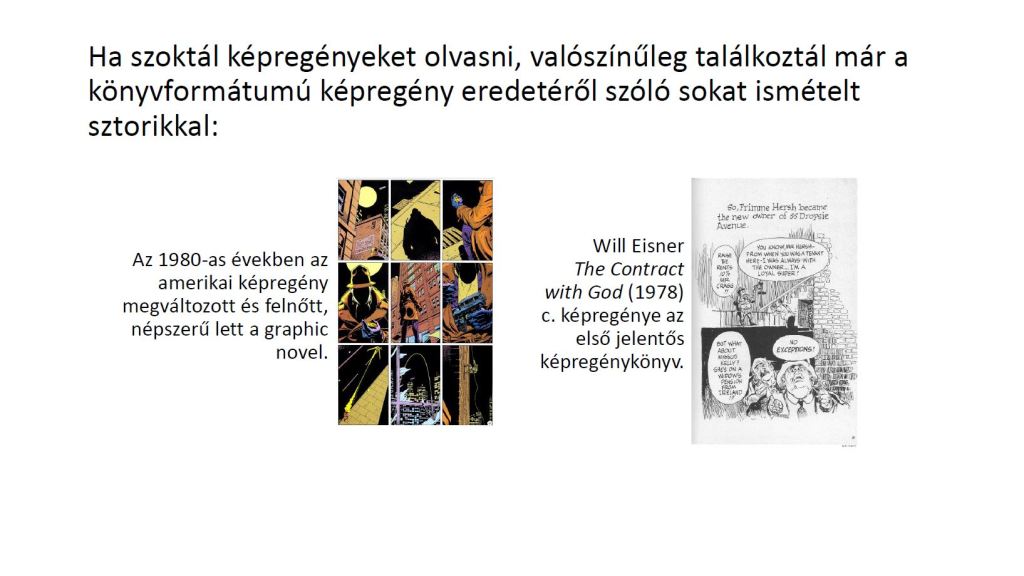
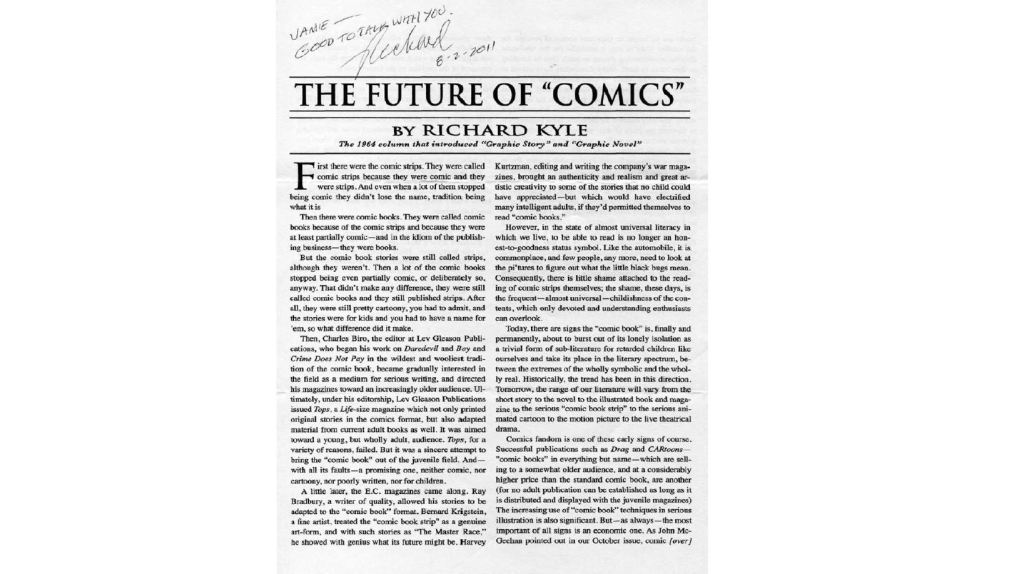
Contrary to the myths inherited from the 80s and later, the graphic novel was not invented or made popular exclusively by Will Eisner or his manager. In my latest Patreon project I dig into the origins of the graphic novel format and I also explore the origins of the term. A teaser of the project is now available for anyone on my website.
The project itself is longer than this teaser and is more argumentative. It is based on Dreaming the Graphic Novel by Paul Williams (Rutgers UP, 2020). I absolutely recommend this book. And my Patreon! Have I mentioned my Patreon in this paragraph yet?
The project on Patreon (ha!) shows that in the 60s and 70s many people had many ideas about how comics should be rethought. Yes, creators, publishers, editors, retailers thought that comics was in need of some change.
I do not dwell on this moral and financial crisis for long in my Patreon project (check!) , instead, I show the diversity of things people were doing and thinking AT THE SAME TIME. This is a dynamic and exciting age: noone knew that the graphic novel will turn out to be successful. They did not know it would be called graphic novel!
Why Patreon? I am experimenting with new formats to keep on doing research, thinking, and discussing ideas. As some of you know, I am outside Academia, which gives me a hard time, but I have watched dozens of Neil Gaiman motivational speeches and I am actively looking for alternative ways to share what I know and to learn from you all.
Distinguished guests, behold the project teaser:
The argumentation and further details of how people were experimenting with long format comics is available on Patreon, where my previous project is also available: You can also listen to an audio/podcast/thing on Ursula K. Le Guin’s Earthsea cycle. Here is the link: patreon.com/eszterszep
Ellentétben a 80-as években (és utána) népszerűvé vált mítoszokkal, a graphic novelt nem Will Eisner vagy a managere találta ki vagy kezdte el népszerűsíteni. A graphic novel szót 1964-ben alkotta meg egy egészen konkrét ember egy egészen konkrét szándékkal – és a hetvenes évek folyamán igen sokan használták.
Legutóbbi Patreon projectemben annak jártam utána, honnan származik a graphic novel formátum és maga a szó. A hatvanas évek végén és a hetvenes években az USÁ-ban nagyon sokan sokfélét gondoltak arról, hogyan kéne újragondolni a képregényt. Bizony, igen sok alkotó, kiadó, szerkesztő, terjesztő úgy gondolta, hogy ráfér a kifejezési formára az újragondolás.
A projectemben ezzel az anyagi és morális válsággal is foglalkozom kicsit, de leginkább azt mutatom be, hogy mennyire sokféle ellentmondó dolgot gondoltak és csináltak a képregényesek EGYSZERRE. Egy dinamikus, izgi, változó korszak ez: senki sem tudta, hogy a képregénykönyv sikeres lesz, és azt sem, hogy a neve végül az lesz, hogy graphic novel.
Fogadjátok szeretettel ezt a rövide beharangozót, a teljes gondolatmenet (ami a Patreonon olvasható) ennél nyilván részletesebb.
Miért Patreon? Ezzel a formával kísérletezem, hogy a kutatást, a gondolkodást, és a beszélgetést egyetemi lehetőségek híján folytatni tudjam. Nagyon hálás vagyok a támgatóknak morális, anyagi és gyakorlati síkon is: ez az anyag például az egyik támogató kérdése folyamán lett kb 15%-kal hosszabb, mint eredetileg terveztem.
Itt találjátok a részletes gondolatmenetet a korábbi, Ursula K. Le Guinről szóló projecttel együtt: patreon.com/eszterszep
Children’s comics is undergoing a change in Hungary: in recent years several YA graphic novels have been translated and further titles are promised. In this small country with a conservative book industry, publishers have been hesitant to publish book format comics, and publishers of children’s literature did not publish comics at all. This seems to be undergoing a change, and I am really happy about it.
The target audience of comics in this country is 20-40 year-olds, most magazine format and book format comics are sold directly on festivals and comics fairs. The canonical works of the 1980s – comics have grown up – era are translated now + newer titles by DC and Marvel, which results in a masculine market that is a) unacknowledged by the gatekeepers of literature (literary publishers, magazines, writers, influencers) b) not particularly open to children’s titles.
I hope that the new children’s titles will attract young readers and also hope that there will be a time when Hungarian authors will also be able to have their stories published as beautiful colorful books.
In my essay I provide a background on the history of children’s comics in Hungary and also of the prevailing stereotypes about comics.
The stereotype that comics will a) teach children to read or b) make children like literature is particularly strong in this country because until the 1980s the ONLY available comics were adaptations of literary works. This tie with literature was the only way comics could survive until state socialism but it has a big drawback: for decades it has been DEFAULT to compare comics to the original literary works and get disappointed. The literary work was shortened, which was deemed barbaric, the comics were text heavy (but noone noticed that in a way we do, because they did not know comics of the capitalist west), and the children were still not queuing in the library to borrow the original literary works!
I also speculate the reasons why children’s literature is so sceptical about comics, claiming that one of the reasons is the culture of collecting toys and gimmicks, which is associated with cheap entertainment. This culture arrived in the late 1980s and in the 1990s. In this era new kinds of comics were allowed to be printed (breaking away from literary adaptations) which were most of the time related to cartoons. Children (among them myself 🙂 ) in this era met comics in a complex transmedial environment: magazines, books, stickers, notebooks, scented rubbers, cartoon series, anime series (of course we did not know the word anime). All this culture of objects and the idea of collecting are alien to the culture of children’s literature in Hungary, and I might be wrong, but this might be the first essay in Hungary that deals with this topic. (I have learned a lot about comics and transmedia from Frederick Luis Aldama’s interview with Benjamin Woo – it’s on youtube, check it out.)
I was also asked to include how comics can be read, somehow this question is very important in Hungary. I am constantly asked how one reads comics properly, and in 2018 when I was co-curating a major comics exhibition I also had to address this issue in one of the texts on the walls. I use the “art of tensions”, the model by Charles Hatfield in Alternative Comics (2005) because I think the idea of having four layers of meaning is a simple model that shows the complex beauty of comics. This model is also very teachable – the portal where my essay is published addresses teachers and professionals working with children’s literature, and I hope they will find my essay and Hatfield’s model useful.
These past months have been very difficult because it seems that being from Eastern Europe and being primarily a comics scholar (though I have also taught literature) make it impossible to get a job in academia either here in Hungary or in the EU / UK. This has negatively influenced all my other projects, such as our podcast, the various guest posts I write to blogs, the academic articles I should be writing (because I simply do not accept that I should quit) and I became more and more gloomy. I do not want to bore you with this, I am sure you have also had some negative spirals in your life. What usually helps in my case is watching Neil Gaiman interviews and feed on his creative positive energy.
I have also decided to share my work (and also my difficulties) more openly because I love working on/with comics and recently I have felt so dark and alone.
Here is a chain of tweets that explains my motives. You can find my page on patreon.com/eszterszep. I have spent some time in making the tiers personal, have a visit if you have the time.
Editors Martha Kuhlman and José Alaniz have found, explored, brought to us a topic that is hardly ever discussed: the comics of Eastern Europe. I am so happy that they thought about Hungary, too, and I could contribute with a chapter on a brief history of Hungarian comics and on contemporary autobiographical comics in Hungary. Thank you, Martha and José, for this collection.
Often, when the phrase “European comics” is uttered, what people mean is French or Belgian comics. However, the countries of Eastern Europe have their own diverse comics traditions. Why are they diverse and what are they like? At the end of the 19th century, magazine culture was hot and trendy in Europe, and the countries of the Austro-Hungarian Empire were no exceptions. Nationalism at the rise, these countries had worked hard to have press in their native languages and not in German. These papers started publishing political satirical cartoons — just like Punch in Britain. In Hungary, these papers often borrowed German and Austrian cartoons and jokes. So the national press, at least in Hungary, was part of a broader European press culture and development of visual culture. We even ripped off the Yellow kid!
However, before WW2 in Hungary Jewish-owned businesses were banned, and this affected many magazines and periodicals. After WW2, under the Soviet invasion, comics were banned as they were considered to have bad imperialistic American ideological influence.
After a while, especially after the 1956 unsuccessful revolution against Soviet rule, some entertainment was offered to the people as diversion, and a few pages of comics were also published in some magazines of entertainment. These comics were adaptations of literary works, and were hugely popular.
In Hungary, comics from the 1950s onward developed completely without American influence (some left-wing French stuff was translated later, though), and the ideological decision to exclude imperial influence had very material and aesthetic consequences: these comics look very different.
During Soviet rule, each country in Eastern Europe had their own comics traditions, and after 1989 they each developed different discourses in the medium of comics. I am so happy that I could contribute with a chapter on contemporary Hungarian comics. Interestingly, we do not really have works that would study our past in a reflective or personal way (yet). I have seen in Comics of the New Europe that some countries have very serious and interesting working through going on in comics. I cannot wait to find out more about the collection, the Introduction, which I have had time to read so far, is really interesting.
… in Hungarian. The literary journal “Alföld” kindly commissioned comics reviews for its May issue (link). The plan was to sync these with the International Comics Festival Budapest. The festival was cancelled, and the journal ran out of funding so it only publishes online instead of print and cannot pay the authors for an indefinite amount of time.
Culture is in a terrible position in Hungary, it is a noble hobby and the frustration caused by the lack of money slowly kills you inside. But I am an optimist today (my position on the optimist-let’s die now axis changes every day), and I am happy that I could write a review of these two comics in Hungarian.
Why are these comics important?
Hungary has a limited comics market: the majority of the titles is interesting for a male readership in their 30s and 40s. I can understand this: they are the ones who buy comics, and the publishers want to sell. Plus publishers belong to that age group. (Naturally, as every trend, this one exists among other trends and is not absoulute.)
When the guys mentioned above were children, there were no comics that could have addressed a girl readership, so they are missing now.
Some publishers realized that it is vitally important to address young readers today — they are the comics readers of the future!
Some publishers realized that it is vitally important to bring in comics that are not about superheroes and white males.
Because of points 3 and 4 in the above list, the publication of Nimona and Women in Battle is very important: they address a new reader group, that of teenage girls. I hope their audience finds them.
(I analyze the comics scene in Hungary from a gender point of view in the 2019/4 issue of Csillagszálló. It will soon be published online at Dot &Line.)


















 Eszter Szép