Get updates about news and blog posts.

Tag: képregény

  • New Publication: Children’s Comics in Hungary

    Children’s comics is undergoing a change in Hungary: in recent years several YA graphic novels have been translated and further titles are promised. In this small country with a conservative book industry, publishers have been hesitant to publish book format comics, and publishers of children’s literature did not publish comics at all. This seems to be undergoing a change, and I am really happy about it.

    The target audience of comics in this country is 20-40 year-olds, most magazine format and book format comics are sold directly on festivals and comics fairs. The canonical works of the 1980s – comics have grown up – era are translated now + newer titles by DC and Marvel, which results in a masculine market that is a) unacknowledged by the gatekeepers of literature (literary publishers, magazines, writers, influencers) b) not particularly open to children’s titles.

    I hope that the new children’s titles will attract young readers and also hope that there will be a time when Hungarian authors will also be able to have their stories published as beautiful colorful books.

    In my essay I provide a background on the history of children’s comics in Hungary and also of the prevailing stereotypes about comics.

    The stereotype that comics will a) teach children to read or b) make children like literature is particularly strong in this country because until the 1980s the ONLY available comics were adaptations of literary works. This tie with literature was the only way comics could survive until state socialism but it has a big drawback: for decades it has been DEFAULT to compare comics to the original literary works and get disappointed. The literary work was shortened, which was deemed barbaric, the comics were text heavy (but noone noticed that in a way we do, because they did not know comics of the capitalist west), and the children were still not queuing in the library to borrow the original literary works!

    I also speculate the reasons why children’s literature is so sceptical about comics, claiming that one of the reasons is the culture of collecting toys and gimmicks, which is associated with cheap entertainment. This culture arrived in the late 1980s and in the 1990s. In this era new kinds of comics were allowed to be printed (breaking away from literary adaptations) which were most of the time related to cartoons. Children (among them myself 🙂 ) in this era met comics in a complex transmedial environment: magazines, books, stickers, notebooks, scented rubbers, cartoon series, anime series (of course we did not know the word anime). All this culture of objects and the idea of collecting are alien to the culture of children’s literature in Hungary, and I might be wrong, but this might be the first essay in Hungary that deals with this topic. (I have learned a lot about comics and transmedia from Frederick Luis Aldama’s interview with Benjamin Woo – it’s on youtube, check it out.)

    I was also asked to include how comics can be read, somehow this question is very important in Hungary. I am constantly asked how one reads comics properly, and in 2018 when I was co-curating a major comics exhibition I also had to address this issue in one of the texts on the walls. I use the “art of tensions”, the model by Charles Hatfield in Alternative Comics (2005) because I think the idea of having four layers of meaning is a simple model that shows the complex beauty of comics. This model is also very teachable – the portal where my essay is published addresses teachers and professionals working with children’s literature, and I hope they will find my essay and Hatfield’s model useful.

    https://igyic.hu/esszektanulmanyok/gyerekek-es-kepregenyek.html

  • 2018 – My publications

    2018: The year most of my projects bloomed, when I finished my PhD, when I reworked my PhD thesis into a book (added 2 chapters, took one away) (to be published in 2020). In terms of non-academic achievements, I organized (almost alone) the comics festival in May, co-curated a major exhibition on comics in the National Széchényi Library, opened Hungary’s first community comics library. Basically a year when I worked my arse off.

    1.Books I Edited

    Turning The Page. Gendered Identities in Contemporary Literary and Visual Cultures. Ed. Kata Gyuris, Eszter Szép and Dóra Vecsernyés. L’Harmattan, Budapest. Download link.

    2018 [Exhibition catalog, bilingual] Kép-regény-történet: A kilencedik művészet ikonjai Magyarországon. Ed. Eszter Szép. Országos Széchényi Könyvtár, Budapest, 2018.

    2. Articles and Reviews in English

    “Kids’n’Comics: An Equation with Variables to Rearrange.” Kids’n’Comics Exhibition Catalog, D17 Gallery, 2018. pp. 10-12.

    “A review of Simon Grennan: A Theory of Narrative Drawing. Palgrave Macmillan, 2017. 277 pp, 96,29 €.” INKS – The Journal of the Comics Studies Society, Summer 2018, pp. 261-264.

    “A review of The Materiality of Writing. A Trace-Making Perspective. Edited by Christian Mosbæk Johaannessen and Theo van Leeuwen.” Image & Narrative. online.

    “A review of Unflattening, Nick Sousanis (2015), Cambridge: Harvard University Press, 208 pp., ISBN: 9780674744431, p/bk, £18.95.” Studies in Comics 8.2. 262-264.

    “Ben Katchor: A képregény túllép a próza kifejezési lehetőségein” [The title is in Hungarian, but the interview is in English] Ben Katchor: Conversations. Ed. Ian Gordon. University Press of Mississippi, 2018, pp. 152-154.

    3. Articles and Reviews in Hungarian

    “Metacomics: Poetics of Self-Reflection in Comics” [Metaképregény: Az önreflexivitás képregényes poétikái”][This is the Hungarian version of my article in Studies in Comics featuring examples taken from H. comics.]Intézményesülés, elbeszélések, médiumok: Tendenciák a kortárs magyar képregényben és képregénykutatásban II. ed. Ferenc Vincze, Szépirodalmi Figyelő Alapítvány, 2018, pp. 95-119. 

    “Kölykök + képregények: egy régóta rendezésre váró egyenlet.” Kölykök + képregények kiállításkatalógus, D17 Galéria, 2018, pp. 7-9.

    “Setting a Limit on Fantasy.” [in Hungarian. Original title: “A fantáziának határt szabni.”] Szépirodalmi Figyelő no. 3, 2018, pp. 100-104.

    “Comics on the Power of Poetry: Nyugat + Zombik by Olivér Csepella.” [in Hungarian. Original title: “Képregény a költészet hatalmáról: Csepella Olivér: Nyugat + zombik.”] Alföld, vol. 69, no. 4, 2018, pp. 96-101.

    “Comics Around the Globe Today: A Review of Gyula Maksa’s Comics in Intercultural Currents,” [ “A képregényről globálisan, ma: Maksa Gyula Képregények kultúraközi áramlatokban című könyvéről.”],
    Médiakutató vol. 19, no. 1, 2018, pp. 97-99.

    4. Non-Academic Writings on Comics in Hungarian

    “Történetváz a fiókból – Michael Crichton: Dragon Teeth.kilencedik.hu/tortenetvaz-a-fiokbol-michael-crichton-dragon-teeth/

    “Brit istenek – Gillen & McKelvie: The Wicked + The Divinekilencedik.hu/brit-istenek-gillan-mckelvie-the-wicked-the-divine/

    “Hogyan került a szövegbuborék a képregénybe?” kilencedik.hu/szovegbuborek/

    “A magyar képregény 2017-ben, kilenc pontban.” kilencedik.hu/a-magyar-kepregeny-2017-ben-kilenc-pontban/

    “Mellékszereplők reflektorfényben: Paper Girls 1-4.” kilencedik.hu/paper-girls/

    “Jessica Jones és a sötét.” kilencedik.hu/jessica-jones-es-a-sotet/

    5. Extras

    • I co-curated a major comics exhibition
    • I co-founded the first comics library in Hungary

  • Community Comics Library Opened on 13 Dec

    Around two months ago Adam approached me with the idea of establishing a comics library. He had a vision of a bookshelf of comics donated by nice people. I immeditely loved the idea. We worked on it for two months. Discussed stuff. Made a Facebook page. The next thing we realized was that there are so many comics donated that there is no more place on our bookshelf and we need a new one. And within two days, someone donated a new bookshelf. This is how Hungary’s first comics library opened on 13 Dec.

    Here are three things I particularly like about this project and that make me proud:

    1. It is a community initiative. For me, this means two things: everything is done on a voluntary basis, and this initiative has the potential to create a community around comics. If you have followed the news about Hungary recently, you could not have missed the political dissatisfaction that is shared by most Hungarians, even by those who do not protest. The biggest challenge in living in Hungary now, the way I see it, is that communities have been eroded. People do not work together, do not discuss stuff. Everyone is an island, alone (as in Houellebecq’s novel), isolated by what he or she presumes about others, but has never discussed. Moreover, in Hungary people are often suspicious about causes: politics has way to often preyed on causes and gutted them. I have high hopes that this library can be a place for some people to be part of a community and that we can transform the cause of making this library happen into maintaining this library.
    2. The library is located at Nem adom fel café, which translates as I don’t give up café. This is a special place, a community in itself: it is the first café of Budapest run by people with disabilities. They have been extremely welcoming from the first minute. Just like us, they would not have expected that we would open with nearly 400 copies of comics, really good ones, all donated. When it turned out that we need a second bookshelf, they immediately offered extra space for us to place it. I see a parallel between the perception of comics in Hungary and the perception of people. As comics are not visible (few bookshops sell them), people have only stereotypes about them: they are presumed to be non-serious and childish. But comics is more diverse than that. It is rich and interesting and multivocal. Just like people — and this is what Nem adom fel café shows to the world so perfectly. Get rid of your stereotypes, get to know the people and comics around you!
    3. The third thing I like is personal: the experience of working with Adam. He has more experience of community initiatives than I do. I learn a lot about trust. And about the risk involved in trusting a community with making something happen: they might not take part, or some comics might mysteriously disappear. But so far everyone has been positive: we had a lot of shares and positive comments on social media, 3 major news sites shared news about us. And, the best of all, the people who came to the opening really understood what this thing is about: they stayed for hours, they were browsing the collection, and strangers started discussing comics. It was an amazing experience.

    We are planning to have some programs, but I think just to announce some dates of silent reading together is as much fun as a more organized program.

    Here is our Facebook page, link. You can also find a lot of photos of the opening ceremony, or, rather, opening comics reading.

    Here is our online catalog, link.

    I would like to show you our logo and promo picture. The logo is the work of Gyula Németh, a Hungarian comics artist, and the promo pic is by Canadian Michael DeForge. Thank you, guys!

  • Kids’n’Comics – Exhibition opening

    I had the honor to open the Kids’n’Comics (Kölykök és képregények) exhibition at the Deák 17 Youth Art Gallery on 7 Sept 2018. The exhibition has been curated by Bianka Zsigó, and it features the works of contemporary Hungarian comics artists. Here are some pictures from the opening ceremony — you can still visit this rich and entertaining exhibition till 27 Oct 2018.

    Exhibiting artists:
    Baranyai András l Bernát Barbara l Cserkuti Dávid l Csordás Dániel l Felvidéki Miklós l Fritz Zoltán l Fritz-Majer Nóra l Ghyczy Csongor l Halter András l Kárpáti Tibor l Koska Zoltán l Kovács Viktória l Lanczinger Mátyás l Lakatos István l Oravecz Gergely l Pásztor Alexa l Sárdi Katalin l Stark Attila l Takács Anikó

  • Catalog of Hungarian Comics I edited has been published

    The bilingual catalog on the history of Hungarian comics that I edited in June has been published! And it is beautiful! Thanks to Judit Vincze for the amazing design!

    The catalog is based on the material of our Comics as Narrative exhibition in the National Széchényi Library (14 May – 28 July 2018), and it provides a richly illustrted survey on Hungarian comics on 84 pages. The book is divided into two major sections, one on the history, and another one on the current tendencies of Hungarian comics. The short supporting texts were written by the curators of the exhibition, Ágnes Anikó Patonai, Rita Szűts-Novák, and myself.

    katalc3b3gus-pc3a9ldc3a1nyok.jpg

    On the structure of the volume:

    Our introduction reaches back to word and image relations in the baroque emblem, and we also show the beginnings of Hungarian comics in 19th century magazine culture.

    Literary adaptation comics were a defining tendency in the history of our comics, and several subchapters are devoted to this characteristic tendency that started in the 1950s. I really like the subchapter when different versions are placed next to each other: adaptations of the same novels by different artists are in dialogue, and so are draft and printed versions of the same page. We also devote a section to one of the most celebrated original author behind these adaptations, Jenő Rejtő, and to the afterlife of adaptation comics in the 1980s and onwards.

    Literature is an important inspiration for contemporary Hungarian comics, and so is the quality of self-expression, which is most often associated with poetry (at least in Hungary). The subsections focus on two significant topics in the contemporary scene, alternative realities as in dreams, nightmares and fantasy, and metacomics.

    And, as I have said, everything is available in English, not only in Hungarian. 🙂

    Thanks for the artists and colleagues who made this amazing catalog possible!


  • Csepella Olivér: Nyugat + Zombik kritika online

    Elérhető az Alföld folyóirat honlapján az áprilisban megjelent kritikám, amit Csepella Olivér Nyugat+ Zombik című képregényéről írtam.

    Szerettem ezt írni, mert a sok hibája ellenére jó érzés egy olyan képregényről gondolkodni, amely maga is gondolkodik, és egy olyan képregényről mondani valamit, aminek van mondanivalója.

    alfoldonline.hu/2018/07/kepregeny-a-kolteszet-hatalmarol/

    “A képregénynek értelmezésemben két tétje van: a frappáns alapötletet az olvasóközönség érdeklődését fenntartva végigvezetni kétszázhatvan oldalon, valamint a megidézett nyugatosok nyelvi és kulturális örökségét a 21. század kultúrafogyasztói számára aktualizálni.”

    “A képregény második részét olvasva az az ember érzése, hogy a szerző túl sok ötletét igyekezett belezsúfolni a képregény oldalaiba, és nem szánt elegendő helyet ahhoz, hogy ötletei érvényesülhessenek. Emiatt a zsúfoltság miatt a vizuális poénok, átkötések és viccek egy része első ol­vasáskor sajnos szintén elsikkad, hiszen az olvasó nem ezek észrevételére, hanem a cselekmény fonalának megtalálására fordítja energiáit.”

    “A Nyugat + Zombik egyenetlenségeivel együtt is egy kreatív vizuális gondolkodó és nagykedvű történetmesélő szórakoztató munkája, ami sok kultúrafogyasztónak mutathatja meg a képregényes kifejezésmódban rejlő lehetőségeket és a kép­regény­olva­sás örömét, ezzel segítve a képregény médiumának értőbb elfogadását.”

  • Roundtables

    A) Last week (24 May) I was invited to be a participant of a roundtable on the use of popular culture in the classroom, particularly using science fiction in the teaching of literature. The issue has been raised by many educators more qualified to do so than me, as the situation is that Hungarian teenagers have to read a great number of dated texts that border on the unbearable both in terms of narrative techniques and unattractive storylines. This roundtable addressed the issue from an SF angle, plus I was constantly referring to comics and statistics on comics, and, of course, SF comics.

    It was in Hungarian, and can be watched here.

    roboraptor

    B) This week I’ll participate in a roundtable on the history of comics in Hungary. This is an event linked to the Comics as Narrative/Kép-regény-történet exhibition I was co-curating. It will take place at the National Széchényi Library on 31 May, starting at 5 pm. oszk.hu/konyvtarlat/konyvtarlat-vii-9-jatek-es-kepregeny

    The National Library also made a short interiew with me (in Hungarian): link.


  • Laudáció Felvidéki Miklós Alfabéta-díjához (My short speech when presenting the Hungarian comics award)

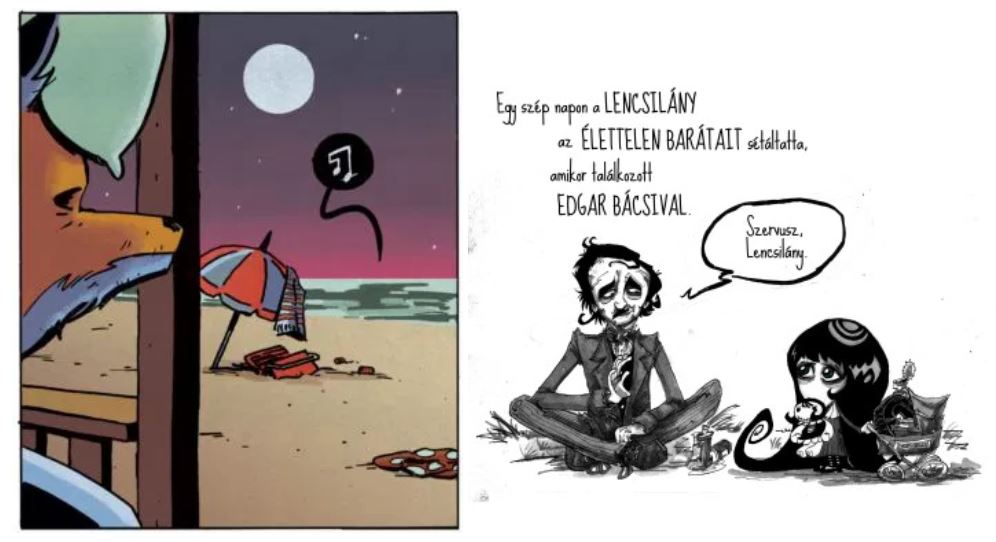
    Az idei Alfabéta-díjjal kitüntetett képregény főszereplője, a névtelen róka világok között egyensúlyozó karaktere végigkísérte Felvidéki Miklós képregényes karrierjét — azaz a fél életét, hiszen már annak a képregénynek is ez a figura a főszereplője, amellyel Miklós tizenhét évesen harmadik lett a Luzerni Fumetto Nemzetközi Képregényfesztiválon (Pinkhell, 2007, 3. szám, 31-34.). Miklós stílusa sokat változott az első publikált Noname-képregények óta, finomodott a vonalvezetés, radikálisan átalakult a színkezelés. A róka azonban ugyanazzal a tapintatos kíváncsisággal ingázik valós és képzelt, evilági és túlvilági, múlt és jövő között, amivel Miklós több, mint tíz évvel ezelőtt kutakodni küldte.

    A Noname-képregényekben egy-egy banálisnak tűnő részlet indítja a történetet, például egy vidéki ház kitakarítása, egy utazási prospektus lapozgatása, vagy, a most díjazott képregényben az ablakon beszűrődő zaj. Történet alatt pedig természetesen nem akciódús eseménysort értek, hiszen a sorozat elemei pár oldalas képregények, hanem érzékeny kérdésfelvetéseket és asszociációkat, amelyek a nekik szentelt figyelemnek köszönhetően a változás és a frappáns csattanó lehetőségét hordozzák.

    A 2017-ben a Szépirodalmi Figyelő folyóirat online felületén, a Szifonline.hu-n megjelent Noname-képregény színekben és — bár nem tartalmaz szöveget, és a kísérőzene sem jár hozzá — zenében adja vissza az álom és ébrenlét között lebegő világot. Az ablakán beszűrődő ismeretlen zenére (amiről később kiderül, hogy énekhang) zsigerileg reagáló, megbabonázott róka azonnal veszi párnáját és felpattan ágyából. A képregény magenta-árnyalatokra és zöldekre épülő színvilága sejtelmes és egzotikus, csábító és fenyegető, akárcsak az ismeretlen ének. Az alvajáró róka céltudatosan, de csukott szemmel vág át a magára hagyott strandon, ússza át a tengert, vándorol panelról panelra. Az eltökélt haladás és a vakság közötti ellentmondás, továbbá az, hogy csak a harmadik oldal utolsó paneljában tudjuk meg, hogy a bolyongás oka az ormokon ülő szirén hívogató dala, feszültségben tartják az olvasót, és erős dramaturgiai ívet teremtenek a mindössze négy oldalas történetben.

    Az utolsó oldalon aztán kiderül, hogy a szirén varázserejú éneke több lényt vándorlásra bírt, és nem a róka az egyetlen, aki álmát és nyugalmát a szirén szigetén találja meg. A történet végén azonban nem hallgat el a szirén, dala továbbra is betölti a teret, és immár az olvasót hívja, hogy hagyja magát megbabonázni és keljen útra: járja be ő is, járja be újra azt a képregényes utat, amelyen a róka végigment. Ezen a ponton fontos visszakanyarodnunk az első oldal hangjegyeihez, és felismernünk: a hangjegyek fekete körei és a névtelen róka megbabonázott, egyetlen kimerevített pillanatra tágra nyílt szemének hasonlósága nem véletlen. A szirénénekben, az útban, és magában a képregényben önmagunkat fedezhetjük fel.

    Gratulálok Felvidéki Miklósnak az Alfabéta-díjhoz, és remélem, újra rendszeresen olvashatunk tőle Noname-képregényeket.

    felvidéki noname 1

  • Észrevételek Lakatos István és Felvidéki Miklós képregényeiről by MOMÉs hallgatók

    A MOMÉ-n a Kép-szöveg relációk órán most már nyíltan csak képregényeket olvasunk és szedünk darabokra (míg korábban elméleteztünk meg fotókat tartalmazó szövegeket vizsgáltunk és hoztunk létre). Elemeztünk szabályos oldalszerkezeteket, szabálytalanokat, visszatérő motívumokat. Foglalkoztunk infografikai és adatbázis-szerű (nem a legjobb név, de így hívják) és nem-linális képregényekkel. Széttrollkodtuk Rodolphe Töpfflert és Herrimant, valamint átstrukturáltuk Oravecz Gergő Blosszáját infografika-tervvé (mert kivitelezni nem volt idő), a leginnovatívabb a Blosszában szereplő rovarok sorsáról szólt. Szóval aktív a csoport!

    A legutóbb Felvidéki Miklós által jegyzett régi, pinkhelles Noname-eket (az újat nem) és Lakatos István két képregényét (Lencsilány és az elhasznált ember, Vasárnap) vizsgálták a hallgatók párokban a tanár (én, hehe) által megadott szempontok alapján, majd rövid elemzéseket írtak hozzájuk. Sajnos ezekre a szövegekre az órából már kevés idő jutott, annyira alapos volt a vizsgálat, ezért a szövegek stiláris egyenetlenségeit nézzétek el. 🙂 A képregényeket irányított kérdések mentén értelmezték, és mivel korábban főleg szerkezeti jegyekkel szórakoztunk, most a karakterekre, a színekre, és változatlanul a panelszerkezetekre vonatkoztak a kérdések, ezért is térnek ezek a témák olyan sokszor vissza a szövegekben.

    Mivel sok képregényes hiányolja a visszajelzéseket, amikből valóban nincs sok, itt van néhány szöveg a MOMÉs hallgatók tollából, amik talán nem csak Mikinek és Istvánnak érdekesek. (Megj. nem mindenhol értek egyet, de ez a feladat nem erről szólt.)

    Edit-Noémi:

    Felvidéki Miklós rajzai jól illeszkednek a történet dinamikájához. Élénk, telített színeket, vékony, szaggatott vonalakat és kontrasztokat alkalmaz, amik párhuzamban vannak az erősen mozgásos és zajos fiktív szituációkkal (autóverseny, koncert, csata, szuperhős tett). A hangutánzó szavak fokozzák ezeknek a jeleneteknek a hangulatát és vizuálisan is növelik a feszültséget. A történetek mindegyikében dimenzióváltások jelennek meg. Ez lehet időben és képzeletben (amikor a jövőjéről fantáziál), vagy az oda-vissza zoomolások által (amikor a szemétre ráközelítve egy birodalom tárul elénk). Olykor játszik a panelek kapcsolódásával (lámpáról lefújja a port két panelen keresztül).

    Lakatos István groteszk látványvilágot teremt, hátborzongató, fiktív karakterekkel, kitalált lényekkel és helyekkel. Az álomszerű helyzetekre a vonalvezetés ráerősít: a formáit vékony, kanyargó vonalak keretezik és esetenként a szövegbuborékok vonalvezetése is ezt követi. A vonalrajzok akvarellel párosulnak, a tónusok kissé elmosottá, bizonytalanná teszik a képeket. Nincsen szigorú panelbeosztás.

    Anna-Lala:

    Lakatos nagyon kidolgozott, aprólékos képekkel dolgozik. A szöveg és a téma is meseszerű. Több féle tipóval dolgozik. Karaktereit azonnal felfedi: Lencsilánynál egy bevezető oldallal, a Vasárnapban pedig egy kis bevezető szöveggel [A Mesék az ágy alól kötetben]. Színei hangulatfestőek, nagyon sok árnyalattal, tónussal dolgozik, ezekkel festői hatást ér el. A karakterei ismertek, előző ismeretek alapján beazonosíthatók.

    Felvidéki sok képregényében földöntúli szörnyekkel kerül kapcsolatba. Jellemzó rá a mikro-makro váltás. A Noname főszereplője feltételezhetően ő maga, róka formában. A történetei nyitva maradnak, a róa nem oldja meg a problémát. Nagyon színesen dolgozik, sokszor tubusszínekkel. Grafikus hatású, erős, határozott kontúrokkal. Nem igazán játszik a panelok nagyságával, azonos képeket használ, ellentétben Lakatossal.

    Emese-Marci:

    Felvidéki képregényeiben egyértelmű és direkt a karakterábrázolás, ezzel szemben Lakatos István műveiben a környezet részletgazdagságán van a hangsúly a karakter megjelenítése helyett. A Lencsilány történetében érzünk egy váratlan váltást, főleg a Noname történetekkel szemben, amiben a főhős szándékai egyértelműek. A Felvidéki-képregény vizuális megjelenítése segíti a történet elmesélését, a Lencsilánynál a rajzi megjelenítés dominálja a történetet.

    Anna-Péter-Valentin:

    Felvidéki oldalkompozíciókban gondolkodik, Lakatos odafigyel a karakterek jellemére és kifejetésére. Lakatos többet foglalkozik a képreégny tipográfiájával, és mélyebb témákat boncolgat. A fakó színek is a téma komolyságára utalnak. Erősebb hangsúlyt helyez egyes elemekre egy panelen belül, míg Felvidéki rajzain el lehet merengeni. Lakatosnál érdekes, hogy a képregény szereplőit kissé groteszk módon, torzított arányokkal rajzolja meg, míg a történet álomvilágban való részénél megtartja a realisztikus ábrázolásmódot az állatok megjelenítésénél. Lényegében grafikai eszközökkel felcseréli a történetben az álmot és valóságot. Ezzel gondolkodásra bírva az olvasót, hiszen nem annyira egyértelmű,hogy melyik verzió a helytállóbb.

    Ági-Zsófi:

    Lakatos István munkái vizuálisan nagyon kidolgozottak, apró részletekkel vannak tele, színvilágában és az ábrázolásában is festői, a karakterek nagyon kidolgozottak. A panelek nem kötöttek, a képek önállóan is működnek, szabadon kezeli az oldalakat. Nem szövegcentrikus, a történet egy kedvesebb ábrázolást kíván. A történet érthető, kedves, csattanóval a végén. Felvidéki Miklós képregényei Lakatossal ellentétben vizuálisan egyszerűbb karakterábrázolást használ, viszont a szövegből megismerhetjük a karakter személyiségét, gondolatait. Visszatérő elem a sztori a sztoriban, a zoom effektus. Grafikusabb, erőteljes színhasználat jellemzi.

    felvidéki és lakatos

  • I’ve become a curator!

    I have always dreamed about curating an exhibition of comics, and I am really happy to have been given the opportunity to organize the contemporary section of the comics exhibition at the National Széchényi Library, Budapest.

    The exhibition is called “Comics as Narrative – The 9th Art and Its Icons in Hungary” — or “Kép-regény-történet – A kilencedik művészet ikonjai Magyarországon.” It will be a big one (with Hungarian standards), focusing on comics under Socialism and contemporary works. It will open on 14 May and it can be visited until 26 July.

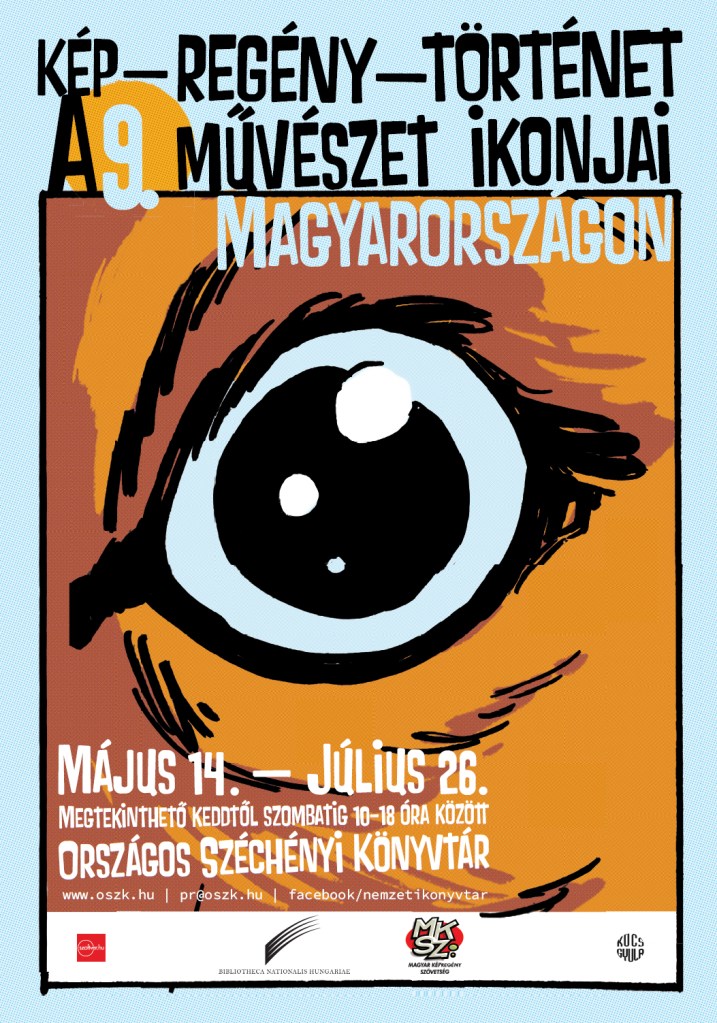
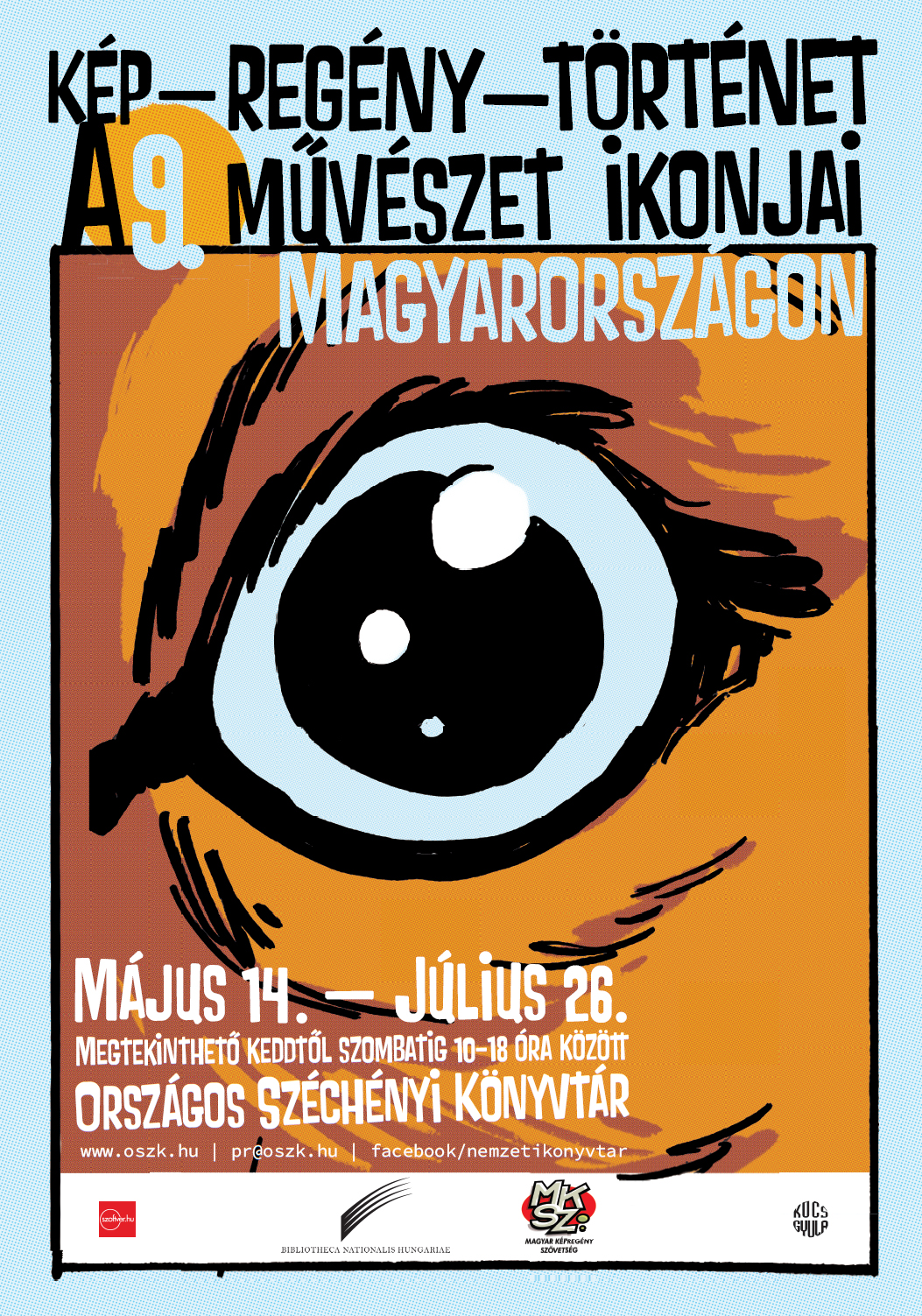
    The poster with the eye is actually based on a panel by Miklós Felvidéki, an amazingly gifted Hungarian cartoonist, who received the Alfabéta prize for the best short comic in 2018 (behance.net/nonamefox).

    Here is a piece of official info in Hungarian: http://www.oszk.hu/kiallitasok/kep-regeny-tortenet-kiallitas

    I am talking about what the contemporary room is about in this short video: youtube.com/watch?v=Q9R5Eq-LlRM&t=2s

    And here is my enthusiastic blogging on how I am preparing the contemporary section – also in Hungarian:  perezvonsgeometry.wordpress.com/category/kep-regeny-tortenet-kiallitas/

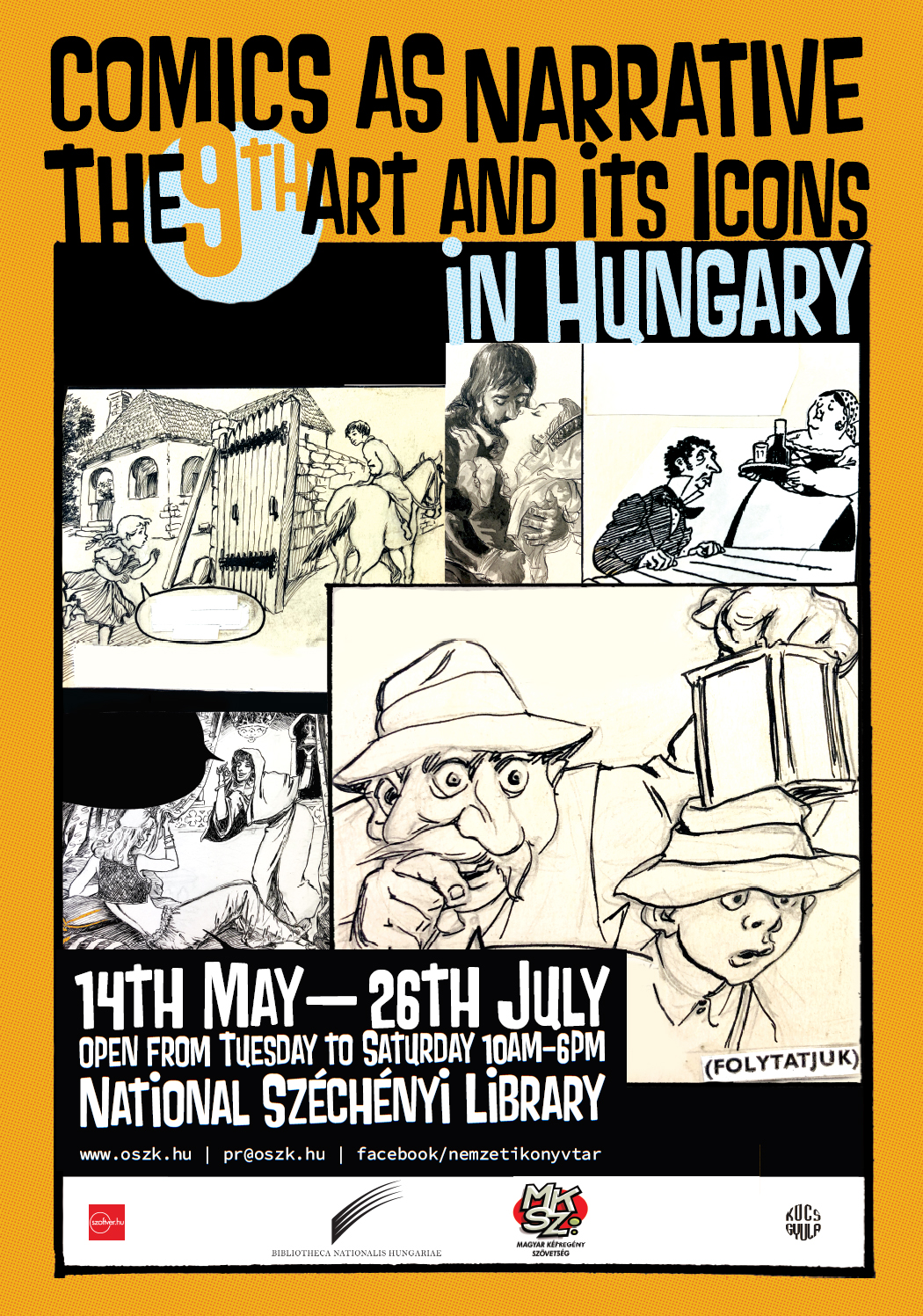
    Here are the two posters of the exhibition and some behind the scenes photos:

    kép-regény-történet kiállítás OSZK 2018 comics as narrative poster 2018

    dudás győzőnél 2
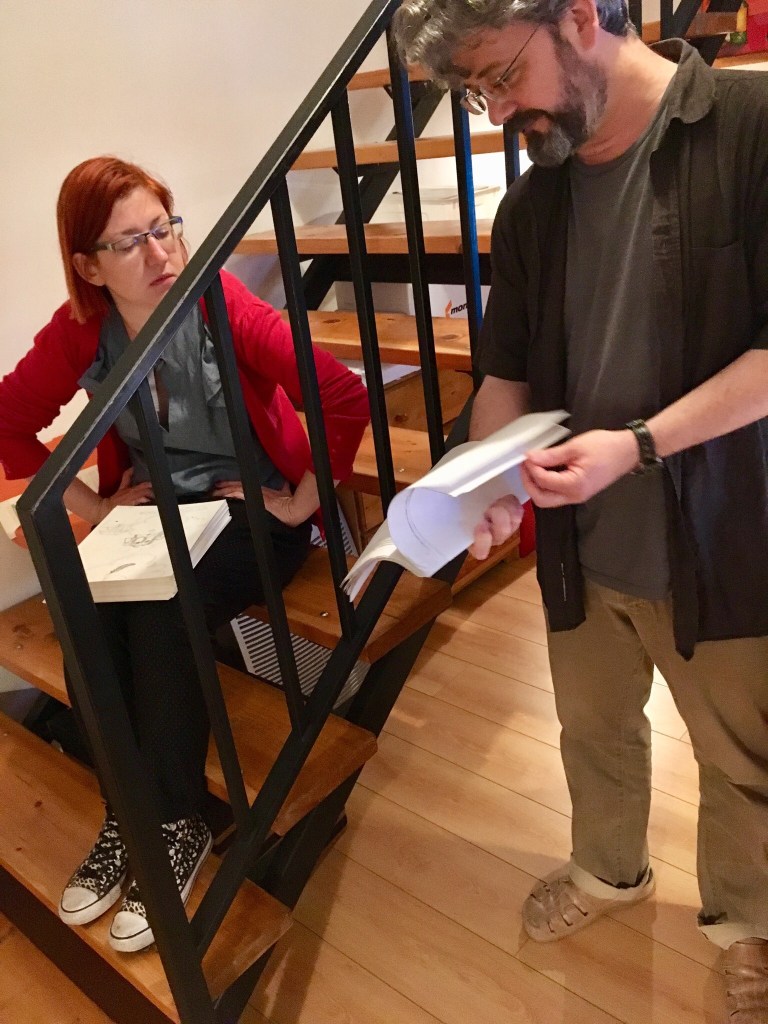
    This is me being a serious curator at the home of comics artist and illustrator Győző Dudás. (Photo credit: my friend Péter Major)

    20180426_213234
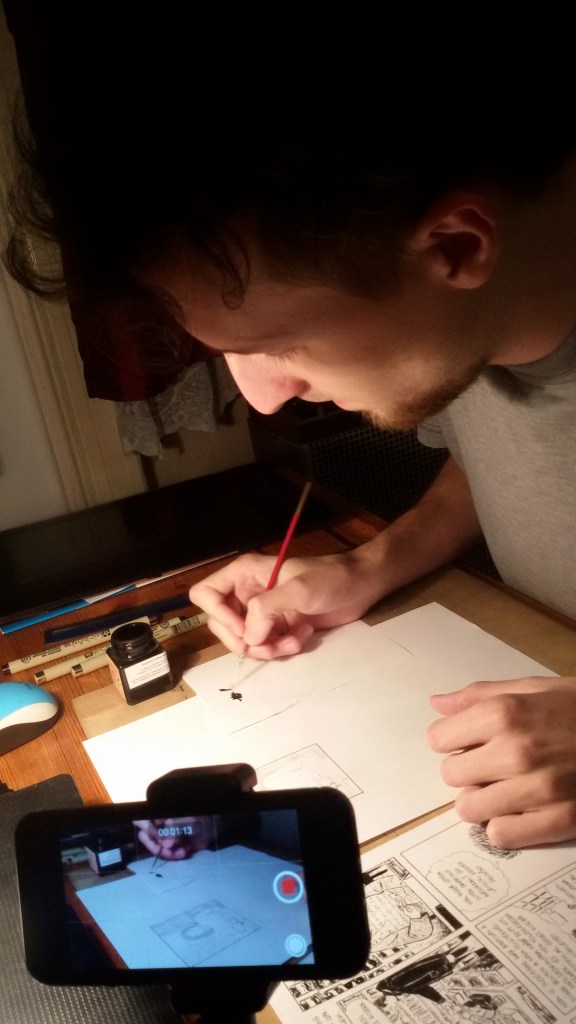
    There will be some short videos on drawing / inking / coloring, this is a werk photo of Gergely Oravecz at work.